
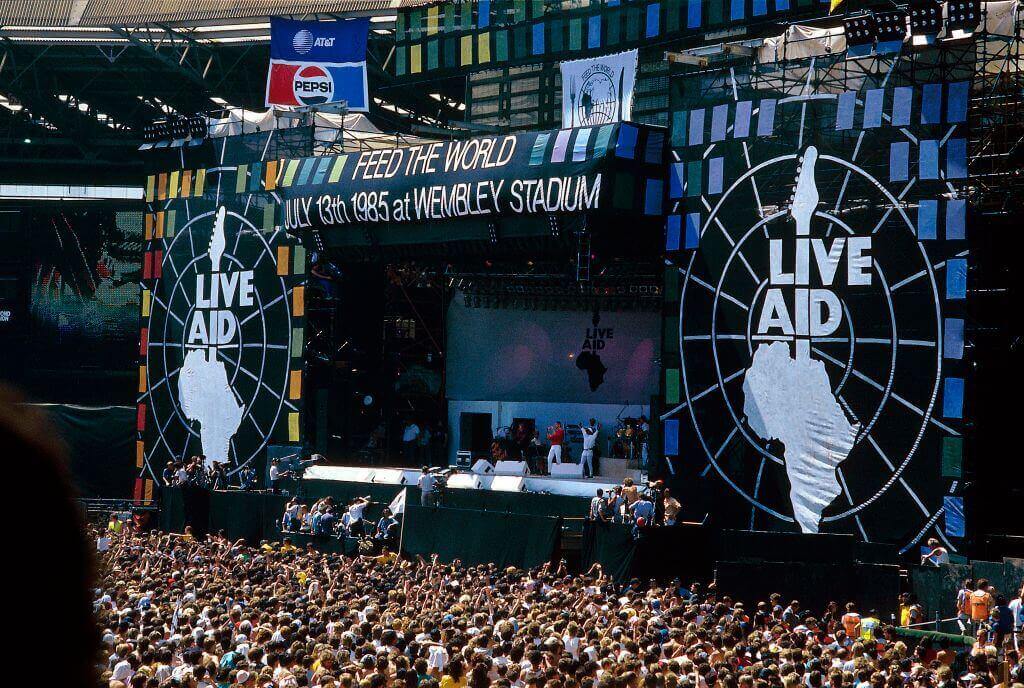
On July 13, 1985, millions of people around the globe witnessed one of the most extraordinary events in music history. Live Aid, a groundbreaking benefit concert held simultaneously at Wembley Stadium in London and John F. Kennedy Stadium in Philadelphia, brought together the world’s biggest musical stars to raise money and awareness for the devastating famine in Ethiopia. More than a concert, Live Aid became a defining moment that demonstrated how entertainment, technology, and compassion could unite people across national boundaries for a common humanitarian cause.
The idea for Live Aid originated with Irish musician Bob Geldof, lead singer of the Boomtown Rats, after he was deeply moved by television reports showing the catastrophic famine that was ravaging Ethiopia. Hundreds of thousands had already died, and millions more faced starvation. In late 1984, Geldof partnered with musician Midge Ure to organize the charity single “Do They Know It’s Christmas?”, performed by the supergroup Band Aid. The song became a massive success, inspiring American artists to record “We Are the World,” which raised millions more for famine relief. Yet Geldof believed even greater action was needed.
Organized in just ten weeks, Live Aid was an unprecedented logistical achievement. The concerts featured more than 75 performers, including Queen, U2, David Bowie, Elton John, Madonna, Mick Jagger, Eric Clapton, The Who, Paul McCartney, Neil Young, Bryan Adams, and many others. Through a network of 13 satellites, the 16-hour event was broadcast live to more than one billion viewers in 110 countries, making it one of the largest television events ever produced.
One of the day’s most memorable moments came when Queen took the stage at Wembley Stadium. Frontman Freddie Mercury delivered a powerful, energetic performance that has since been widely regarded as one of the greatest live performances in rock history. Another remarkable feat came from Phil Collins, who performed in London before boarding the supersonic Concorde to Philadelphia, where he performed again later that same day.
By the end of the marathon broadcast, Live Aid had raised more than $100 million for famine relief in Africa while drawing worldwide attention to the humanitarian crisis. The event also transformed charitable fundraising by demonstrating the power of global media and celebrity influence to mobilize public support on an unprecedented scale.
Although historians and humanitarian organizations have since debated aspects of aid distribution and the complexities of international relief efforts, Live Aid remains a landmark example of people from every walk of life coming together in response to human suffering. Forty years later, it is remembered not only for its unforgettable music but for proving that, when united by compassion, millions of individuals can help make a meaningful difference in the lives of others.



I wonder how much of that 100 million made it to the source and result of the problem; does anyone have the numbers??
I remember that! It was a spectacular event.