
As America marks its 250th birthday, it’s the perfect time to step back into the kitchens of the nation’s Founding Fathers. Beyond politics and revolution, these early leaders were also farmers, hosts, and food enthusiasts who helped shape American culinary traditions.
From hearty colonial dishes to European-inspired favorites, these recipes offer a taste of history—and a delicious way to celebrate.
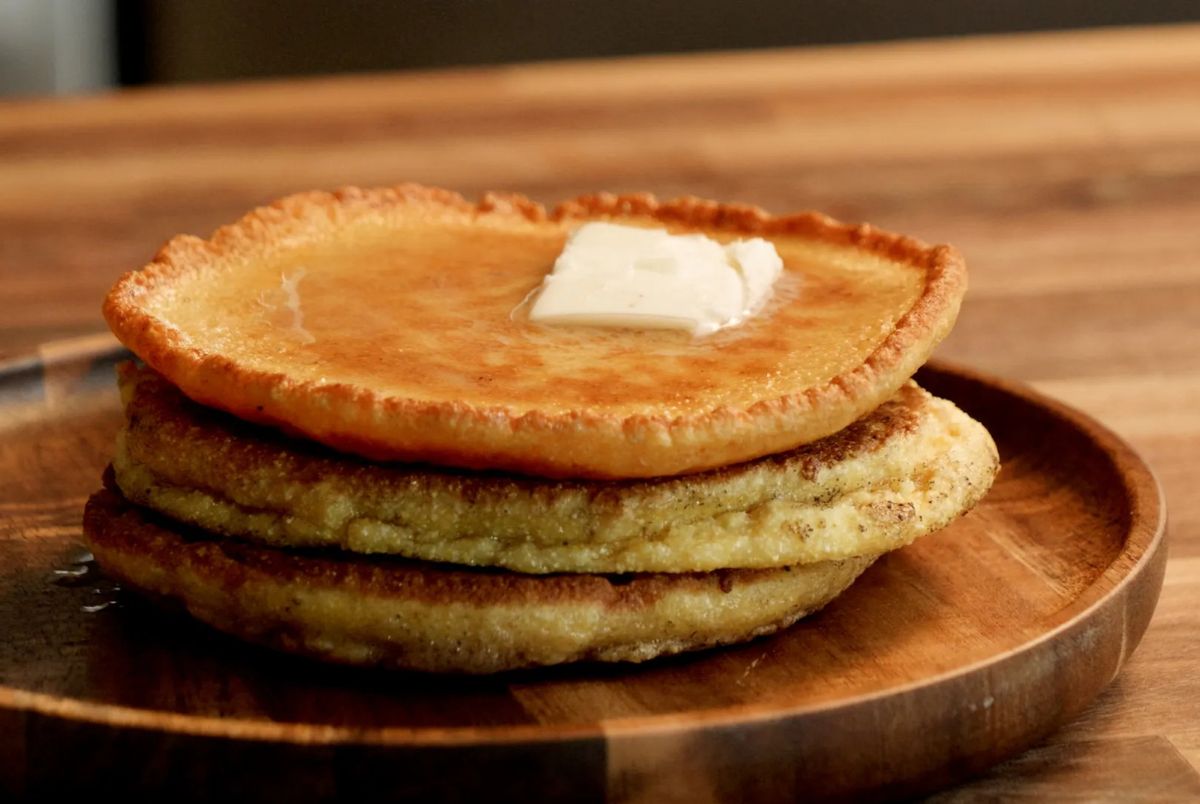
George Washington’s Hoecakes
George Washington’s hoecakes were a simple, everyday staple of colonial life, made from cornmeal and cooked over an open fire—sometimes even on the flat blade of a hoe, which is how they got their name. A favorite at Mount Vernon, hoecakes reflected the influence of Native American cooking techniques and the practicality of early American diets. Their simplicity and reliance on basic ingredients make them a lasting symbol of colonial resourcefulness and the humble beginnings of American cuisine.
Ingredients:
- 1/2 tsp active dry yeast
- 2 1/2 cups white cornmeal, divided
- 3 to 4 cups lukewarm water
- 1/2 tsp salt
- 1 large egg, lightly beaten
- Melted butter for drizzling and serving
- Honey or maple syrup for serving
Instructions:
- Mix the yeast and 1 1/4 cups of the cornmeal in a large bowl.
- Add 1 cup of the lukewarm water, stirring to combine thoroughly.
- Mix in 1/2 cup more of the water, if needed, to give the mixture the consistency of pancake batter.
- Cover with plastic wrap, and refrigerate for at least 8 hours, or overnight.
- Preheat the oven to 200°F.
- When ready to finish the hoecakes, begin by adding 1/2 to 1 cup of the remaining water to the batter.
- Stir in the salt and the egg, blending thoroughly.
- Gradually add the remaining 1 1/4 cups of cornmeal, alternating with enough additional lukewarm water to make a mixture that is the consistency of waffle batter.
- Cover with a towel, and set aside at room temperature for 15 to 20 minutes.
- Heat a griddle on medium-high heat, and lightly grease it with lard or vegetable shortening.
- Preparing 1 hoecake at a time, drop a scant 1/4 cup of the batter onto the griddle and cook on one side for about 5 minutes, or until lightly browned.
- With a spatula, turn the hoecake over and continue cooking another 4 to 5 minutes, until browned.
- Place the hoecake on a platter, and set it in the oven to keep warm while making the rest of the batch.
- Drizzle each batch with melted butter.
- Serve the hoecakes warm, drizzled with melted butter and honey or maple syrup.
John Adams’ Apple Pan Dowdy
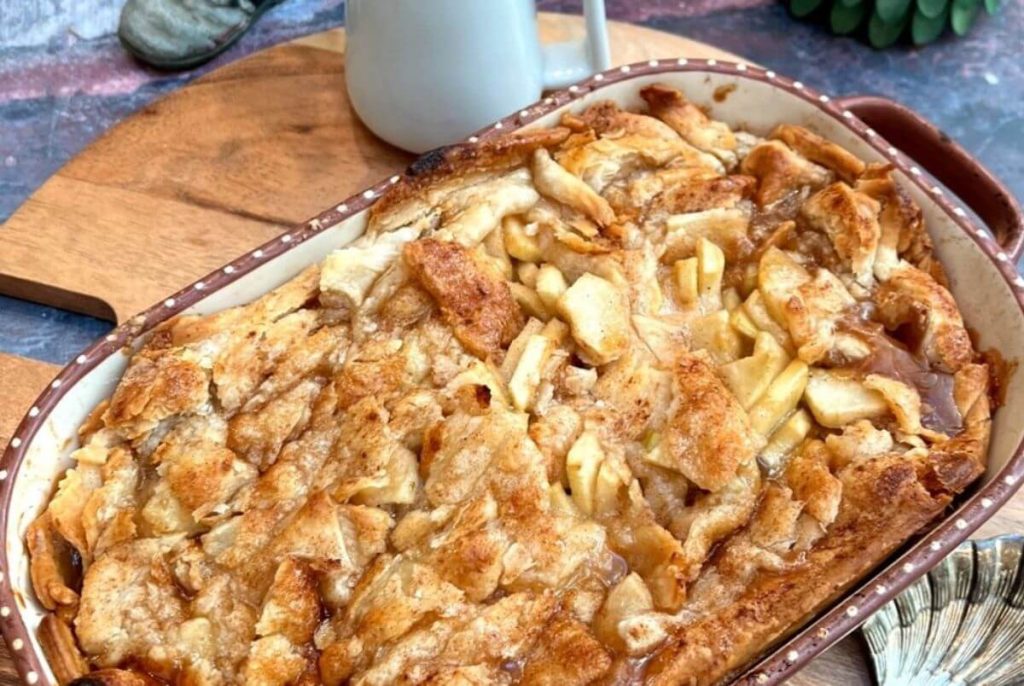
John Adams’ Apple Pan Dowdy reflects the simple, hearty desserts of early New England, where apples were abundant and home cooking emphasized practicality. This rustic dish—made by baking spiced apples with a biscuit or pastry topping that is “dowdied,” or broken up during baking—was a staple in colonial kitchens. Its humble ingredients and comforting flavor embody the straightforward, no-frills lifestyle Adams was known for, as well as the resourcefulness of early American cooks.
Ingredients:
- 1 package of 2 ready-made and ready to roll pastry crusts
- 1 8-inch pie baking dish
- 1 medium size mixing bowl
- 3/4 cup white sugar
- 3/4 teaspoon cinnamon
- 1/4 teaspoon salt
- 2 tablespoon flour
- 1/4 teaspoon nutmeg
- 6 medium green apples “Granny Smith”
- 1 teaspoon lemon juice
Instructions:
- Pre-heat oven to 400.
- Place one pastry crust in the pie baking dish as directed by the package.
- Peel, core, and slice the apples in ¼ inch slices and place in bowl.
- Toss apple slices with lemon juice.
- Add dry ingredients in mixing bowl with apples.
- Add apple mixture to pie crust.
- Cover crust and seal with second pie crust.
- Place pie in oven on the middle rack.
- Bake at 400 degrees for 10 minutes. Then reduce heat to 325 degrees.
- Remove pie from oven and make small slices in several parts of the top of the pie shell.
- This is c called a Dowdy and where the name of the dish comes from.
- Reduce oven temperature to 325 degrees and return pie to oven.
- Bake for 1 hour
- Serve hot with ice cream or whipped cream.
Thomas Jefferson’s Mac and Cheese
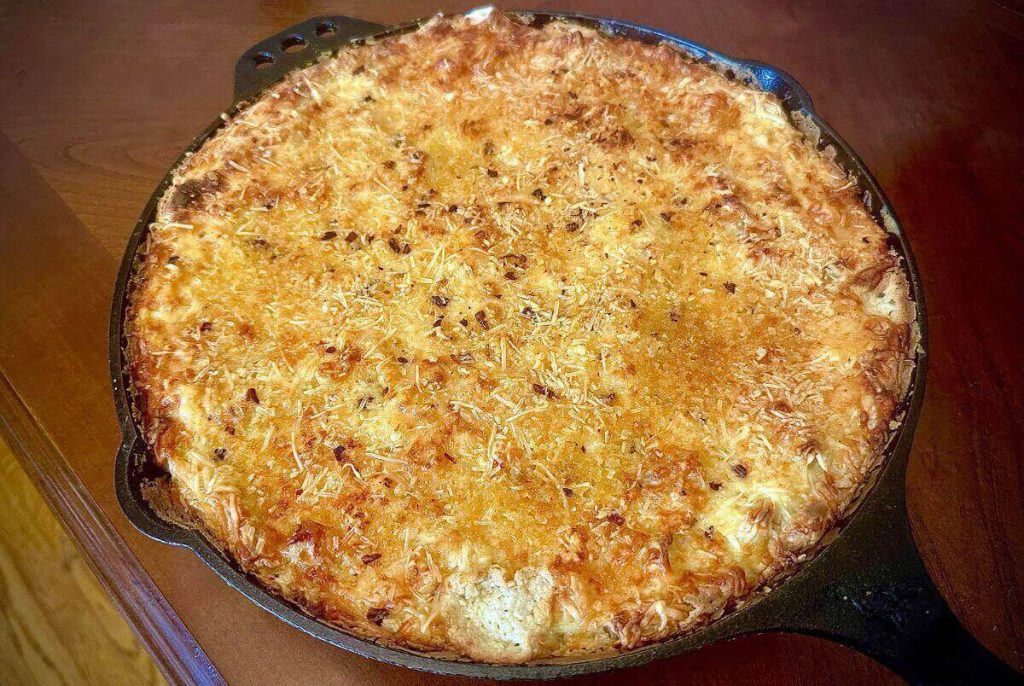
Thomas Jefferson’s macaroni and cheese reflects his deep appreciation for European cuisine and his influence on early American dining. After encountering pasta dishes during his time in France and Italy, Jefferson brought both recipes and a pasta-making machine back to the United States. He later served a baked macaroni dish at the White House, helping introduce and popularize what would become one of America’s most beloved comfort foods.
Ingredients:
- 16 ounces large elbow macaroni
- 3 cups milk
- 2 teaspoons all-purpose flour
- ½ teaspoon salt
- ¼ teaspoon freshly ground black pepper
- 2 cups (packed) freshly shredded Parmesan
- 2 cups (packed) grated mozzarella
- 2 cups (packed) Romano cheese
- 2 tablespoons butter
Instructions:
- Preheat the oven to 450°F.
- Butter a 13-by-9-inch glass baking dish and set aside.
- In a large pot of boiling water, cook the noodles until tender, about 8-10 minutes. Drain, but do not rinse.
- In a large bowl, whisk the milk, flour, salt, and pepper until blended.
- Stir in 1 ½ cup Parmesan, 1 ½ cup mozzarella and 1 ½ cup Romano cheese.
- Add the noodles and butter and toss to coat.
- Transfer the noodle mixture to the prepared baking dish.
- Sprinkle the remaining Parmesan, mozzarella and Romano cheese over the noodle mixture.
- Bake until the cheese begins to lightly brown on top, about 12-14 minutes. Let stand for 10 minutes before serving.
- Season with salt and pepper to taste and enjoy!
James Madison’s Hoppin’ John
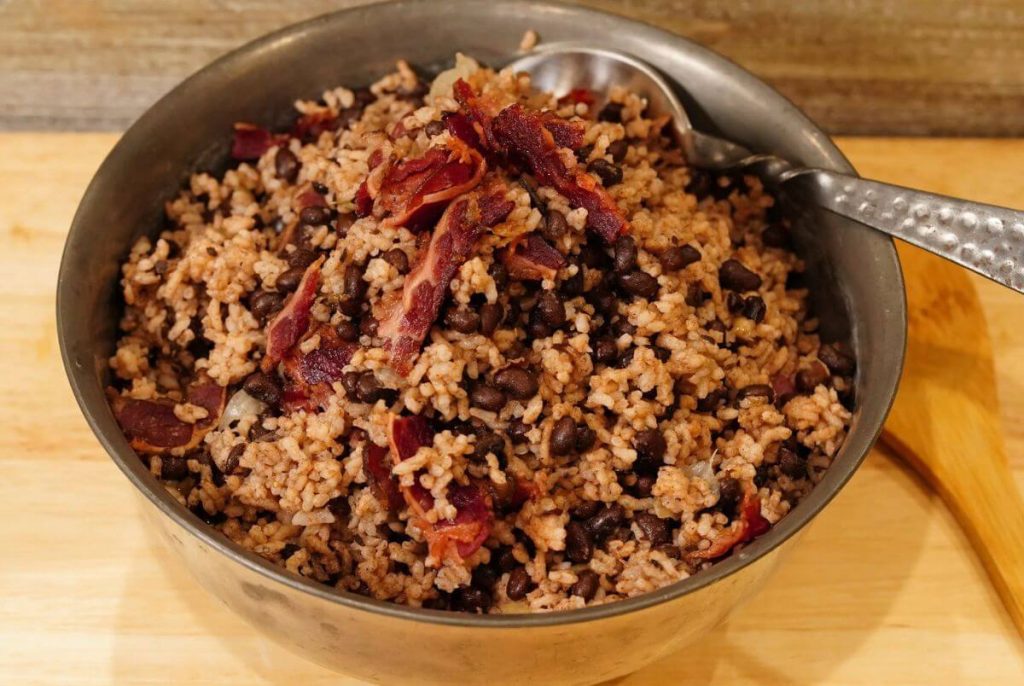
James Madison’s association with Hoppin’ John reflects the blending of Southern and African culinary traditions in early America. This dish—made with rice, black-eyed peas, and pork—has roots in West African cuisine and became a staple in the South, including Virginia, where Madison lived. Often served for good luck and prosperity, Hoppin’ John represents the cultural influences and agricultural foundations that shaped early American food traditions.
Ingredients:
- 1 cup dried black-eyed peas or 2 cans, drained and rinsed
- 4 cups water or chicken broth
- 1 large onion chopped
- 2 cloves garlic minced
- 1 bell pepper chopped
- 1 celery stalk chopped
- 1 bay leaf
- 1 tsp thyme
- 1 tsp smoked paprika
- 1 ham hock or 6 slices of bacon chopped
- 1 cup long-grain white rice
- Salt and pepper to taste
- 2 tbsp chopped parsley for garnish
Instructions:
- If using dried black-eyed peas, place them in a large bowl and cover with water.
- Let them soak overnight or use the quick-soak method by boiling them for 2 minutes, then letting them sit for 1 hour.
- Drain and rinse before using.
- In a large pot or Dutch oven, cook the chopped bacon over medium heat until crispy.
- If using a ham hock, add it directly to the pot and cook for about 5 minutes to render some fat.
- Add the chopped onion, garlic, bell pepper, and celery to the pot.
- Sauté until the vegetables are softened, about 5-7 minutes.
- Stir in the bay leaf, thyme, and smoked paprika.
- Add the soaked and drained black-eyed peas (or canned peas) to the pot.
- Pour in the water or chicken broth.
- Bring the mixture to a boil, then reduce the heat to low and let it simmer, uncovered, until the peas are tender, about 1 hour if using dried peas, or 20-30 minutes if using canned peas. If needed, add more liquid to keep the peas covered.
- While the peas are simmering, cook the rice according to the package instructions.
- Once the peas are tender, remove the ham hock if used and shred any meat from it, returning the meat to the pot.
- Stir in the cooked rice and season with salt and pepper to taste.
- Let the mixture simmer for another 10 minutes to allow the flavors to meld.
- Ladle the Hoppin’ John into bowls and garnish with chopped parsley.
Alexander Hamilton’s Mushroom Fricassee
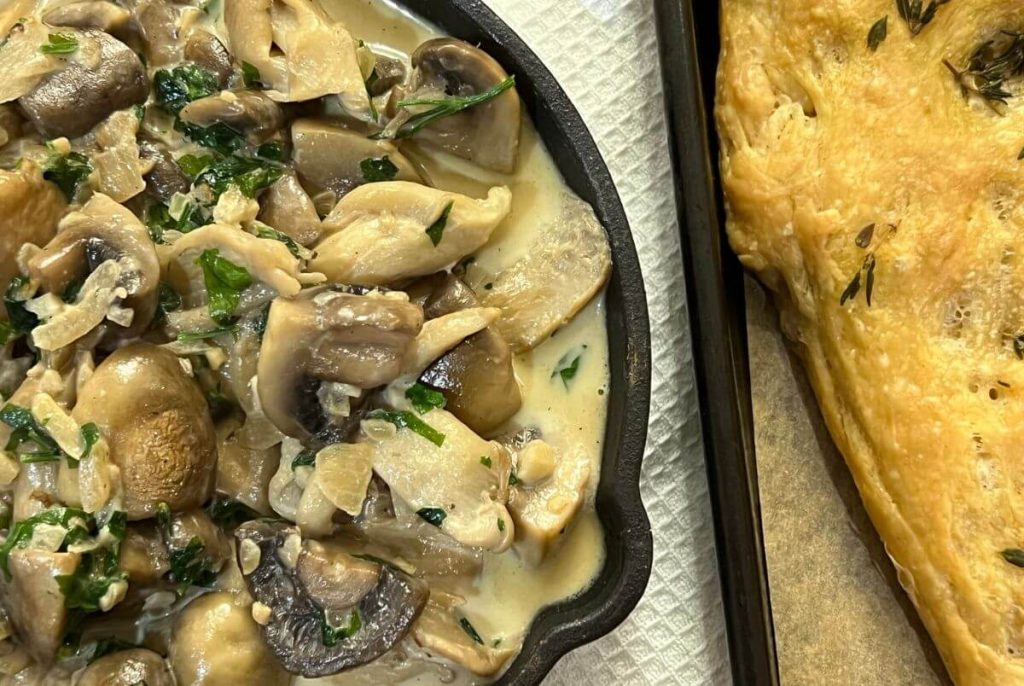
Alexander Hamilton’s mushroom fricassee reflects the refined, European-influenced cuisine enjoyed by early American elites in the late 18th century. As a statesman in bustling New York, Hamilton was exposed to sophisticated dining traditions that blended French cooking techniques with local ingredients. Dishes like mushroom fricassee—featuring sautéed mushrooms in a rich, buttery sauce—highlight the growing elegance of American tables during the nation’s formative years and the influence of international flavors on its culinary identity.
Ingredients:
- 2 lb assorted fresh mushrooms
- 2 tbsp cooking oil
- 1 tbsp butter
- ½ cup finely chopped shallots
- 2 cloves garlic, minced
- ½ tsp coarse sea salt
- ¼ tsp ground black pepper
- ½ cup Madeira wine or chicken broth
- ½ cup heavy cream
- 1 tbsp fresh chives, chopped
Instructions:
- Heat oil and butter in a large skillet over medium heat.
- Add mushrooms and cook until they begin to color.
- Add shallots and garlic, cooking until tender.
- Add the Madeira or broth, cooking until the liquid is reduced by half.
- Stir in the heavy cream and simmer until slightly thickened.
- Season with salt, pepper, and garnish with fresh chives.
Benjamin Franklin’s Roast Turkey
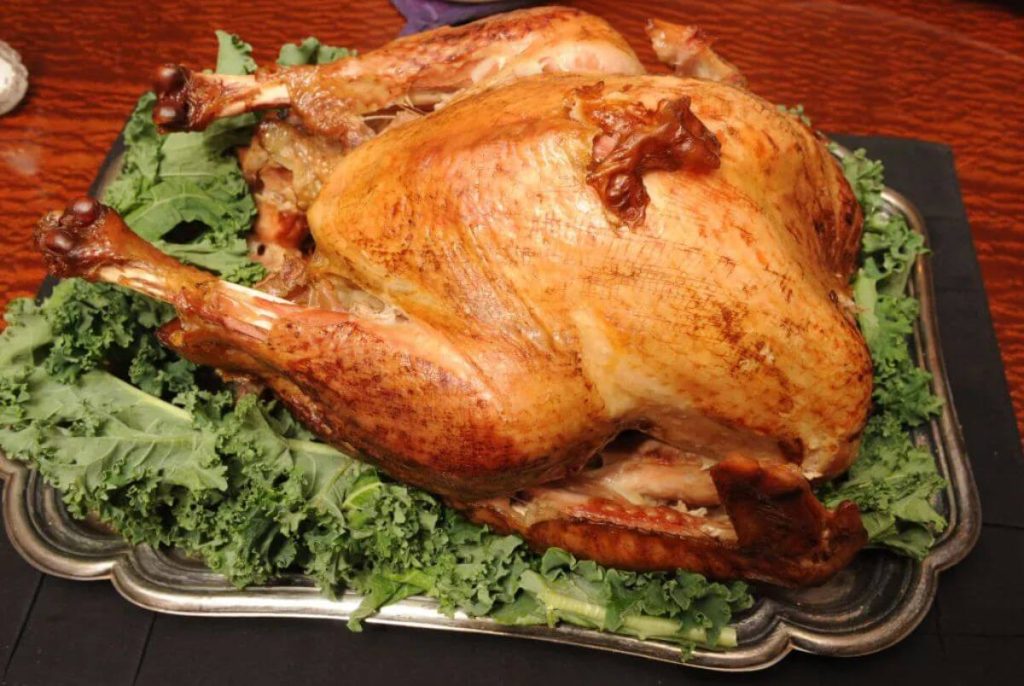
Roast turkey was one of Benjamin Franklin’s favorite foods and reflected the hearty, traditional meals of colonial America. Widely available and well-suited for feeding large gatherings, turkey became a staple at festive occasions and family dinners. Franklin’s well-known admiration for the bird—even suggesting it as a symbol of American identity—underscores its lasting connection to the nation’s culture, abundance, and culinary heritage.
Ingredients:
- Fresh Turkey
- Lemon
- Butter
- Salt
- Pepper
- Preferred Stuffing
Instructions:
- Wash the turkey thoroughly, remove any pinfeathers, and singe any hairs along the edges of the wings and around the legs.
- Rub the cavity with the cut side of a half lemon and stuff the bird lightly with any of the stuffings.
- Close the opening by skewering or sewing it and truss the bird well.
- Rub the turkey with butter and season with salt and pepper.
- Place in a large roasting pan and cover with several layers of cheesecloth soaked in butter. Do not add water to the pan.
- Roast in a preheated 325° oven.
- Baste several times during the roasting period, right through the cheesecloth.
- Remove the cheesecloth during the last half hour of cooking to allow the turkey to brown.
- To test whether it is done, move the leg joint up and down – it should give readily – or take several layers of paper towels and squeeze the fleshy part of the drumstick-if properly cooked, it should feel soft.
To roast an 8- to 10-pound stuffed turkey, allow 4 to 41/2 hours; for a 12- to 14-pound stuffed turkey, allow 5 to 5 1/4 hours; and for a large stuffed turkey, 18 to 20 pounds, allow 6 1/2 to 7 1/2 hours.
John Jay’s Hot Chocolate
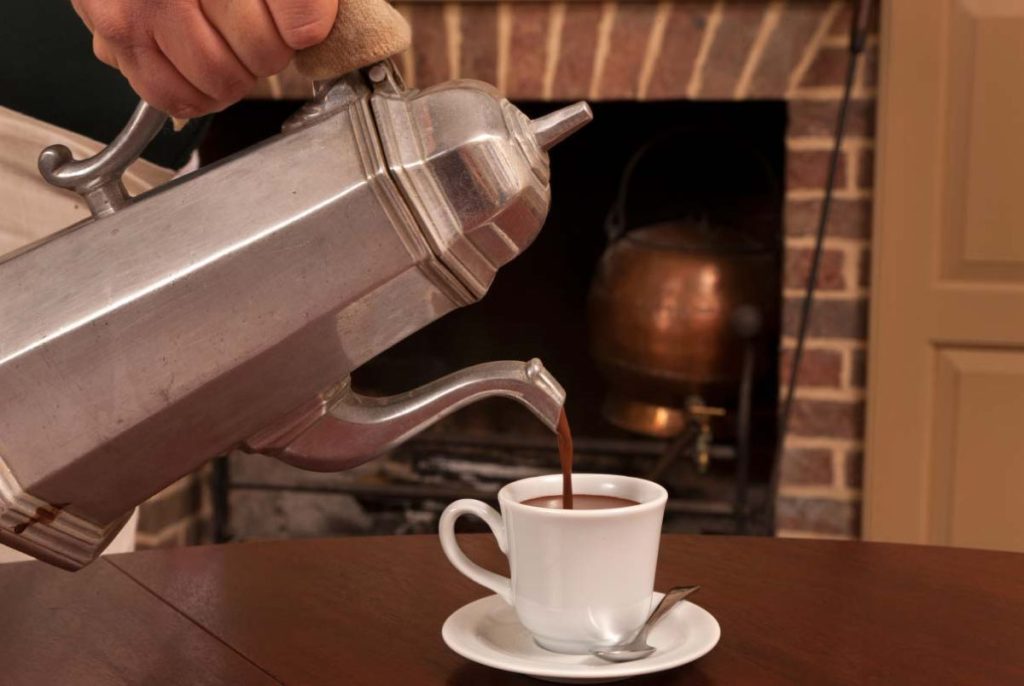
As Jon Jay traveled, influencing early American diplomacy abroad, he always brought with him blocks of chocolate. He even wrote home to his dad in 1790, to share that he kept his chocolate close with him, “shaving or grating it into pots of milk.” I think we can all relate to needing a cup of chocolate milk when we’re missing home.
Ingredients:
- 2 cups whole milk
- 2 whole star anise
- 1 tsp ground cinnamon
- 1/4 tsp freshly ground cardamom
- 1/8 tsp freshly ground nutmeg
- 1/8 tsp sea salt
- 2 tbsp brown sugar
- 1/4 tsp pure vanilla extract
- 5 oz dark chocolate, finely chopped
Instructions:
- Pour the milk in a small saucepan and add the star anise, cinnamon, cardamom, and salt.
- Slowly heat the milk until it is very hot and steaming but not boiling (should take at least 5 minutes to give the spices time to infuse the milk).
- Add the brown sugar, vanilla extract, and dark chocolate and whisk until melted.
- Bring the mixture to a low simmer and simmer for another 5 minutes, whisking constantly to prevent scorching.
- Pour into mugs and if desired serve with whipped cream and a sprinkling of cocoa powder and ground cinnamon.
The Founding Fathers helped shape more than a nation—they influenced how Americans eat, gather, and celebrate. Their meals reflect a blend of cultures, resources, and traditions that continue to define American cuisine today.
As you celebrate America’s 250th birthday, these recipes offer a meaningful way to bring history to life—right at your table.
Want to see more recipes tied to America’s history? Visit amac.us/250 to learn more!







What recipe series would you like AMAC to feature next? Let us know in the comments below!
Might get my daughter to make some of these if we can find all of the ingredients. I don’t believe they had ready made pastry crust back then. The advantage of home made is that you choose, and know, everything that is in it.
Want the mac and cheese recipe
LOVE ME SOME HOPPIN’ JOHN AND HOECAKES!
I could live on black-eyed peas and corn-ANYTHING!
Why does every picture look like the food was originally dog vomit that was scraped off the floor, thrown in the trash, then picked back out of the trash and dropped into a pan? There is nothing appealing about any of the recipes posted. Do better.