
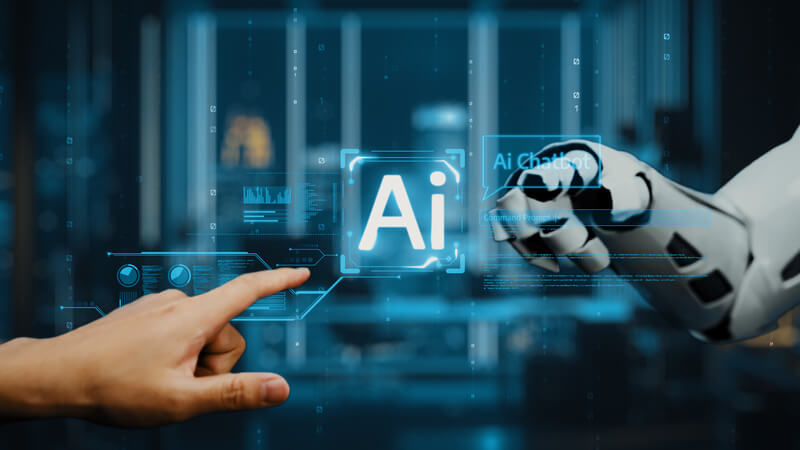
As machines become more sophisticated and increasingly able to handle traditional human tasks, what will become of us? This question is becoming increasingly common.
The Dynamic Role of Machines and Computers in the Workforce
Years ago, I took part in a time capsule project. Each of us wrote a short note about ourselves, predicted what the future might look like, and sealed everything in a bottle to be opened years later. Although the capsule remains unopened, I still remember writing that I expected a cure for cancer, something I continue to believe is possible. What I did not imagine was a future shaped so dramatically by robots. Yet based on what I see on television, in the news, and on city sidewalks, that future is already here.
Friend or foe?
Recently, I watched a man hurl insults at a sidewalk delivery robot, one of many small machines now appearing in cities as part of the food service industry. The well-dressed man shook his finger at the little metal box as it rolled along. “You’re putting me out of work, you hunk of metal junk. Yes, I’m talking to you,” he shouted as it crossed the street, likely carrying someone’s DoorDash order. The robot, with its triangle-shaped eyes or sensors, showed no sign of distress. The man’s anger, however, felt very real.
Are Machines Outperforming Humans?
The technology behind a delivery robot is more complex than the metal box we see, but the fear that robots can take human jobs is no longer theoretical. Watching that brief scene between man and machine made me wonder: how replaceable are we? As a writer, I know my own profession could one day be at risk. A musician I recently spoke with pointed out that AI can now compose music, too. Replacing food delivery workers or even helping write or produce music is one thing. But what happens when AI moves into more serious situations, such as health care? Imagine going to the doctor and being seen by a machine instead of a person. What if a computer diagnoses your illness or a robot performs your life-or-death surgery? It may sound futuristic, but parts of this future are already here.
AI Moves into Medicine
Artificial intelligence is already taking on new roles in medicine. NBC’s Today Show reported that many people now turn to AI tools for medical advice instead of first consulting a doctor. According to OpenAI, more than 230 million users worldwide ask ChatGPT health and wellness questions each week. The segment features people who used ChatGPT to better understand symptoms of headache and gout, and these patients describe the technology as helpful.
Still, OpenAI emphasizes that ChatGPT is not a substitute for professional medical advice. At best, it can help people understand medical information and prepare for conversations with clinicians. In these cases, AI supports health care—but the larger question remains: could this emerging technology eventually replace human doctors? The possibility is increasingly real.
The “RoboDoc” Question
Mick Skolnick, MD, explores that question in his Substack article, “The RoboDoc Will See You Now.” He describes AI as a tool that must be used carefully and verified against reliable sources. He also points to the political, economic, and social pressures pushing AI into health care, including the possibility that Medicaid may soon cover AI-powered wellness apps and wearables and that the Centers for Medicare and Medicaid Services (CMS) plans to use AI agents by the end of 2026.
Like self-driving cars, Skolnick describes, AI-powered “RoboDocs” are being promoted as part of the future of care, even though America’s profit-driven health care system is already criticized for feeling too impersonal. Skolnick acknowledges that AI can perform certain tasks well, such as analyzing electrocardiograms and streamlining workflows. But he also stresses what it cannot replace: the interpersonal connection and moral reasoning that human doctors bring to medicine.
The Promise and Limits of AI
In some cases, computers can save companies money and even outperform humans, which explains why AI is becoming such a powerful force in the future of work. In health care, however, efficiency cannot be the only goal. Although chatbots and other AI tools can be helpful assistants, they may also provide information that is incorrect, misleading, or outdated, putting people who rely on them for medical guidance at risk.
What Machines Cannot Replace
Beyond the risk of inaccurate answers, AI lacks the human qualities that medicine depends on, such as judgment, emotional intelligence, creative problem solving, and compassion. These limits matter because health care is not simply about processing information. It is also about listening, understanding fear, weighing moral choices, and building trust with another person – something machines simply cannot do.
Transformation, Not Just Replacement
Fear of job loss is a major reason people resist AI. In The New Yorker, Cal Newport explores this concern in “Instead of Taking Your Job, A.I. Might Transform It.” He argues that AI is often compared to industrial automation, but it may be more like an intern: useful, fast, and capable of assisting with work, yet still in need of human direction and oversight. In that sense, the author explains, AI may not create a workplace apocalypse so much as change the way many jobs are done.
Returning to Medicine
The distinction between man and machine is especially important in medicine. AI may help doctors work faster, spot patterns sooner, and explain information more clearly, but for what machines lack, they should not become a substitute for human care. When someone is frightened, sick, or searching for answers, they need more than data. They need a human who can interpret information responsibly, recognize what a machine might miss, and respond with empathy. The future of medicine may include AI, but it should not lose the human presence at its center.
How do you feel about AI’s growing role in medicine? Are you concerned that machines could replace human workers, and what effects might that have on health and society?
Disclosure: This article was written independently and does not represent the views of AMAC. It is intended to encourage discussion on this highly debated topic.






This article reminds me of the computer generation of the 70’s in which we were told that our jobs would be eliminated because of the oncoming computer generation. Well I am sure many jobs were eliminated but many jobs were created by the computer generation. The same will apply with AI and be frightening by this. One will just have to adapt. I was very fortunate in the computer generation and managed to stay employed for 42 years.