
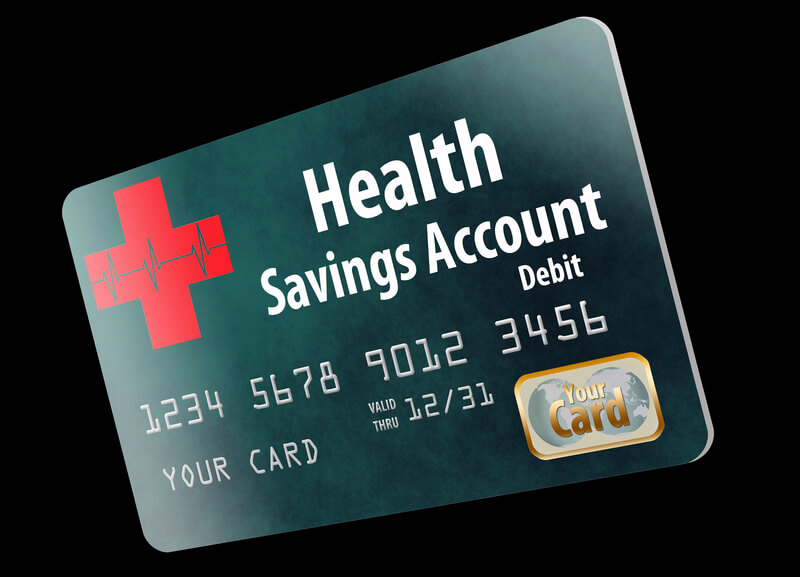
It is no secret that millions of Americans are feeling the pinch of higher costs and are searching for more affordable solutions in every area of our lives. A recent survey reveals that the vast majority of Americans are extremely worried about the rising cost of healthcare. Soon, Congress will debate a spending bill — called “reconciliation” — in which members will look to address affordability.
Congress can listen to constituents and give Americans a tax break by expanding the availability and versatility of tax-advantaged Health Savings Accounts (HSAs).
I spent a dozen years at the Food and Drug Administration, which oversees America’s pharmaceutical development system as it produces medical breakthroughs in everything from heart health to cancer care. I can tell you that America has incredible physicians, researchers and health technology; our problem is access and payment, not quality of care.
However, most Americans believe that our healthcare system is broken. Recently, Gallup revealed that healthcare is, for the first time in five years, Americans’ top domestic concern. Nearly two-thirds said they “worry about it a great deal,” and in another poll, 80 percent of Americans said that healthcare is “in crisis.”
America is producing the best healthcare in history — but we’re not delivering it to patients well, and millions of American families are nearing a breaking point.
A second — and possibly third — budget reconciliation bill presents a rare, and probably final, opportunity for Congress to deliver results for voters ahead of this fall’s midterm elections. Healthcare costs are top of mind in homes across the country, and that anxiety deserves a real response from Washington.
Consumers are demanding more control of their care so they can invest in their health. HSAs can be used to pay for routine and preventive healthcare services, directly reducing out-of-pocket costs. And, unlike insurance, HSAs go with the patient when they change jobs, and they grow as an investment if not fully utilized in any given year, eliminating the dreaded “use it or lose it” for healthcare dollars.
The next reconciliation bill will probably cover a broad range of issues. One of those issues should be to expand HSA access, once again, to help even more Americans lead healthier lives.
Currently, HSAs can be used on everything from allergy treatments to sunscreen. But thanks to an antiquated IRS rule, some of the most popular new technologies and platforms remain off limits for HSA accounts. Congress should enable American consumers by expanding HSA eligibility to all Americans, decoupling HSAs from high-deductible insurance plans, and expanding HSA-eligible expenses to prioritize wellness and longevity through prevention, fitness, health program memberships and screenings. This will support Americans’ demand for healthcare instead of “sick care.”
HSA expansion will benefit all of us by improving how we deliver healthcare and making it more like a free market. Studies have shown that people with HSAs tend to spend less on healthcare, and such control motivates consumers to demand price transparency and shop for the best value.
When people spend their money — as opposed to the insurance company’s money — they make smarter decisions and demand better care, lower prices and more price transparency up front. Encouraging more preventive care would reduce the burdens on the system that drive up overall costs.
The time is now. The last budget reconciliation bill took a historic step in the right direction by expanding HSA eligibility to the 9 million Americans with bronze plans in the Affordable Care Act marketplace. That builds upon the more than 40 million Americans who already have HSAs through high-deductible plans.
Together, nearly half of Americans on the Affordable Care Act marketplace are HSA-eligible — a major step forward for healthcare affordability and access.
The momentum is real, but the work isn’t done. Most Americans are still not eligible and remain shut out of the tax benefits, and poll numbers are sounding the alarm about healthcare cost worries. Expanding HSAs, which 73 percent of Americans support, is the obvious next step. Congress should listen and take this final opportunity to bring down healthcare costs and give more Americans peace of mind.
Deborah Autor is the chief policy officer of Hims & Hers and a former deputy commissioner of the FDA.
Reprinted with Permission from DC Journal – By Deborah Autor
The opinions expressed by columnists are their own and do not necessarily represent the views of AMAC or AMAC Action.





Most people I know here in CA don’t have enough “disposable income”, after taxes, food, meds, fuel, mortgage and insurances, to contribute to an HSA. So….?
I think our problem is, we want it all and we want it now. We were promised it was possible but not told who will pay for it all. We never asked, thinking “government” will pay. There needs to be a reality check and primary responsibility for ones self put on self. There is nothing doctor can do for anyone if we are engaging in activity hazardous to one’s health. Everything in moderation and staying active should be the standard, the rest is up to individual, there is not really medicine to fix what individual screw up and be as good as new. Saving health account sounds good, onus would be on the user as it should be.We as nation are in poor shape, with all the advantages it is a shame, the same shame as the ed. system that despite the money spent turns out illiterates .
That ship sailed with Obama Care , he destroyed Health Care in our Country .
At my company we have an FSA, I designate of my choosing, a total amount for the year that will cover all my doctor copays, Rx, glasses, dental out of pocket charges and the card is loaded with that total amount in January, my payroll takes a little weekly to pay back thru out the year. I hardly miss the weekly deduction. The FSA card is available to use for every medical need at any moment. I like that.
Once the Government takes over our Health Care it will become Bankrupt just like our Country .