
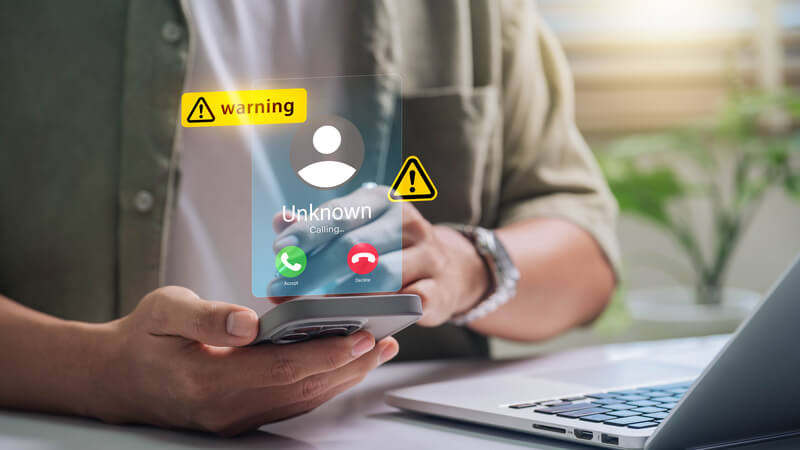
Find out how scammers are using this form of deception to pull off bank & utility scams – and learn how your actions can keep you from being tricked.
Every day, new scams are occurring across the globe, and they are becoming more sophisticated and harder to identify. One of the key reasons for this increased difficulty is the rise of technological advancements, such as the ability to spoof phone numbers.
What Is Spoofing?
Spoofing is a deceptive technique that allows scammers to disguise their identity by falsifying information, such as phone numbers, so that their calls or messages appear to come from a trusted source. This technology is often used in scams, phishing, or cyberattacks to steal data or money, or gain unauthorized access to systems.
Why Are Phone Numbers Spoofed?
In spoofing scams, the scammer doing the impersonation creates a fake caller ID and launches the attack by calling targeted potential victims. Phone numbers are falsified to trick recipients into believing that the call is from someone they know or from an official organization. This deception makes it easier for scammers to gain access to sensitive information or resources. The scammer is hoping that the target will provide information or money or click a malicious code.
Challenges in Detection
Detecting spoofed phone numbers is challenging because the technology used enables scammers to make their calls look legitimate. As a result, traditional methods of verifying caller identity are often ineffective.
Importance of Awareness
People are cautioned to be aware of the high prevalence of spoofing scams. Spoofing can occur in other ways besides phone number spoofing. Other examples include email, text, website, facial, identity, filename extension, DNS, GPS, IP, APR, and MAC. Click here to learn more from Norton about each of these spoofing scams.
Scammers Striving to Appear Legitimate
A common example of spoofing is when a scammer manipulates their phone number to appear as a bank’s customer service line. The recipient may then be tricked into providing account details, believing the call is genuinely from their trusted bank. The caller, posing as a legitimate bank representative, may ask for account numbers, passwords, or other confidential details under the pretense of verifying the account or resolving an urgent issue. Because the phone number seems authentic and the caller sounds professional, many victims comply with these requests, inadvertently exposing their financial data to fraudsters. Once the scammer obtains this information, they can access the victim’s accounts, make unauthorized transactions, or steal funds.
Scammers Impersonating Utility Companies
In another type of popular phone number spoofing scam, an individual impersonates your utility service by spoofing its phone number. Next, the scammers prompt you to share account details by asking you to verify your identity or using other schemes. Increasingly, reports indicate that scammers may already possess your account number, claim your account is delinquent, and threaten to disconnect your utilities unless payment is made. Since the phone number appears to match that of the utility company and the caller has your identification information (likely illegally obtained), many individuals are deceived by this scheme.
How Scammers Obtain Personal Information
Sometimes, scammers persuade individuals to share sensitive information simply through conversation or manipulation. However, in other scenarios, scammers may already possess some of your details, such as account numbers. This raises the question: how do scammers acquire personal information?
One common method involves accessing the dark web, an online marketplace where stolen data is bought and sold. The dark web is a hidden part of the internet not indexed by standard search engines, where cybercriminals exchange personal information, including account numbers, passwords, and other sensitive data. Scammers can unlawfully purchase this information and use it to make their schemes seem more convincing.
Protecting Yourself Against Spoofed Phone Numbers
To safeguard against spoofed phone numbers and related scams, individuals should avoid sharing any personal information during suspicious calls. If you receive a call from someone claiming to represent a trusted organization but the conversation feels unusual or urgent, it is best to hang up without providing any details. Next, verify the caller’s identity by contacting the official organization directly through a trusted phone number that you independently look up. Never assume that the caller is legitimate based on caller ID. Even if the caller sounds trustworthy, it’s still best to guard your personal information by not sharing it.
Step-by-Step Guide: How to Secure Personal Information
- Keep your guard up. Don’t automatically assume that the caller and the phone number are authentic.
- Be cautious and protect sensitive information. Avoid providing account numbers, passwords, or other confidential details during unsolicited calls, even if they appear to be from trusted organizations.
- Hang up immediately if a call feels unusual, urgent, or suspicious. Do not disclose any personal information.
- Verify the caller’s identity by contacting the organization directly using a trusted phone number you have – rather than the number provided during the call. Never call a number provided to you by the caller (potential scammer).
- Stay informed about common spoofing techniques and warning signs so you can recognize potential scams. Don’t fall victim to pressure, threats, or sudden emergencies.
- Regularly monitor your accounts for unauthorized activity and report any suspicious transactions to your financial institution or utility provider.
PECO Impersonation Scam: How Scammers Exploit Technology and Personal Information
In the News
A recent news story highlighted a sophisticated spoofing scam targeting PECO customers. NBC10 News reported the details of the incident, which began when a customer received a call from a “spoofed” 1-800 number he recognized as belonging to Philadelphia Electric Company (PECO). Here’s how this scam went down:
The caller informed the customer of an outstanding payment and threatened to disconnect service unless payment was made by 2:00 p.m. To confirm the legitimacy of the call, the customer requested the caller verify his account information. The scammer provided the customer’s full name and correct account information, making the call appear authentic. The customer then contacted his wife to arrange payment. However, the scammers gave her a different phone number for payment instructions and told her to deposit cash at CVS using a provided barcode. The customers were deceived by this impersonation scam, which relied on a spoofed phone number and unusual payment methods.
How Scammers Obtain and Use Private Information
A PECO representative explained that account details can be obtained through phishing, data brokers, third-party breaches, or by tricking customers into sharing information. Though the exact method used to access the above customer’s information is uncertain, PECO emphasizes that utility scams are persistent, demanding, and often escalate. In the current year, there have been 126 reports of utility scams, with 31 victims losing more than $16,000. PECO does not make financial demands threatening immediate shutoffs, nor do they tell customers to make payments at CVS, deposit cash, or use barcodes. These unusual and difficult-to-trace payment methods are clear signs of a scam.
The Need for Independent Verification
When you receive a call from a number that appears to be familiar or official, and the caller claims there is an issue with your account, it is crucial to proceed with caution. To ensure the security of your account, do not reveal any personal or account information during the call. Do not pay the caller or anyone they connect you to. Instead, end the conversation immediately without sharing details. Then, independently check the status of your account directly. Do this either by securely logging in to your account online (as you normally do) or by contacting the company using a trusted phone number that you already have. Under no circumstances should you dial a number provided by the caller or pay as instructed by the caller, as this could connect you to a scammer and compromise your information.
Understanding the Risks
There is a common misconception that victims of scams are unwise. While education and awareness are helpful, anyone can fall victim to convincing impersonation scams, especially those using technology such as spoofed phone numbers or possessing customer information. The sophistication of these scams requires individuals to be mindful of the advanced tactics scammers use.
Safeguarding Against Scams
To protect yourself, it is essential to take two primary steps: safeguarding your personal information and pausing before acting on urgent requests. These two actions are vital because scammers, whether working independently or as part of large operations, may have obtained your information from illegal sources like the dark web or from data breaches. Making careful decisions is key.
- Safeguarding your private information: Scammers are untrustworthy individuals or organized groups who exploit any opportunity to steal from victims. They may obtain your information illegally and use it to target you. While some breaches are beyond your control, proactive measures such as choosing reputable businesses, maintaining computer security, and using strong passwords can help protect your data. Be mindful not to share or expose your account numbers, social security numbers, financial data, and other sensitive information.
You are under zero obligation to answer texts, emails, or phone calls from unknown numbers, especially those flagged as spam. Many individuals feel compelled to respond, whether by picking up the phone for unfamiliar callers, opening unverified text messages, or replying to communications from unknown sources. However, this curiosity and sense of urgency or pressure can provide scammers with an opportunity to exploit unsuspecting victims. By refraining from engaging with suspicious or unrecognized contacts, you reduce your risk of falling prey to scam attempts.
- Think ahead of acting. Perhaps you’ve heard the phrase “Keep Calm and Carry on.” This mantra was originally created by the British government’s Ministry of Information in 1939 as part of an effort to boost morale at the outset of World War II. However, remaining calm and carrying on are two things that victims of scams can benefit from doing.
When faced with a scam attempt, maintaining composure and not panicking is crucial. Scammers often rely on creating urgency or fear to pressure individuals into making hasty decisions. By staying calm, you can think clearly, assess the situation, and avoid falling victim to their tactics. This approach allows you to pause, verify information, and seek advice if needed, rather than reacting impulsively to threats or demands. Remember, a calm response can be your best defense against fraudulent schemes.
Responding to Scam Victimization
Becoming the victim of a scam is a distressing experience. If you’ve been scammed, it is important to remain resilient and act. The first step is to manage your emotions and avoid feeling overwhelmed. By staying composed, you can focus on what needs to be done next.
The second step is to gather information and report the incident to your affected financial institution. Prompt communication can help limit any further damage and secure your accounts against additional fraud. It may also help you find resolution.
In addition to contacting your bank or credit card company, a third step to consider is reporting the scam to the Federal Trade Commission (FTC) at ReportFraud.FTC.gov or another helpful agency that takes fraud seriously and works toward shutting scammers down.
Finally, should the scam involve financial theft or threats, notify your local law enforcement agency to ensure that the authorities are aware and can assist if necessary.
Reporting scams not only helps you protect yourself and possibly recover funds, but it also contributes to educating others and preventing future incidents. Sharing your experience can empower others to recognize similar threats and respond appropriately.
Understanding Phone Number Spoofing
Phone number spoofing is a deceptive tactic used by scam callers to make it seem as though their calls originate from a legitimate phone number. This manipulation allows scammers to disguise their identity, increasing the likelihood that recipients will answer the call. Today, caller ID and the number displayed on your phone can no longer be relied upon as indicators of authenticity. It is important for everyone to recognize that the appearance of a familiar or trustworthy phone number does not guarantee the call is genuine. Awareness of this issue is crucial in protecting yourself from potential scams.
Disclosure: This article is purely informational and is not intended as a substitute for professional advice.







I was spoofed several years ago which resulted in 10 or 12 call backs everyday wanting to know why I called them. When I called the phone company I was told they could do nothing to help me, Between these calls and 10 or 12 Spam calls everyday I got to the point I let the machine answer every call. Three years ago the landline was removed, don’t miss it at all.
Yep, I get those scam emails and text messages from the USPS about an undeliverable package, and the DMV and toll road service about delinquent accounts accompanied by threats. Also, watch out for texts about an unauthorized charge on your credit card. Those are tricky if you use a credit card often.
Our numbers were private till Obama let everyone have access to all numbers during his second term. So the Scammers can call us all, but who developed the technology to Spoof the numbers they call from? Technology created this problem, can it not counteract this?
I have developed a call blocker device that checks incoming caller ID numbers to an authorized number list the user sets up. It will be coming to market in the near future. Your phone won’t even ring unless the number is authorized. It also can receive and decode DTMF signals (using the caller’s telephone keypad) in case caller ID doesn’t come through or someone such as a friend or family member is calling from a different number because their cell phone died, etc. Of course, scammers can still spoof a number you have identified as authorized so you still need to be vigilant. But my call blocker will end telemarketing, survey taking and many scammer calls.
If you want to be elected president, just figure a way to prevent this practice.
With A.I., self-driving cars, space travel, and all the latest tech stuff, this should be an easy fix.
Use Truth Social AI to screen phone numbers#
ALL
If on TS