
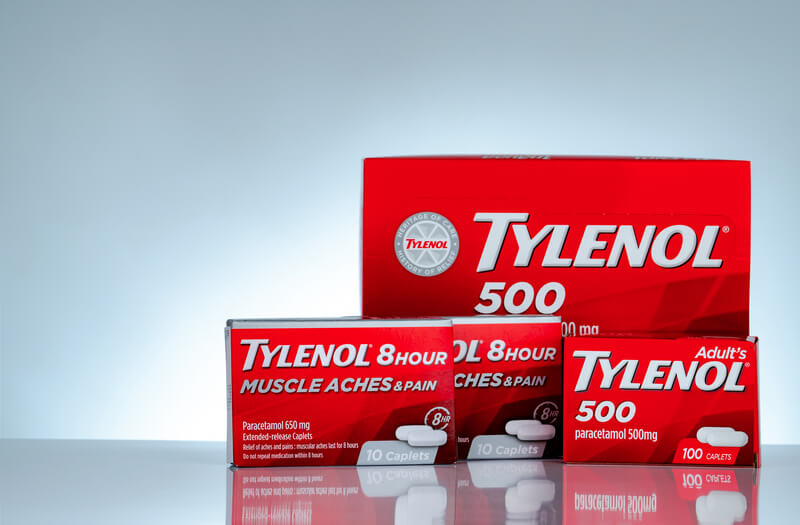
The stakes of a case about Tylenol and autism are enormous.
The debate over whether Tylenol causes autism has entered the courtroom. A federal appeals court is considering a case that could affect not only one of America’s most widely used medications but also the integrity of scientific evidence in court.
Starting in 2022, plaintiffs’ lawyers began filing lawsuits alleging that prenatal exposure to acetaminophen, the active ingredient in Tylenol, causes autism and attention deficit hyperactivity disorder (ADHD) in children. Several hundred of these lawsuits were consolidated into a single mass tort case and assigned to Judge Denise Cote, a federal trial court judge in Manhattan. In two thorough opinions, totaling more than 230 pages, Cote carefully analyzed the methodologies used by each of the plaintiffs’ six expert witnesses. She excluded all of them as unreliable.
Last November, the New York–based Second Circuit Court of Appeals heard oral argument on whether Cote was right to block the plaintiffs’ experts under Federal Rule of Evidence 702, which allows judges to disallow questionable scientific claims into evidence. The appeals court has yet to rule on the case.
Rule 702 sets a higher bar for expert opinions than those from non-technical “lay” witnesses. Lay witnesses do not need to show a “scientific” basis for their opinions to be admitted. By contrast, federal trial court judges must serve as “gatekeepers” for expert testimony under the 1993 Supreme Court decision Daubert v. Merrell Dow Pharmaceuticals. Rule 702 further directs judges to exclude testimony that is not based on “reliable principles and methods.” The appeals court’s decision could have far-reaching consequences, shaping the outcome of other major product liability cases where this rule is frequently invoked.
Previously, judges had often neglected their gatekeeping role, even after Daubert and the codification of Rule 702 in 2000. As the Fourth Circuit lamented in a 2021 ruling, the admission of unreliable scientific testimony can tilt the outcome in products liability cases, where expert analysis grounded in specialized knowledge unfamiliar to most jurors is a standard feature.
In response, the Advisory Committee on the Federal Rules of Evidence (the entity authorized under federal law to propose amendments to those rules) recommended a stricter standard. Rule 702’s new formulation went into effect in 2023. Expert testimony must now also reflect “a reliable application of the principles and methods to the facts of the case.”
As the advisory committee explained, the purpose of the amendment was to clarify that courts are authorized, not only to assess an expert’s methodology, but also “the conclusion that the expert has drawn from the methodology.” The revised rule underscored that judges must bar expert testimony when the expert’s conclusions are separated from the underlying methodology by “too great an analytical gap,” to quote the Supreme Court’s opinion in General Electric Co. v. Joiner (1997).
The stakes of the Second Circuit appeal are greater than the Tylenol case’s outcome. Without accurate, informed scientific assessments, liability in mass tort cases becomes disconnected from evidence. In medical and pharmaceutical products cases, abuse of the tort system hurts those in need of medical help by raising drug costs, delaying the introduction of new devices, and diverting resources to “defensive” medicine — non-medically necessary procedures undertaken for the purpose of reducing tort liability.
Outside of the health-care sector, abuse of the tort system places enormous pressure on manufacturers and retailers of widely used products to settle weak cases due to litigation costs and reputational risk — not because of liability. That dynamic encourages more meritless claims. Over time, it freezes innovation and diminishes economic dynamism.
The fundamental flaw of the Tylenol mass tort case is that, as even the MAHA-aligned Food and Drug Administration Commissioner Martin Makary acknowledges, there is no reliable evidence of causation between prenatal Tylenol use and neurodevelopmental disorders. A former Johns Hopkins University School of Medicine–tenured professor, Makary explained in a letter to doctors last September that while “many studies” link acetaminophen usage and autism, “a causal relationship has not been established and there are contrary studies in the scientific literature.” The FDA has also announced that it has initiated a process to update the Tylenol label to reflect evidence suggesting that the use of the pain medication by pregnant women may be associated with an increased risk of autism and ADHD in children.
The Tylenol mass tort cases bring what Makary calls an “ongoing area of scientific debate” into the courts. But as Judge Cote correctly pointed out, the gatekeeper duties of federal district courts prevent them from “forging new trails in scientific thinking.” While the rise in autism diagnoses in the United States over the last several decades is concerning and requires additional study, the roles of genetics, maternal health, and other factors are still not fully understood and should be examined. In 2022, the FDA surveyed the scientific literature and concluded that studies of acetaminophen use during pregnancy were constrained by “the possibility of unmeasured confounding,” including maternal illness and age, other medications, and genetic factors.
During oral argument, the Second Circuit judges scrutinized aspects of the trial court judge’s rulings on the expert witnesses. At the same time, however, the appellate judges also voiced concerns about the risks of trying to decide cases of significant public health importance when much about the genetic and other potential causes of autism remains unknown. Judge Gerard E. Lynch noted that the “scientific inquiry” on autism’s causes will continue apart from the Tylenol tort cases, and the actual “state of the science” could differ from the expert opinions that the jurors in these cases are asked to consider. It’s a concern that the judges should not take lightly. Just weeks after the Second Circuit argument, a Lancet review of 43 studies found “no evidence” that use of acetaminophen during pregnancy increases the risks of autism or ADHD among children.
The need for further scientific inquiry into the origins of neurodevelopmental conditions should caution the Second Circuit against greenlighting the testimony of the plaintiffs’ experts. Their analyses, as Cote concluded, “permitted cherry-picking, allowed a results-driven analysis, and obscured the complexities, inconsistencies, and weaknesses in the underlying data.” This left too large an “analytical gap” between the existing scientific data and the conclusions that the plaintiffs’ experts are asking jurors to reach to be admissible under Supreme Court precedent and Rule 702’s recently tightened standard.
Allowing jurors to consider expert testimony that demonstrates “association rather than causation,” in the words of the Fourth Circuit, will invite verdicts “steeped in speculation.” The law requires a higher standard. To protect the public against a runaway tort system, the Second Circuit should affirm Cote and reinforce Rule 702’s vital gatekeeping function.
Michael Toth is director of research at the Civitas Institute at the University of Texas, Austin.
Reprinted with Permission from National Review – By Michael Toth
The opinions expressed by columnists are their own and do not necessarily represent the views of AMAC or AMAC Action.







The plaintiffs’ timeline is backwards.
Their proof needs to be obtained before their lawsuit is filed, it is not magically going to appear because their lawsuit is filed.
Agree with rhe Judge and below comments refuting the analysis by the “experts”
and the lawyers. The sheer percentage of NON issues should be enlightening to even a novice.
You have to be absolutely and completely braindead to actually believe Tylenol causes autism.
Still espousing Stone Age thinking, Fred?
I am not so sure this is an appropriate article for this forum. I seems that we can’t suggest it does or that it doesn’t or if it has a role. There “appears” to be an association but we don’t know what that association is or if it is significant. And the population most involved are a very small portion of our membership. It does demonstrate how difficult, costly and time consuming medical research is.
too bad, we were counting on him to make you smart enough to take a dump without help from your hero biden.
Since when does a hazardous material cause harm? After it is used extensively and when it’s effects becomes obvious. Unfortunately if Tylenol causes the unfortunate side affects, any reasonable person would ask when did they manifest those conditions and who correlated those findings?
Tylenol is a billion dollar business with doctor endorsement from the beginning, covering up any adverse issues would be high suspected as any problem causing products. All medicines have adverse reactions and side effects depending on who’s taking them, we just haven’t gotten to yours yet.
Check and see what the Japanese are taking or not taking, while their women are pregnant. Because they haven’t had a single case of autism,ADHD, or Downs Syndrome.
Somethings UP here in the US
There are other reasons the cases of Autism diagnoses seem to have “sky-rocketed”. One of the big ones is that now other neurological diagnoses like Asperger’s is as of several years ago included in the Autism “spectrum”. Asperger’s is a condition in which the child has little control over their emotions and their anger, sadness, etc. are stronger than in “normal” children. This causes behavioral issues not only at home but also in school. If there is no documentation from formal testing, why would an OTC drug by banned? Some people just want a cause that they can blame the drug company for and thereby get a lot of money.
Having people with no scientific knowledge and no understanding of the scientific method acting as judges and juries in these cases is appalling. Most lawyers are utterly unversed in advanced mathematics and woefully lacking in scientific knowledge. In no way should any of these people make any decision regarding anything to do with math or science. They have no basis on which to judge.
Back when I was a nurse in the 1970’s we knew that Tylenol/acetaminophen would cause liver damage if used on a consistent basis. Liver damage was listed on every bottle with the advise to only take it short term. The reason Tylenol was seen as a viable pain relief alternative was, it had no blood thinning action and would not cause you to bleed. The liver damage effect is why I never buy, or use, Tylenol for anything. Now it seems to have been linked to autism through a mother’s consistent use of it for discomfort during pregnancy.d All those who are either are invested in, or working for, the company that produces Tylenol will be in denial, and in defensive mode. The company that produces the product will produce their own paid experts to say the claim is false, and that there is no link. How much money will they lose if a few pregnant women choose to avoid taking Tylenol? Very little. We do tend to be a law suit to gain from a perceived harm society, so I can see how the manufacturers of Tylenol want more clarity, and to have their say. If it is true, and their product causes so much trouble, I hope they would restrict their marketing, and spend some of their high profits to help families who have proven their cases.
Tylenol has been pushed as “safe” by the medical professionals for every ache & pain for 50 years, oops – “Tylenol (acetaminophen) may increase the risk of heart attack.” The link to autism is certainly plausible. Best to stay away from every medication (unless absolutely necessary) during pregnancy.
Why are young children taking this med. I believe we have given many products to our children that can cause autism, Many many shots and we have weekend our immune system and our bodys don’t know how to protect it self any more. When I was young it was a Polio shot and if I got a bad cut it was a tetanus shot.
This is a very helpful explanation and I agree that the causation verses association needs to be identified with little room for doubt. Those affected by autism want and need an answer as to the cause! I was so sad to hear a link between Tylenol and theses neurologic conditions, but will forever exercise greater caution with it’s use.
What about drugs, what do they cause, is anyone suing Cartels? whatever woman takes or uses ends up in the baby ,smokes, alcohol, drugs, marijuana,ultimately she is responsible.