
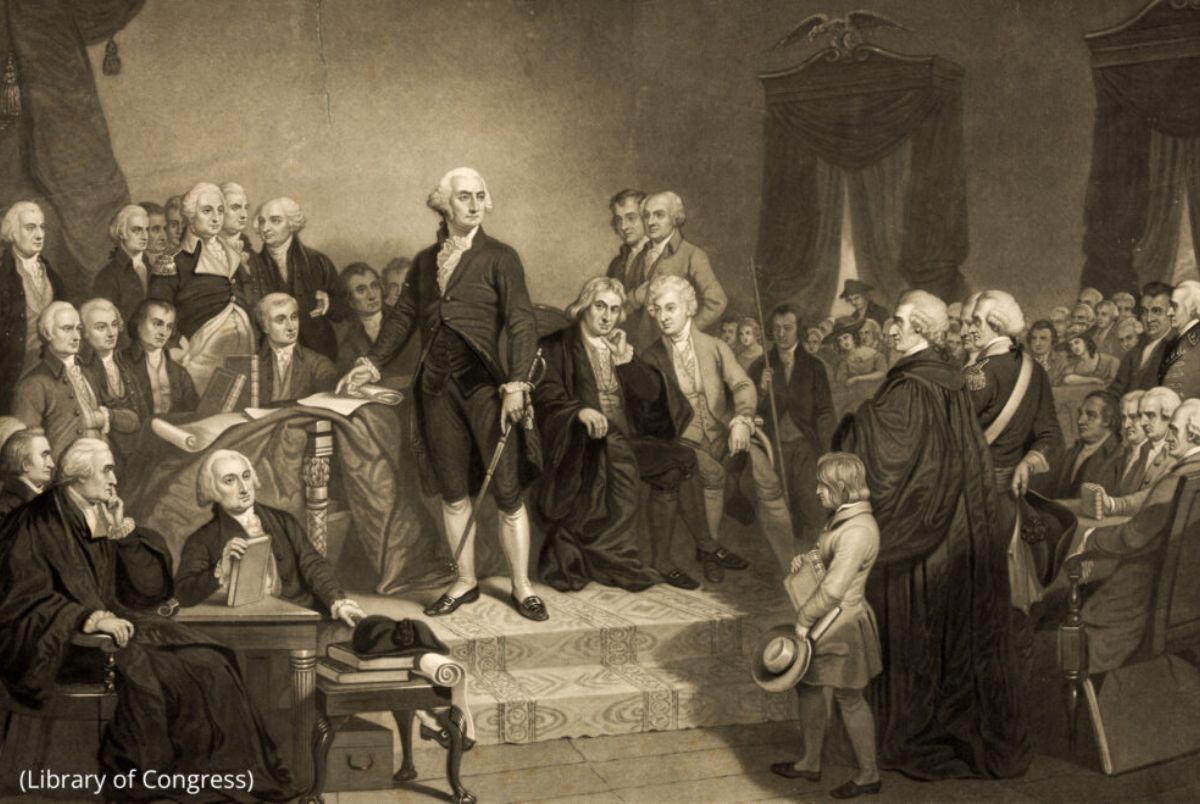
On March 4, 1789, the First Federal Congress of the United States convened under the new U.S. Constitution. It met for the first time at Federal Hall in New York City, marking the beginning of the nation’s constitutional government. This inaugural session was not merely ceremonial — it was a foundational moment that shaped the mechanics and responsibilities of the federal legislature and brought to life a governing system that until then had been only an outline on parchment.
At the heart of this moment was the challenge of translating the abstract principles of the Constitution into functioning law and institutional practice. The Constitution had left many critical decisions unresolved — how the legislative body would operate, how its officers would be chosen, and how it would interact with the executive and judicial branches. The First Congress was charged with filling in these details and doing so without the benefit of precedent. As James Madison, one of its most influential members, later observed, “scarcely a day passes without some striking evidence of the delays and perplexities springing merely from the want of precedents.”
Once organized, the First Congress quickly set to work. One of its earliest achievements was the adoption of oaths of office, applying not only to members of Congress but also to state legislators, federal executives, and judges — thereby creating a shared commitment to uphold the Constitution across all branches and levels of government. It passed revenue legislation that imposed duties on imported goods, establishing the financial underpinnings of the new federal government.
The Congress also created several key institutions of the federal government. It enacted statutes establishing the Departments of State, War, and Treasury, as well as a temporary postal department. A federal judiciary was also created, laying the groundwork for the nation’s court system. Other early laws set compensation for government officials, authorized the construction of lighthouses, and provided funding for negotiations with Native American tribes. Importantly, the First Congress reenacted the Northwest Ordinance of 1787, a landmark law that governed the settlement and political organization of much of the nation’s western territories.
Life as a member of Congress in the late 18th century was both an honor and a hardship. Serving in New York City and later in Philadelphia was socially stimulating but financially burdensome. Travel was lengthy and difficult, and legislators received a modest daily stipend of just six dollars — a factor that contributed to resignations and turnover during the 1790s.
In its brief but consequential span, the First Federal Congress solidified the legislative foundation of the United States, establishing procedures, institutions, and legal frameworks that remain central to American government today. It transformed the promise of the Constitution into enduring practice, laying a foundation that would guide the Republic for generations.







My kids are especially interested in history, and early American is their favorite to know. Thanks to God for those men, I’m praying for our country’s continued growing faith. The fight against Sharia, and other basic foolishness has just begun and we should be asking God Almighty, the God of Israel specifically for directions that He approves of. Thank You Lord! Amen