
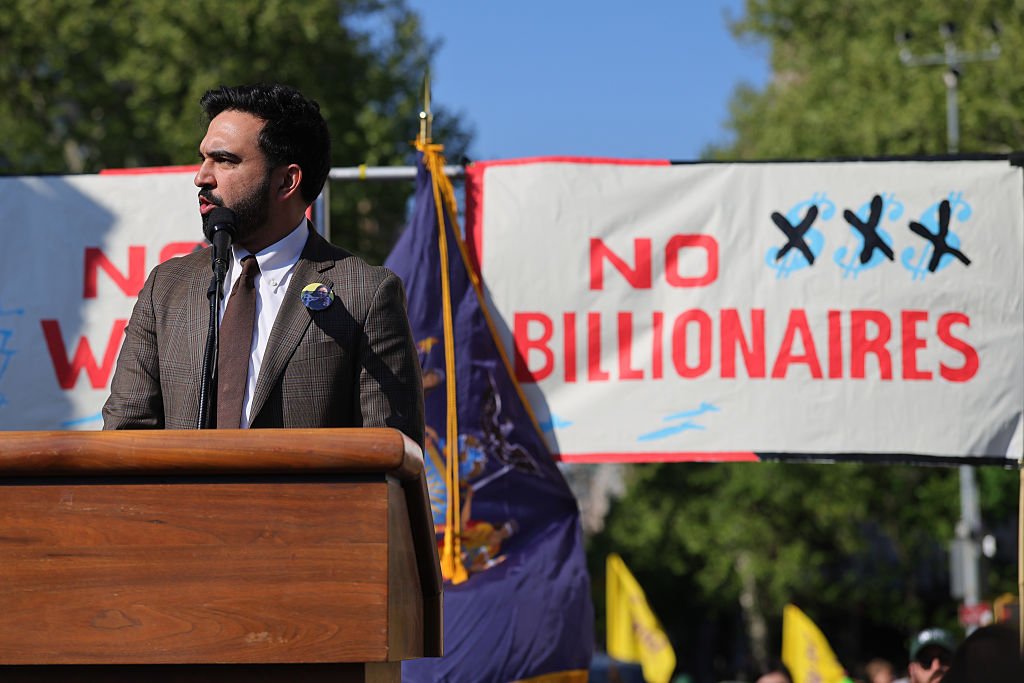
Under Mayor Zohran Mamdani’s New York City, 16 people experiencing homelessness froze to death in a single brutal winter weekend—found across Manhattan, Brooklyn, and the subway system. These tragedies occurred despite the mayor’s $100 million affordable housing campaign, which promised 200,000 new homes, and New York City spending roughly $3 billion in fiscal year 2025 on homelessness-related services.
The failures highlight a troubling reality: Government programs can provide aid, but they often fail to change lives.
Poverty, homelessness, broken families, and addiction have long plagued American communities. Policymakers have attempted to solve these problems through government intervention and social programs. These programs may provide temporary relief to families across the country, but the root of the problem remains neglected.
Because the programs are administered through bureaucratic systems, they tend to treat people as cases to be managed rather than individuals to be restored. Social programs can unintentionally erode personal accountability and often lack personal investment and support.
This is why religious communities succeed where social programs fail: Government aid manages needs while religion changes behavior. True change is not imposed—it is chosen. When people accept accountability for their decisions, they can alter the course of their lives.
Religion treats aid as part of a community, not as a handout. When a congregation offers support, it does so within a relationship that expects growth, contribution, and accountability.
Change Happens in Community
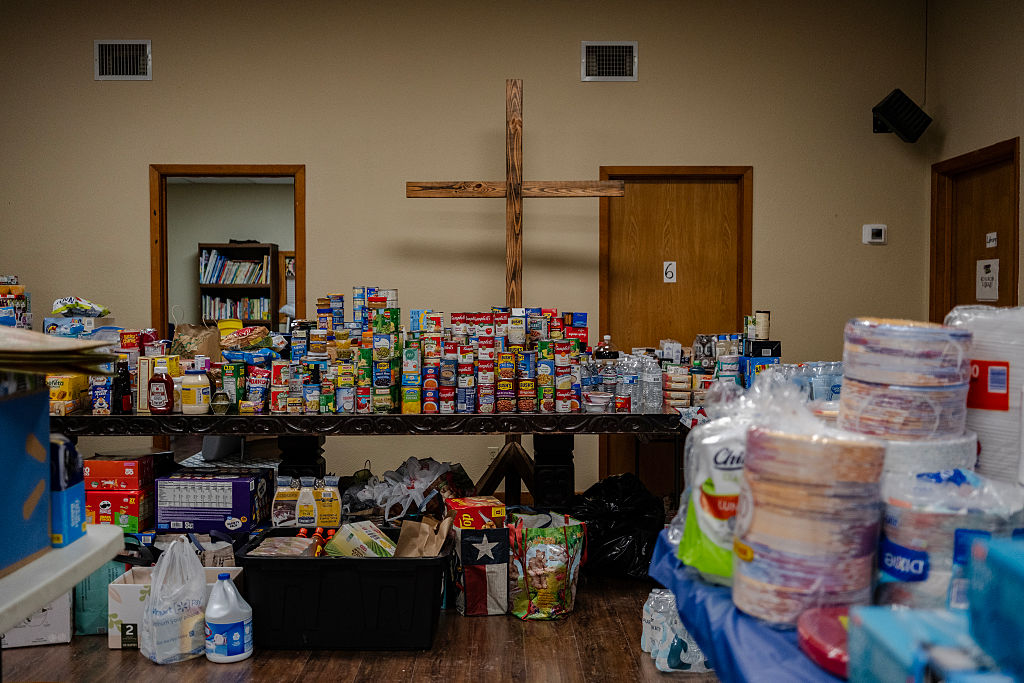
James, a single father of two from Ranger, Texas, was struggling to make ends meet while facing unemployment and the daily challenges of raising his children alone. Desperate for help, he turned to St. Rita’s Church for assistance, as Catholic Charities Fort Worth reports.
At Catholic Charities Fort Worth, James enrolled in a program designed to provide financial assistance and equip him with the tools and guidance needed to navigate his challenging circumstances.
Perhaps the most important part of the program was the support network it offered—especially Dina, his program navigator.
“Sometimes he would call me crying,” Dina said, “but I felt like those were breakthroughs for him because he had somebody to at least, you know, confide in and not judge him. I think it gave him confidence and courage to know that somebody was there with him, walking that path with him.”
Catholic social services demonstrate how religious communities pair material assistance with emotional support. In 2024, the network of Catholic Charities agencies across the country served more than 28 million meals and provided emergency housing services to nearly 295,000 people.
Pope Benedict XVI taught: “The State which would provide everything, absorbing everything into itself, would ultimately become a mere bureaucracy incapable of guaranteeing the very thing which the suffering person, every person needs: namely, loving personal concern.” He emphasizes that true help and lasting change are rooted in love.
Ironically, churches are both communal and individual. As members grow and encourage others, they themselves are transformed.
The Need for Accountability
Government aid is built on eligibility, not community. People often receive benefits without a clear expectation of change, which can contribute to cycles of dependency rather than progress.
Temporary Assistance for Needy Families was created to promote work and self-sufficiency, but over time, its reach and incentives have weakened. In the 1990s, this program replaced the traditional welfare system. Since then, the share of families in poverty receiving cash assistance has declined dramatically.
Today, only 20 out of every 100 families in poverty receive Temporary Assistance for Needy Families support. Although work participation requirements exist, the national average work participation rate in the program was just 37.4% in 2023.
Because benefits are tied to eligibility and compliance rather than personal growth, accountability becomes procedural instead of relational.
The Church of Jesus Christ of Latter-day Saints demonstrates how combining material assistance with accountability can help individuals move out of hardship. In 2024, the church spent $1.45 billion on humanitarian aid and welfare programs. The church has stated that its welfare program “is not only a way to help members in temporarily difficult circumstances, but also stresses self-reliance as a way of life, including education, health, employment, family home production and storage, family finances, and spiritual strength.”
Accountability paired with practical skill-building helps individuals escape difficult situations rather than remain trapped in them.
The LDS Newsroom shared Charlene Cummings’ firsthand experience with the welfare program. Having faced childhood abuse and living with a diagnosed mental illness, Charlene recently moved from a group home into her own apartment.
She credits her independence to the care and guidance of her local church community. Church members helped her develop practical skills like budgeting, savings, and meal planning. When financial gaps arose, the Church provided food and financial support. “The Church has become the family I’ve never had; they’ve taught me things I’d never learned,” Charlene said.
This is due to the LDS church’s emphasis on self-reliance.
Some may argue that government programs are essential because they provide large-scale, legally mandated, and widely accessible support. Yes, social programs can offer meaningful assistance to many people. However, religious communities often deliver aid in ways that are more personal, relational, and adaptable than bureaucratic systems, particularly when it comes to fostering long-term change.
In essence, social programs primarily provide material needs. While this may offer temporary relief, it does not create a sustainable path toward long-term success. Religious communities, however, offer the essential combination of love, accountability, and material support that leads to genuine progress.
Reagan Campbell is an intern for The Daily Signal.
Reprinted with Permission from The Daily Signal – By Reagan Campbell
The opinions expressed by columnists are their own and do not necessarily represent the views of AMAC or AMAC Action.





Government run anything is a recipe for fraud. Keeping people dependent on government subsistence can be tied to voter registration. You wouldn’t want to elect politicians that will cut off your free stuff would you? Welfare recipients are ripe for the taking, easy to sway, exploited with out effort and keeping them in place.
It comes down to the Government decided to start welfare programs that have been abused from the beginning and many generations of lazy people who won’t earnestly find the jobs to support their families. The Roman empire started this system called “doles” that helped lead to the downfall of this empire. As for the church, they were called to be the lead role of helping the poor but can’t maintain it since a majority of people don’t tithe properly to their congregations. Churches can only do so much if they aren’t receiving the funds to help the poor. Since the government is involved, how much of the taxpayer’s money is being misused? The welfare system needs to be reduced from the government and the people on such rolls need to get off their duffs and get a job.
Government assistance is a form of socialism.
Progressive Leftist are communist. Communist HATE religion, because it is an allegiance to something other than the collective state. Clerics should realize this and preach this fact if they want to survive communism.
Our government welfare programs have become nothing but a money tree for those who accept it. The radical liberals see this as a win-win because as long as they can keep and perhaps dole out more, all of these people will vote for them. They do not care about people, they just want to have power over them and to use them for padding their votes. Until Musk and Trump worked on finding the fraud in government, no one even thought about it. I really wish that Musk will one day become part of a watchdog committee that will keep tabs on welfare and assure the cheating in elections is ended.
Government has no capacity for love.
May I say that the Church of Jesus Christ of Latter-Day Saints never limits its humanitarian aid to serve only members of the church. It distributes food, wheelchairs, medicine, etc and services including providing sustainable sources of potable water to people and communities worldwide, often partnering with other charities.
They need to find God and get a job. Pray Pray Pray it’s good for the soul.
Working with recovering addicts has been wonderful. We transport them from a facility that provides assistance to help them get out of their addiction. They know how they got into their addiction so we don’t discuss it. We do try to make them understand that they can learn from their experiences. That makes the experience not a waste of time. We encourage them to assist family and friends to help them stay away from addictive substances.
Most have never had someone give them encouragement like this. It generally adjusts their character and causes them to do some introspection. We then pray with them.
When caring and love enters in a program things change for the better. The govt hands out money and don’t require responsibility or anything in return. The govt is invisible. When your neighbors and fellow church members give one on one help it changes that person. It doesn’t feel entitled. Other people are helping him or her on their own time. They are there 24/7 for them the govt isn’t. We are never going to solve the problem of the homeless and the poor until we humanize the organizations. And govt can never do that. Billionaires that built fancy homes for them are stripped in weeks of everything that will
make them money on the street. These billionaires feel smug when they open another condo building for the poor and or homeless. You treated the visible problem not the person not the human beings. CA threw billions of dollars at the homeless problem in LA and SF it only increased. They got free needles, free health care free drugs you think those people are going to give up their lives on the street? They need care 24/7 one on one with someone that accepts them as they are without demanding they follow certain rules and deadlines. You don’t cure these people that way. A lot I blame on our education system. They don’t prepare many kids on how to live, deal with money or know where to go for help. Teach them how to fill out a job application or steer them in the direction of a teachnical school or junior college. We are not all Harvard brainiacs. Or have the money to go there to buy a diploma. And be brainwashed at the same time. Local people taking care of their neighbors. Who know what is needed. Not hatred and disdain. But compassion and understanding. Today I saw a handful of demonstrators standing on a street corner proclaiming Trump and the GOP were morally corrupt. I think that distinction belongs by the left democrats who want to kill ICE agents and mutilate small children into a gender they don’t know anything about. Just to kill off a whole generation for population control. And keep
the illegal criminals here to kill our women and children. That is moral?
Essentially, faith community efforts and the government efforts are oxymorons. Little do they have in common. Few efforts are comparable. The rate of “success” is determined on fully diametric opposites. While we ponder the sad result of government and tout the good results of faith communities, one thing is missing…..the cooperation between the two. While we cling to the constitutional “separation of church and state” it comes to mind that there could be a joint effort to deal with the problems of lost and homeless people. Govt. could be a source of funding, carefully monitored and accounted for, while what works in the faith community would benefit from helping in the important area of the cost. I don’t propose this without knowing money is a problem when the amounts that come to billions is presented. I do know that even a small church with a big heart is far too often strapped for funds and cannot do what they seek to do for the needy. Meanwhile government seems to have loads of cash and giant fraud issues that make help a side note. If “hand-outs” went to an organization that proves to be frugal, useful and worthy in its successes, I imagine strides could be made that far outstrip what is going on now……I am all for smaller government. And know the risk of this kind of venture….but the risks can be seriously controlled by audit and accountability. Mis-management is always possible but to me, far less a challenge when you are dealing people who operate out of love as opposed to making people things to fix.
When people hopefully someday learn that government are not your friends…Bernie ,,Commie Mandani,,,,,AOC…..come on Wake Up. These people tell you what you wann hear every two and four years so you’ll vote for them.
‘Catholic Charities’ creates more problems than they fix.
There is no room in NYC for 200,000 houses
Catholic Charities ?????????????
Social Welfare is more properly the Church’s domain, but over time government has filled the vacuum where the Church has failed or withdrawn.