Radon awareness month is a valuable lifesaving effort to educate people about radon, a naturally occurring, invisible, and radioactive gas that can cause people harm. What’s scary is that you can’t see radon, you can’t smell it, and you can’t taste it. Find out how to keep you and your family safe from this silent, potential killer.
Twenty-eight truths about radon:
- January is designated as National Radon Action Month (NRAM) by the U.S. Environmental Protection Agency (EPA) to raise awareness of the dangers of radon and encourage testing.
- Radon is a naturally occurring radioactive colorless and odorless gas from uranium, thorium, and radium decay in soil, rock, or water.
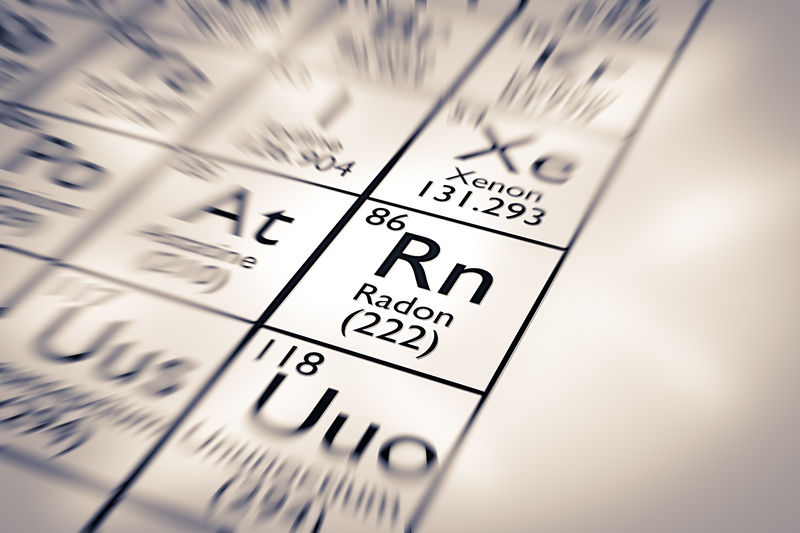
- Radon is a heavy noble gas (element Rn, atomic number 86).
- Inhaled radon releases radiation that over time can damage lung tissue and cause lung cancer.
- Exposure to high concentrations of indoor radon is particularly dangerous.
- Children and pets are at increased radon risk because they breathe faster relative to their body size, have developing or smaller lungs, have immune systems that are maturing, and spend more time indoors and closer to the ground.
- Exposure to radon does not have immediate signs; effects can develop over years.
- Radon gas decays into radioactive particles that can get trapped in lungs. This may lead to lung cancer – but not everyone exposed will develop lung cancer as other variables may come into play.
- Exposure to radon is a serious yet preventable health risk. That’s why homebuyers are encouraged to test their homes before moving in and reevaluate their homes every few years.
- Radon is the leading cause of lung cancer deaths among nonsmokers in America.
- Smokers with high radon levels face significantly increased synergistic risk.
- This poisonous gas claims the live of about 21,000 Americans each year.
- Radon has been found in every state.
- Pennsylvania is known to have one of the most serious radon problems in the U.S.
- Homes built on uranium-rich soil or near certain rock formations are at higher risk of radon.
- Radon can be found outdoors as well as indoors, but it can build up indoors.
- Radon can seep into structures through foundation cracks and building materials and build up in poorly ventilated spaces. Radon can also enter through floor drains, sump pits, crawl spaces, gaps in wires and pipes and more.
- Homes with basements and underground areas with poor airflow/ventilation can potentially trap radon. Proper ventilation and creating escape routes for trapped radon is vital.
- Radon can be present in well-sealed and drafty homes as well as homes with or without basements.
- Well water can contain radon that can dissolve in groundwater and be released into the air when water is used.
- The U.S. Surgeon General urges all Americans to protect their health by testing their homes, schools, and other buildings for radon.
- Testing one’s home for radon using a kit is easy. Test kits are widely available online and at home improvement centers.
- Testers follow directions and place the kit in a recommended space. After a brief testing period, they mail the kit to a professional testing service company who will provide the results.
- Since radon is undetectable by human senses, testing is the only accurate way to determine radon levels.
- Radon levels are measured in picocuries per liter (pCi/L). This essentially measures the level of radioactivity.
- If your house has radon, it can likely be professionally fixed. Mitigation is necessary if radon is at or above EPA action levels (4 pCi/L).
- Per EPA, “Help is available to fix a radon problem. You can call your state radon office to find qualified radon mitigation in your area.” Costs can vary depending upon how your home was built or how you use it. However, they explain, “Most homes can be fixed for about the same cost as other common home repairs.”
- Continuous monitoring systems that measure radon levels in real time are available. They are mainly worth the money as radon values can fluctuate. These provide data over a long course of time and send alerts if levels get too high, thereby delivering homeowners great peace of mind.
Why radon awareness month matters
The EPA and CDC advise people to stay informed about radon risks, share safety information, and test their homes for this radioactive gas. Radon is undetectable without testing, but exposure can be prevented. If high levels are found, mitigation makes homes safe. Homeowners should be proactive in prioritizing safety and encourage others to do the same.
Disclosure: This article is purely informational and is not intended as a substitute for professional advice nor recommendation for any company.
[adrotate banner=”1197″]