
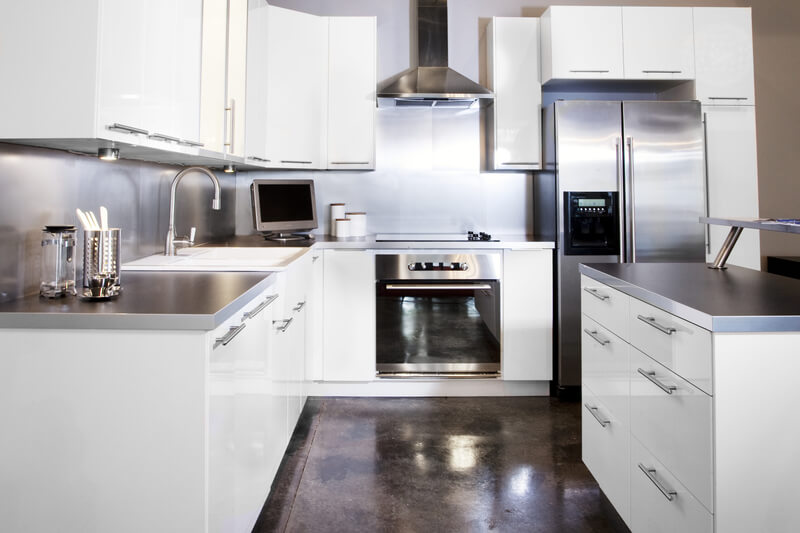
It’s frustrating when appliances suddenly stop working. Confused about whether to repair or replace basic household appliances that have gone on the fritz? This information can help. Also discover bonus tips to protect your household from unexpected appliance failures.
Most homeowners have had an appliance break or fail at one time or another. Whether it’s a dishwasher that stops mid-cycle, an oven that won’t preheat, a freezer that’s melting, or a dryer that refuses to spin, failing appliances can happen to anyone. In such conundrums, homeowners are faced with three options: replace the appliance, call a repair person, or troubleshoot the problem and fix it yourself. Let’s examine three pros and cons of each option:
Replacing an old appliance with a brand new one:
Pros:
New appliances typically come with one-year manufacturer warranties.
New appliances incorporate updated technology to outperform older models.
New appliances use less energy and can save money over time.
Cons:
Cost is a major drawback to buying new appliances.
Buyers may incur long waiting times for shipping.
Luxury appliance parts are pricey to repair.
Replacing a broken appliance with a used one:
Pros:
Cost is well below that of a new appliance.
Environmental factors by giving the appliance a second life.
Access to vintage and hard to find appliances.
Cons:
Previous use can lead to dependability issues.
It is likely to have outdated technology.
Old appliances typically use more water and electricity and are costlier to run.
Calling a repair person to fix an appliance:
Pros:
If the fix is straightforward, it may be cheaper to repair than replace.
If the appliance is still under warranty, it may be fixed for free or at low cost.
It is better for the environment to fix it than toss it.
Cons:
In some cases, it may be more expensive to repair it than to replace it.
Replacement parts may be challenging or impossible to find.
The machine is still old so other parts may soon break.
Fixing an old appliance oneself:
Pros:
Reading the appliance manual and troubleshooting may lead to a simple fix.
Money saving if you know what you’re doing.
No shopping or financing is needed.
Cons:
Potential safety hazard if you don’t know what you’re doing.
Parts may be hard to find on one’s own.
Potential to mess up by attempting to fix the wrong parts.
The takeaway:
There are pros and cons to every decision. Here are some general rules of thumb:
- Recognizing when an appliance is past its prime: When appliances have passed their ideal “performance dates”, meaning that they’ve exceeded their longevity date, it is typically time to buy new.
- Seeing the big picture: People purchasing newer appliances should not only consider purchase price but also consider the utility bill(s) for operating the appliance over its lifetime. Manufacturers typically offer this information on energy guide labels so that buyers can make educated decisions.
- Acknowledging your limitations: While simple troubleshoots are likely fine, only perform DIY repairs if you know what you’re doing, and no safety issues are present. Otherwise leave repairs to the experts.
Interesting statistics about appliances:
- Per Direct Energy, appliances and electronics account for about 23% of a household’s energy costs, with a whopping 54% going toward A/C and heat. Water heating accounts for 16%, refrigeration 4%, and lighting 4%.
- Appliances are typically broken down into two major categories: major appliances and minor appliances.
- Major appliances like an oven or refrigerator are large and are sometimes built in. Most major appliances are typically considered as transferable property in real estate transactions.
- Minor appliances are smaller and portable gadgets. They are generally not transferred in real estate transactions.
- Per Accio, “The global household appliances market is projected to grow significantly, driven by smart technology adoption, energy efficiency trends, and online sales channels.”
- Hot selling minor appliances on Amazon include digital air fryers, Smart coffee makers, and more.
- There is growing demand for compact designs, such as space saving mini refrigerators to fit smaller home spaces and urban designs.
- Modern trends in home décor include integrated kitchen appliances, which are built-in units that blend seamlessly into a kitchen. Most are designed to be hidden behind cabinet doors to provide kitchen spaces with a sleek look.
Major household appliance longevity & average price chart
| APPLIANCE | AVERAGE LIFESPAN* | AVERAGE PRICE** |
| Air conditioning | 7-16 years | $3,000 |
| Clothes dryer | 10-13 years | $1,000 |
| Clothes washer | 10-13 years | $1,000 |
| Dishwasher | 8-12 years | $850 |
| Electric range/oven | 13-15 years | $1,100 |
| Freezer (upright) | 12-20 years | $850 |
| Furnace | 15-25 years | $5,000 |
| Garage door opener | 10-15 years | $450 |
| Garbage disposal | 8-15 years | $550 |
| Gas range/oven | 15-17 years | $1,100 |
| Heat pump | 10-15 years | $6,000 |
| Microwave (built-in) | 7-10 years | $400 |
| Refrigerator | 10-15 years | $1,500 |
| Trash compactor | 6-10 years | $1,400 |
| Water heater | 10 years | $1,500 |
*Product performance and longevity may be affected by independent factors such as usage, quality, brand, environmental factors, and maintenance and upkeep.
** Product prices can fluctuate greatly depending upon appliance size, features, quality, brands, and region. These average prices typically exclude fees for installation and delivery and product warranties.
Note: These averages are general numbers gathered from a range of sources widely available across the internet, including NBC Today Show, Google search, Mr. Appliance, Echo Home Inspections Inc., Whirlpool, and other manufacturers. These averages are subject to change with improvements in technology, cost of building appliances, fluctuations in the economy, and other variables.
Good to know about home appliances:
- The global market worldwide for household appliances is projected to reach $703.5 billion in revenue for 2025, demonstrating widespread adoption of modern technology.
- When buying new appliances, look for the ENERGY STAR label. These appliances use less water and energy than required by federal standards. This equals savings for consumers over time. Note that ENERGY STAR washers boast using 20% less energy and 30% less water than standard washers.
- Consider buying products labeled “smart appliances” that feature home energy management capabilities. Many smart appliances, such as home thermostats, can be controlled from distant locations with a smart phone device.
- Budget-friendly models may appeal to buyers due to price, but buyers beware because they typically have shorter lifespans than reliable name brands.
- Traditional appliances like clothes washers use a lot of water. When buying a new model, choose a machine that has sensors to detect and adjust water levels. Also run machines less often with fuller loads to save money.
- Follow manufacturer instructions such as keeping the refrigerator and freezer at optimal temperatures and cleaning the dryer lint screen after use for safety and to improve load efficiency.
- To maintain and extend the life of appliances, use them gently. Do not overfill dryers to avoid overworking them. To extend the life of older model machines, consider drying only essential clothing that requires heat and hang dry the rest.
How regular cleanings can increase the lifespan of your appliances:
- Clean filters. Most dishwashers have a reusable filter at the bottom. Most likely it should be removed, cleaned, and put back. This prevents debris from clogging it and helps to optimize performance and longevity of your machine.
- Clean dryer vents. In addition to regularly cleaning the lint screen, vacuuming lint and debris in the vents prolongs the life of the dryer by restoring proper airflow and preventing overheating. People can do this themselves or hire a professional.
- Clean refrigerator coils. Dust can build up around the refrigerator and harm performance. Vacuuming the coils every six months can go a long way to keep the refrigerator running.
Why consider smart appliances?
We learned that smart appliances are devices that use advanced technology to automate functions, make tasks easier, and/or connect to smart devices such as iPhones for easy control. Did you know that modern-day devices can perform fancy tasks using this technology? For example, refrigerators can do amazing things like keep track of contents, add low-stock items to a digital grocery list and even suggest recipes. Some modern appliances like washing machines are set to receive voice commands, remind users of maintenance, and even predict issues before they become a problem. Some devices are intended to communicate with each other. For instance, window treatments can be designed to automatically close when letting in too much heat as detected by a smart thermostat. That’s two technologies working together.
Keeping up with product warranties
Home appliances are purchased with expectations that they will last for an expected number of years. So, it’s utterly frustrating when nearly new appliances suddenly stop working properly. It is especially hair raising when they break a few years after purchase, just after the manufacturer warranty has expired. Consumers can buy extended warranties to prolong coverage of appliances. Homeowners are required to do their homework and be sensible. Price and coverage are some main considerations. If the policy is expensive and lacks coverage for common issues, it’s probably better to pass on the extended warranty. However, if the policy is cheap and offers decent coverage, or the appliance is expensive or challenging to replace, extended coverage may be worthwhile.
Appliances make lives easier
Americans and residents of other modern countries rely on appliances to make tasks easier. Major home appliances like refrigerators, dishwashers, washing machines and dryers, and minor household ones such as air fryers, blenders, and slow cookers, are designed to make ordinary tasks easier. While most appliances are dependable, it can be frustrating when they fail to operate properly or completely break down.
Consumers play a role in appliance longevity
Appliance owners may have some influence over how long appliances may last. Folks are encouraged to perform regular maintenance to prevent issues. Should an appliance fail, consumers are advised to carefully weigh decisions to replace, repair, or fix broken or old appliances. One may also consider appliance age and functions. Should an appliance grow older or more obsolete, owners should prepare for the best possible replacement by saving up money to avoid encountering debt. Note that the term “best” is subjective as ideal price and desired features varies per individual wants and needs. Regardless, America’s dependence on appliances has progressed with time and is likely to thrive well into the future.







Major appliances used to be called durable goods, however nothing seems to be durable these days after the warranty expires. Most appliances are now microprocessor controlled which means sensitive electronics easily prone to damage during power fluctuations. Of course now you have to buy surge protector products because they won’t build one in. After all you don’t sell many appliances if they don’t break. I had a mechanical freezer that lasted 30yrs and still going, but I had to manually defrost it. The new shiny freezer replacement with a microprocessor failed in 3 years. There’s a reason appliances are no longer called durable goods.