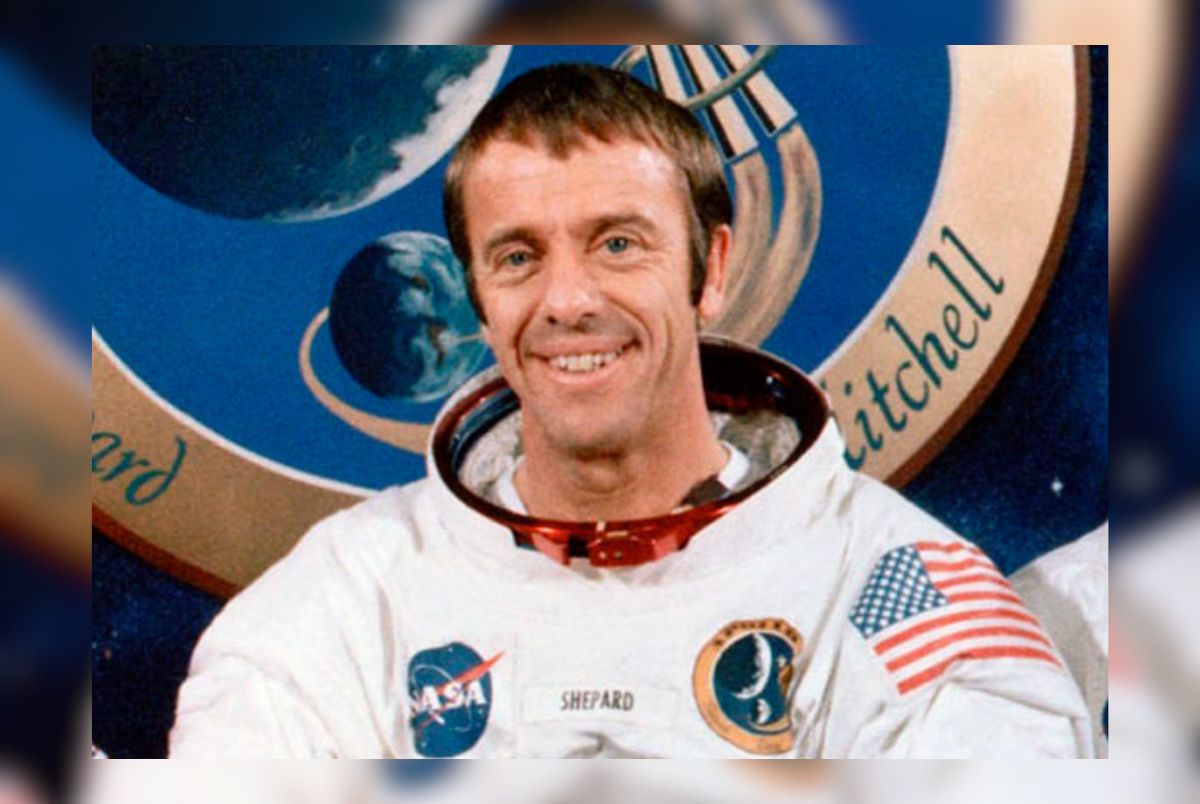
On May 5, 1961, the United States took a bold step into the space age when Navy Commander Alan B. Shepard Jr. became the first American to travel into space. Launched aboard the Mercury capsule Freedom 7, Shepard’s mission marked a critical milestone in the Cold War–era space race and helped restore national confidence after earlier Soviet successes.
The flight came at a time of intense global competition. Just weeks earlier, on April 12, 1961, Soviet cosmonaut Yuri Gagarin had become the first human in space, completing a full orbit around Earth. The achievement stunned the United States and underscored how far it had fallen behind in the race for space dominance. NASA, established in 1958 in response to earlier Soviet advances like the launch of Sputnik, was under immense pressure to prove that America could compete on the same stage.
Shepard’s mission, known as Mercury-Redstone 3, was not an orbital flight like Gagarin’s, but rather a suborbital journey lasting about 15 minutes. During that time, Freedom 7 reached an altitude of roughly 116 miles above Earth, giving Shepard a brief but historic experience of weightlessness before reentering the atmosphere and splashing down safely in the Atlantic Ocean.
Despite its short duration, the flight represented a major technological and psychological victory. Shepard demonstrated that American astronauts could survive space travel and operate spacecraft under extreme conditions. His calm demeanor and successful mission quickly made him a national hero, symbolizing resilience and determination at a moment when the United States needed both.
The success of Freedom 7 had far-reaching consequences. Within weeks, President John F. Kennedy used the momentum from Shepard’s flight to commit the nation to an even more ambitious goal: landing a man on the Moon before the end of the decade. Shepard’s mission thus became a foundational step toward the Apollo program and the eventual lunar landing in 1969.
Beyond its immediate impact, Shepard’s journey helped usher in a new era of human exploration. It proved that space was not just the domain of robotic probes but a frontier that humans could reach and eventually inhabit. Although brief, the mission demonstrated the potential of American engineering and set the stage for future breakthroughs in spaceflight.
Today, Alan Shepard’s flight is remembered not only as a historic first for the United States but also as a defining moment in humanity’s quest to explore beyond Earth. On that May morning in 1961, a 15-minute journey helped ignite decades of discovery and forever changed the trajectory of space exploration.