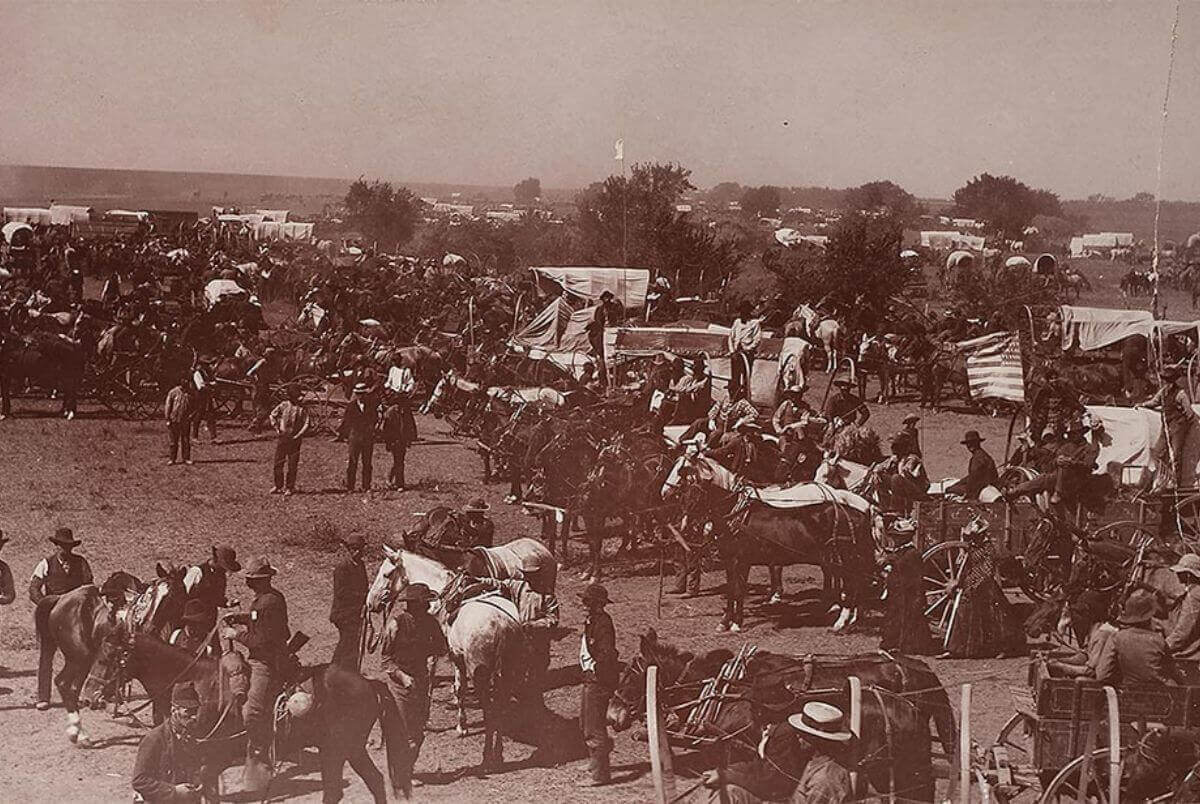
On April 22, 1889, one of the most dramatic scenes in American frontier history unfolded as tens of thousands of settlers surged across the borders of Oklahoma Territory in a chaotic race for land. Known as the Oklahoma Land Rush, the event marked the opening of nearly two million acres of “unassigned” land—territory that had once been set aside for Native American tribes but was now being made available to white settlers under federal policy.
The origins of the land rush lay in decades of westward expansion and displacement. Much of the region had been designated Indian Territory following the forced relocation of Native American tribes during the 1830s, particularly under the Indian Removal Act. Over time, however, pressure from settlers, speculators, and railroad interests mounted, leading Congress to pass legislation in 1889 that authorized President Benjamin Harrison to open the land for settlement.
The rules seemed simple: at precisely noon, settlers could cross into the territory and claim up to 160 acres under the Homestead Act, provided they lived on and improved the land. In reality, the event was anything but orderly. An estimated 50,000 people lined the borders, waiting anxiously for the signal to begin. When the moment arrived—marked by a gunshot or bugle—horsemen, wagons, and on-foot participants rushed forward in a cloud of dust, all vying to stake their claim as quickly as possible.
The rush was frantic and often contentious. Some participants, later dubbed “Sooners,” cheated by sneaking into the territory early to secure prime land before the official start. Others found themselves in disputes over overlapping claims, leading to arguments, legal battles, and occasional violence. By the end of the day, much of the available land had already been claimed, and those who arrived too late were left empty-handed.
Despite the chaos, the land rush produced immediate and remarkable results. Tent cities sprang up almost overnight, with places like Oklahoma City and Guthrie rapidly transforming from open prairie into bustling communities of thousands. The event marked the beginning of organized settlement in what would eventually become the state of Oklahoma.
Yet the Oklahoma Land Rush also reflects a more complicated legacy. While it symbolized opportunity and expansion for settlers, it came at the expense of Native American lands and sovereignty. The very territory opened in 1889 had been promised to displaced tribes only decades earlier, underscoring the ongoing pattern of displacement that accompanied American westward growth.
In the end, the Oklahoma Land Rush stands as both a defining moment of frontier ambition and a reminder of the conflicts embedded in American expansion. In a single afternoon, a vast stretch of land was transformed—claimed, divided, and settled—reshaping the region and leaving an enduring imprint on the nation’s history.