
Celebrating 250 years of independence isn’t just about fireworks—it’s about honoring the foods that shaped the nation. These dishes tell the story of America from its earliest days to today.
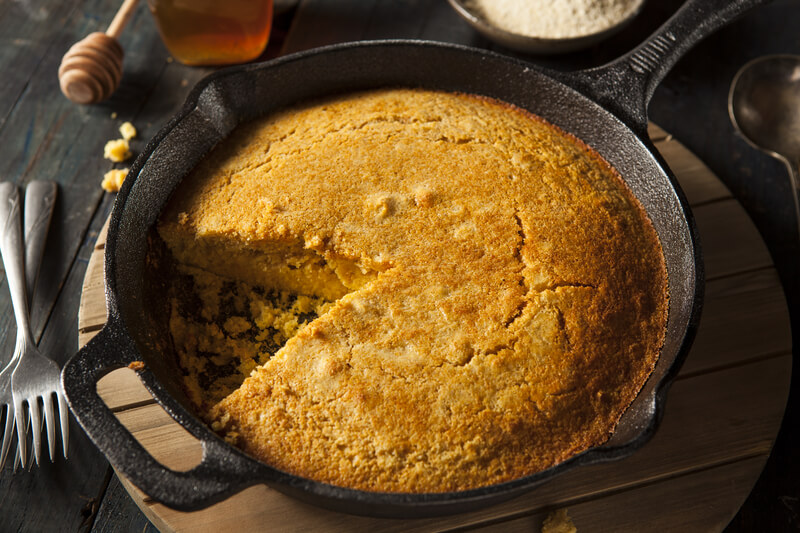
Cornbread (1700s)
Cornbread has its roots in Native American cooking, long before European settlers arrived. Indigenous tribes used ground corn (maize) to make simple, nourishing breads cooked over open fires or on hot stones. When colonists adopted corn as a staple crop—since wheat was harder to grow in the New World—they adapted these techniques into what became early cornbread. Unlike modern versions, ‘colonial’ cornbread was often dense, rustic, and made with minimal ingredients like cornmeal, water, and salt, reflecting both necessity and resourcefulness in early American life.
Ingredients:
- 1 cup cornmeal
- ¾ cup flour
- 1 tbsp granulated sugar
- 1 ½ tsp baking powder
- 1 tsp baking soda
- ¼ tsp salt
- 1 ½ cup buttermilk
- 2 eggs (lightly beaten)
- 6 tbsp unsalted butter (melted) – Will also need additional butter to grease pan
Optional – 1 tbsp of diced green chilis
Instructions:
- Preheat oven to 425°F
- Lightly grease an 8-inch baking dish with butter
- In a large bowl, mix the cornmeal, flour, sugar, baking powder, baking soda, and salt
- In a separate bowl, mix together the eggs, buttermilk, and melted butter
- Pour the buttermilk mixture into the cornmeal mixture and fold together until there are no dry spots (the batter will still be lumpy)
- Pour the batter into the prepared baking dish
- Bake until the top is golden brown and the tester inserted comes out clean, about 20 to 25 minutes
- Remove the cornbread from the oven and let cool for 10 minutes before serving
Why it Matters:
Cornbread dates back to Native American cooking and became a staple for early colonists due to its simplicity and accessibility.
Pepper Pot Soup (Revolutionary War)
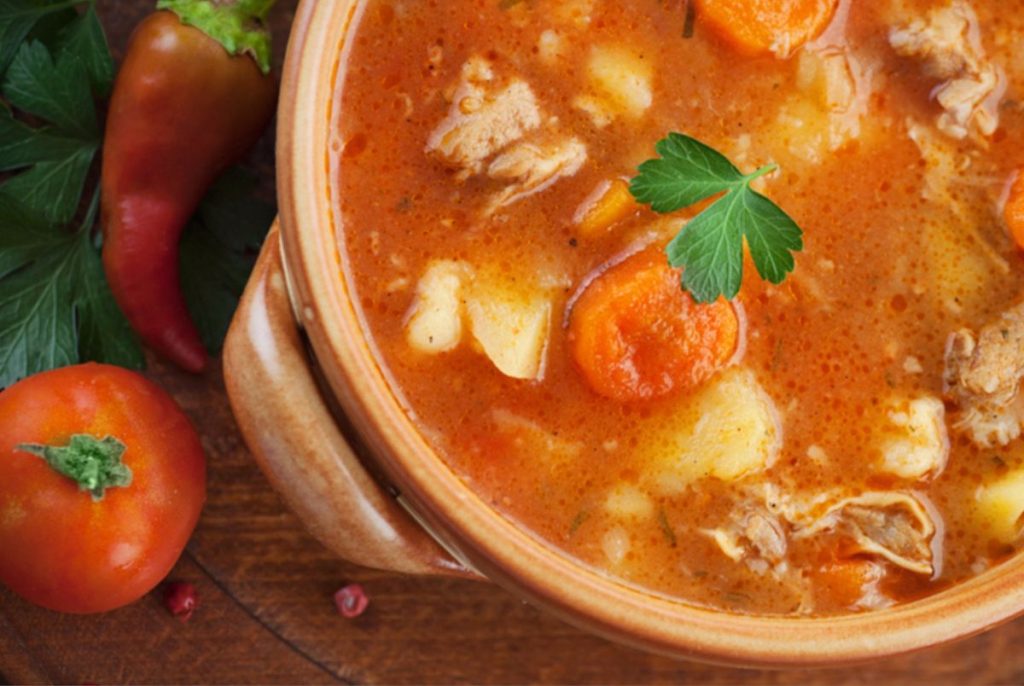
Revolutionary War Pepper Pot Soup, often called “the soup that won the war,” has its origins in Philadelphia during the harsh winter of 1777–1778. As George Washington’s troops endured severe shortages at Valley Forge, a hearty, peppery soup made with meat, tripe, vegetables, and spices was prepared to nourish and sustain them. Its rich flavor and warming qualities boosted morale and provided much-needed energy during a critical time in the fight for independence. Over time, Pepper Pot Soup became a symbol of resilience and resourcefulness in early American history.
Ingredients:
- 1 package spinach or collard greens
- 1 tablespoon cooking oil
- 6 potatoes
- 3 quarts water or stock
- 1 ham hock or 5 oz. sliced salted pork (Boil first to get rid of the excess salt)
- 1½ pounds stew beef
- ½ of a medium-sized African yam*
- 2 plantains
- 2 long red peppers or one Scotch bonnet pepper
- 1 tablespoon black pepper
- 1 cup cooked rice
- Small dumplings (1 cup cornmeal, 1 cup flour, ½ stick of butter worked in to dry ingredients; add a cup of water and roll the dough into small marble-sized balls)
Optional – 1 cup of picked crab meat, garlic, onions, pickled peppers
*African yams are not sweet potatoes. They are a white or yellow tuber, with skin that looks like the bark of a tree. When sliced, they are slightly slimy and have the taste of a lightly sweetened white potato. Yams can be found in specialty, Asian, or ethnic markets, as well as certain chain supermarkets. If you cannot find yams, substitute white potatoes.
Instructions:
- Start by adding the salted pork to a small pan filled with water and bring to a boil for 30 minutes
- Remove the pork and set it aside.
- In a large stock pot, heat the oil and fry the beef. Then add water.
- Chop the spinach or collards to a size you like and add them to the pot. Then add the yams and potatoes, plantains and salted pork. Add the peppers and bring to a boil. Let simmer for at least two hours.
- The last 30 minutes, add the dumplings and the crab (if using).
- Remove the ham hock and serve it over rice.
Why it Matters:
Known as “the soup that won the war,” this dish was served to Continental Army troops during harsh winters, especially at Valley Forge.
All-American Burger (20th Century Icon)
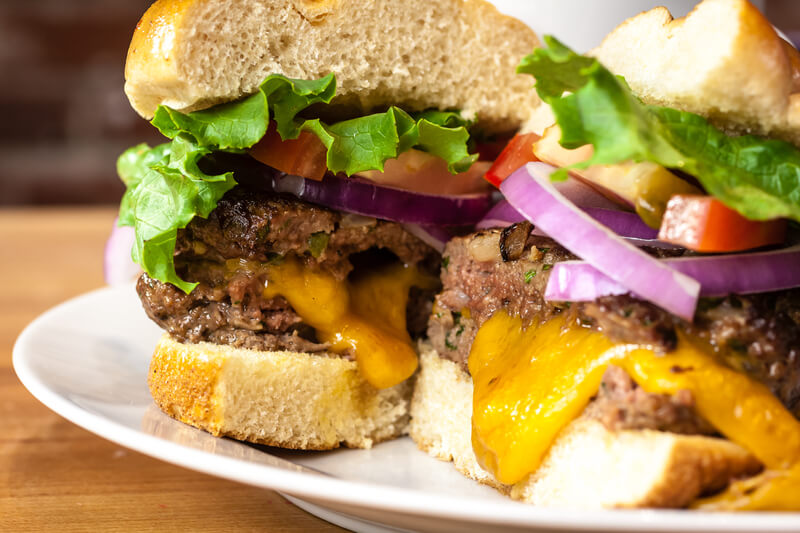
The All-American burger rose to prominence in the early 20th century, evolving from minced beef dishes brought by German immigrants, particularly the “Hamburg steak.” As industrialization grew and Americans sought quick, affordable meals, the hamburger found its place at fairs, diners, and roadside stands. By the 1920s and 1930s, it became a staple of American dining culture, especially with the rise of fast-food chains like White Castle. Over time, the burger transformed into a national icon—symbolizing convenience, innovation, and the distinctly American love of bold, satisfying comfort food.
Ingredients:
- 1 lb ground beef (80/20)
- Salt & pepper
- 4 burger buns
- Cheese (optional)
- Lettuce, tomato, onion, pickles
Instructions:
- Form beef into 4 patties and season generously.
- Grill over medium-high heat for 3–4 minutes per side.
- Add cheese in the last minute if desired.
- Toast buns and assemble with toppings.
Tip – Set up a DIY burger bar for guests—it’s festive and interactive.
Why it Matters:
The hamburger became a symbol of American culture during the rise of diners and fast food in the early 1900s.
Want to see more recipes tied to America’s history? Visit amac.us/250 to learn more!








Very cool to see recipes here! We’ve been AMAC members for a long time and we’ve recommended it to many!
Nice article and recipes. Will do the soup for sure. The cornbread and cheeseburgers are already part of our family meals.
It would be nice if the articles such as recipes were made easy to download.I am An Apple user and when I bring up the printer(an HP Envy) the formating does not work.