On March 19, 2003, the United States and its allies launched military operations against Iraq, marking the beginning of what would become known as the Iraq War. The conflict began with airstrikes on strategic targets in and around the Iraqi capital of Baghdad, signaling the start of a U.S.-led invasion intended to topple the government of Iraqi leader Saddam Hussein. The military campaign, called Operation Iraqi Freedom, would quickly grow into one of the most significant and controversial conflicts of the early 21st century.
The decision to invade Iraq followed months of growing tension between the United States and the Iraqi government. U.S. officials argued that Saddam Hussein possessed weapons of mass destruction (WMDs) and posed a threat to international security. President George W. Bush warned that Iraq must disarm and comply with United Nations resolutions or face military action. After issuing a 48-hour ultimatum demanding that Saddam Hussein leave the country, the United States and its coalition partners moved forward with their plan when the Iraqi leader refused.
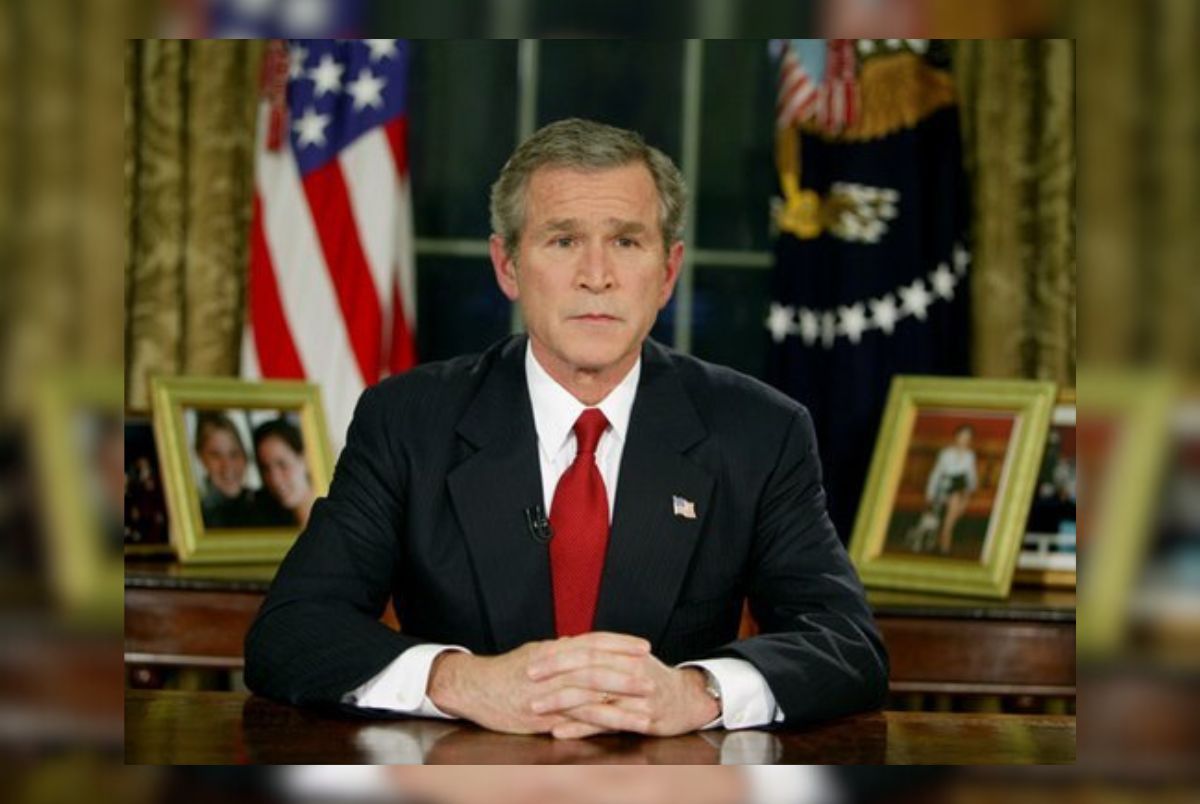
Late on the evening of March 19 in the United States—early morning on March 20 in Baghdad—American and allied forces launched the first wave of attacks. Cruise missiles and precision-guided bombs targeted key military installations and locations believed to be connected to the Iraqi leadership. Shortly after the explosions began, President Bush addressed the nation, announcing that coalition forces had begun military operations aimed at disarming Iraq, removing Saddam Hussein from power, and defending the world from what he described as a growing threat.
The invasion was carried out by a coalition of nations led primarily by the United States and the United Kingdom, with additional forces from countries including Australia and Poland. Military planners expected the campaign to proceed quickly, relying on overwhelming airpower and rapid ground advances to defeat Iraqi forces. Within days, coalition troops began pushing toward Baghdad from neighboring Kuwait, supported by extensive aerial bombardment often described as a “shock and awe” campaign designed to weaken Iraqi defenses.
In the initial phase of the war, coalition forces advanced rapidly through Iraq. Within a few weeks, they reached Baghdad, and the Iraqi government collapsed soon afterward. Saddam Hussein’s regime, which had ruled Iraq for decades, was effectively removed from power by April 2003. However, the swift military victory was followed by a far more complex and prolonged period of conflict.
What began as a conventional invasion soon turned into a lengthy occupation marked by insurgency, sectarian violence, and political instability. The United States and its allies remained involved in Iraq for years as the country attempted to rebuild its government and security forces. American troops did not fully withdraw until 2011, after nearly a decade of war that resulted in thousands of coalition casualties and widespread destruction in Iraq.
The events of March 19, 2003, therefore represent more than the opening of a military campaign. They marked the start of a conflict that reshaped Iraq, influenced global politics, and had lasting consequences for international relations and U.S. foreign policy in the decades that followed.