
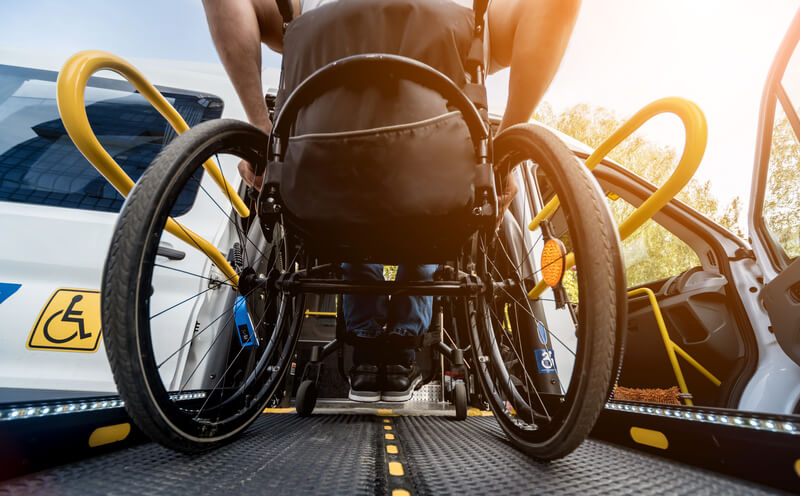
What should I do if I need mobility assistance when traveling?
Senior citizens with mobility challenges, especially those traveling alone or with heavy luggage, often face difficulties navigating through busy airports, hectic transportation hubs, and making travel connections. Fortunately, improved mobility solutions are making independent travel more accessible for older adults. Worried about traveling alone with reduced mobility? Discover clever tricks and tips for smooth travel and ways to keep your hard-earned independence!
The Real Deal
Carla, a 62-year-old insurance professional from Arizona, has an 85-year-old widowed mother named Maria who lives in Florida. Due to osteoporosis, which weakens muscles and affects posture, Maria was initially hesitant to visit her daughter. She feared she might fall while traveling alone at the airport. Carla reassured her mother that flying was possible with the use of airline assistance. The trip turned out so well that Maria now plans to visit her daughter more often.
How They Made It Work
Here’s what they did: Maria obtained a wheelchair prescription from her doctor. The cost of her manual wheelchair was covered by Medicare Part B. Maria then contacted the airline to make her flight arrangements and requested airport wheelchair assistance using her own wheelchair. Maria arranged for a ride to the airport, courtesy of a shuttle service. The wheelchair assistance, a complementary service arranged by her airline, began curbside at the airport. From there, Maria was helped through check-in, security, and brought to the departing gate. An associate escorted Maria in her wheelchair down the jet bridge to the aircraft door. Maria declined further service that would take her to her seat, and her wheelchair was promptly stowed away. Maria secured a non-stop flight and was assisted at the other end, successfully catching up with her daughter at a designated meeting point. What relief Maria felt that she could still travel on her own, thanks to airline assistance!
Top Tips for Mobility Assistance When Traveling
- Consult a physician. This is an excellent starting point. Health-challenged travelers, such as seniors with mobility issues, should consult their doctor(s) before booking trips to ensure that travel is safe. Some medical problems, like recent surgery, might mean postponement. Doctors can also provide guidance on medications, vaccinations, and other health matters related to travel, giving tailored recommendations based on each patient’s condition.
- Use assistive devices. Senior citizens can benefit from use of assistive devices (objects that help them stay mobile) as determined by their physician. This may include:
- Wheelchairs
- Canes
- Scooters
- & more
Traveling Long Distances
By Car
Many people with mobility issues can drive. In fact, driving might be a preferred mode of travel. Should you require an accessible vehicle, reserve it in advance. Start with major auto rental companies like Enterprise, Hertz, Avis, and Sixt, which offer a multitude of adaptive devices depending upon need, such as hand controls or spinner knobs. Recognize that limited availability exists, so plan accordingly.
By Bus
Companies like Greyhound offer ADA-accessible buses with wheelchair spaces. Typically, bus network operators require advance notice (at least 48 hours for planning) and follow size restrictions for mobility devices. Most also have options for solo travelers, attendants, and service animals. For bus travel, do inquire about accessible bathrooms as there may be limitations. For the comfort of passengers with mobility issues or other disabilities, priority boarding is generally offered. This allows passengers to get comfortable ahead of departure.
By Train
Travel by rail can sometimes pose challenges for people with wheelchairs or other mobility devices, but a little preplanning goes a long way. Per Wheelchairtravel.org, “Train networks across the world, including Amtrak in the United States, can accommodate both manual and powered wheelchairs. Due to the gaps between the train and station platform, “bridge plates” and ramps are used to allow wheelchairs to roll smoothly onto the train.” When purchasing your domestic rail ticket, wheelchair assistance can be requested at booking. Note that discounts might be available on your ticket when reserving wheelchair seating space. For international travel, wheelchair or scooter users should contact a sales agent at the train station in advance to learn how things work. Frequently, passengers requiring special assistance board first and sections of the train may have seats removed, creating space to accommodate wheelchairs. This is particularly important for people who must remain in their own wheelchairs.
By Air
Older people who walk slowly or get tired easily may choose to use a wheelchair or electric cart at an airport to navigate large spaces, deal better with long lines, and get to their gates on time. Airlines and/or airports typically offer wheelchair service as a complementary service. To get a wheelchair at the airport, one must request assistance directly from the airline in advance or at least 48 hours before the flight via the airline’s website, app, or by phone. Like in Maria’s case, wheelchair services can help people go from ticketing and security to their gate. Also, luggage assistance is available upon request. Attendants can lift or carry luggage when passengers are unable to do so due to disability. When necessary, wheelchair attendants may escort people to the entrance of the bathroom – if it does not pose a significant delay.
Great Air Travel News!
Improved Service at Airports
Airports are improving services for travelers with mobility challenges. For example, Philadelphia Airport’s Access for All program allows guests to request a pass so someone can help them all the way to the gate. This service is offered at various flight locations and is becoming more common; call your departure and arrival airports for details. Increasingly, airports like Minneapolis Saint Paul International Airport offer wheelchair accessible bathroom stalls and companion care restrooms that meet ADA requirements. These feature extra wide stalls and railings located in each restroom. This space is also helpful for people using walkers.
Important Things to Know for Airline Travel
- Self-identify: If you need an airport wheelchair, tell the airline when you make your reservation. Per the U.S. Department of Transportation, a person must also self-identify to airline staff at the airport as a person requiring assistance.
- Information required: When flying with your own wheelchair or mobility scooter, inform your airline when booking. Airlines may likely ask questions to include: The type of mobility aid (manual vs. battery powered), the dimensions and weight, and the type of battery used (gel, lithium ion, non-spillable etc.) The information you provide ensures that your equipment complies with the law, meets airport and airline safety standards, and fits on the plane. Helpful suggestions: Label all equipment and keep note of your make, model, and serial number. Also have safe-handling and disassembly instructions attached to your equipment. Notify a gate agent at baggage should you discover damage.
- Battery type matters: Batteries for assistive devices must be FAA approved. If you’re unsure of your battery type, check the user’s manual. It’s recommended that travelers carry a copy of that manual to confirm the battery’s safety regulations.
- No extra fees: By law, airlines cannot charge you fees to check mobility devices or medical equipment. This applies to national and most international flights. Should a ticket agent attempt to charge, politely speak up. Do note that there may be charges for special services so contact your carrier with questions.
- Security check: A person who uses their own wheelchair is permitted to bring it through TSA but still must go through security. The traveler and the device will be scanned. If a traveler is unable to stand and walk, notify a TSA agent for a hands-on pat down screening.
- Priority storage: When a passenger with a wheelchair preboards, collapsible and other assistive devices are usually given priority for storage inside the cabin. However, because space on board is limited, or devices may not fit overhead, airlines may be required to store them in the aircraft cargo hold.
- Traveling with oxygen: Per the American Lung Association, “It may take more planning, but people successfully travel while using oxygen therapy. By air, you can use an FAA approved portable oxygen concentrator (POC) or use in-flight oxygen for a fee.” Check with your airline or visit www.lung.org for more information on traveling with oxygen.
About Cruises
Cruise lines are committed to supporting passengers with special needs by fostering strong partnerships. To obtain mobility assistance during your cruise, inform the cruise line at the time of booking or at least 30 to 60 days prior to departure. Passengers are generally required to complete a special requirements or disability form, which can be accessed via the cruise line’s website or by contacting their customer service department. These forms must be submitted to receive assistance during boarding and disembarkation.
Rental equipment, such as mobility scooters and wheelchairs, is available and can be arranged in advance for delivery to your stateroom. If you require assistance at ports or onboard, it is advisable to request these services before your trip. Please note that attendants are not authorized to lift guests; travelers requiring such support should be accompanied by a companion or healthcare professional. For ships utilizing tenders, passengers may need to navigate steps, and wheelchairs should be foldable.
Accessible shore excursions are clearly designated when booking. Most cruise lines like Holland America strive to provide an inclusive experience through amenities such as pool lifts, accessible seating areas in restaurants and entertainment venues, and accommodations featuring wide doorways and other accessibility enhancements. By communicating your specific needs in advance, the cruise line can ensure your room and onboard experience are suitably tailored to accommodate mobility devices such as wheelchairs and scooters. Note that Holland America is specially selected to host Amac’s Celebrate America Cruise to Alaska by Inspiration Travel this August. Click that link for more information.
Getting Help and Feeling Overwhelmed
If you have questions, reach out to your travel agent, transportation provider, or hotel. They can help with documentation and offer useful advice for your trip. Their goal is to meet your needs and encourage your safe trip and return.
Disclosure: This article is purely informational and is not intended as a substitute for professional travel, legal or medical advice.
[adrotate banner=”1223″]






A year ago, my wife had to travel from Cincinnati to West Palm Beach. She has an artificial leg and can’t stand very long. She contacted the airlines she was using, and they provided a wheelchair with a driver at both ends of her flight, going to FL and coming back to OH. No extra charge and the airline was most accommodating.