
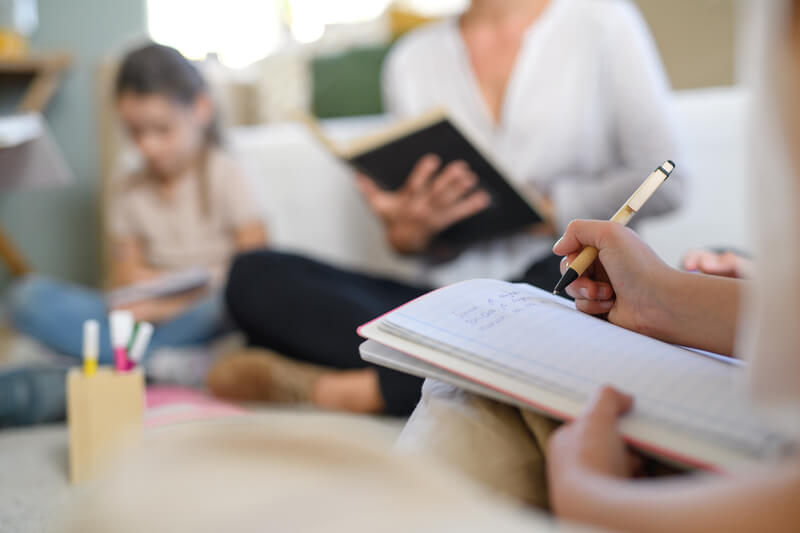
In recent years, many parents have begun questioning long-standing assumptions about traditional education. Concerns about bureaucracy, one-size-fits-all curricula, and institutional failures have eroded confidence in the public school system for many families.
Some parents are also increasingly wary of ideological instruction in public schools, particularly when it comes to gender ideology and sex education.
While debate over education is healthy in our society, a growing number of families believe the system has become less responsive to individual needs and more influenced by political and administrative pressures.
It is little surprise, then, that parents are looking for alternatives. For many families, homeschooling has moved from the margins to the mainstream.
The Shift Toward Homeschooling
Homeschooling is no longer a fringe educational choice. In the United States, an estimated 3.1 million students—about 6% of school-age children—are educated at home, and that number has grown steadily in recent years.
The COVID-19 pandemic accelerated this trend, forcing many parents to educate their children at home, which demystified homeschooling. Today, families cite flexibility, personalized pacing, and concerns about school culture and learning environments as reasons for choosing to homeschool.
What drives this shift is not just dissatisfaction with traditional schools. Many parents point to the academic and personal success of homeschooled students as reasons for making the switch.
Academic Outcomes and Personal Growth
Research consistently shows that homeschooled students perform well across multiple measures:
- Studies indicate that homeschooled students often score 15 to 30 percentile points higher on standardized tests than their conventionally schooled peers.
- Peer-reviewed research finds that homeschoolers outperform or match public-school students academically, with 78% of studies showing statistically significant better performance.
- Homeschool graduates often enroll in college at rates comparable to—or higher than—students from traditional schools and often succeed once enrolled.
- Beyond academics, homeschooled students are involved in community service, extracurricular activities, and social organizations, challenging the stereotype that homeschooling leads to isolation.
Parents and students alike report high levels of confidence, engagement, and satisfaction with the homeschooling experience.
Learning at an Individual Pace
One of homeschooling’s greatest strengths is its adaptability. In traditional classrooms, a standardized pace can leave advanced learners bored and struggling students behind. Homeschooling eliminates those problems.
Students can master subjects thoroughly before moving on, pursue interests beyond a standard curriculum, and develop self-directed learning habits that serve them well throughout life.
This flexibility supports not only academic growth but also personal development.
Many families see their homeschooled children become more confident, creative, and motivated when they are given the freedom to learn in ways that resonate with them.
Benefits Beyond Academics
Homeschooling is not solely just about test scores and college admissions. Its benefits extend into deep emotional and interpersonal development.
Parents who homeschool experience stronger family bonds and better communication.
Learning at home or in small group settings can also reduce exposure to bullying and peer pressure, creating safer learning environments.
In addition, homeschoolers are offered more freedom to structure days around peak focus times and unique learning styles. Rather than waiting for hours in lines for the bathroom or waking up two hours early to catch a bus, homeschoolers have more individualized schedules, leading to more efficient and productive uses of time.
Dispelling the Socialization Myth
One of the most persistent criticisms of homeschooling is the belief that homeschooled children lack social skills. In reality, this stereotype does not reflect the modern homeschooling landscape.
Today’s homeschoolers regularly participate in sports teams, co-ops, volunteer programs, internships, faith-based groups, clubs, and community organizations. These opportunities allow students to interact with people of all ages rather than being confined to a single peer group.
Researchers and colleges report that homeschooled students demonstrate strong communication skills, maturity, and confidence in social settings. Far from being socially isolated, many homeschoolers are proving to be well-rounded, articulate, and fully prepared to engage with the world around them.
Growing Government Scrutiny
Despite its growth and success, homeschooling faces increased scrutiny from government bodies and state agencies. In several states and countries, lawmakers have proposed tighter regulations, expanded reporting requirements, and additional restrictions that would make homeschooling more difficult.
Supporters of these measures often cite “accountability,” while many parents view them as attempts to reassert control over education and limit parental involvement.
Overregulation of homeschooling threatens to undermine one of the few educational models that truly prioritizes individual development and family choice.
Limiting homeschooling risks forcing parents back into systems they believe are failing to meet their children’s needs.
A Personalized Path Forward
Education should serve students, not the other way around.
As traditional systems struggle with bureaucratic challenges and fail to adapt to the needs of individual students, homeschooling stands out as a flexible and effective option for many families.
No educational path is perfect, and homeschooling might not be the right choice for everyone. Still, the evidence and stories are clear: When parents take an active role in their children’s education and tailor learning to their individual needs, kids don’t just succeed—they thrive.
Homeschooling is no longer just an alternative. For many families, it’s the best path to raising educated, confident, and resilient individuals ready for the challenges of today’s world.
Katherine Matt is an intern for The Daily Signal.
Reprinted with Permission from Daily Signal – By Katherine Matt
The opinions expressed by columnists are their own and do not necessarily represent the views of AMAC or AMAC Action.





Homeschooling is so much fun. I am not a teacher, but still, I home schooled my two youngest children until the end of Junior High. Now I wish I had done it to the end of Senior High as well. Sometimes I read the teacher manual to them to teach them how to do some of the math as math was my weak spot. For the most part, I found fun, active, and hands on curriculum that involved them in what ever subject we studied. Science was the most fun, as we performed experiments, and then learned the science that was behind them. I am guilty of locking up all the screens in the house for two hours each day while they were required to read one or two chapters of a book, and then tell me what happened in those chapters. Their Dad also got involved by reading some more advanced books to us that had all of us rolling on the floor laughing. We had gym class, music, art, and went on field trips with other home school families. Yes, they did well on the standardized tests. It was one of the best times in our lives. Thank you for this positive article.
Homeschooling, especially for Christians, lays a solid foundation of faith and godliness in children’s minds and hearts. The Bible tells us, “To train up a child in the way he should go and when he is old he will not depart.” Proverbs
A few years ago, our son-in-law graduated from the University of Washington. Even then they had two valdictorians–one for homeschooled grads, and a second for public school. They thought this was necessary to keep the homeschooolers from taking it all.
We homeschooled our two sons all the way through, and LOVED it! As the primary teacher, I really enjoyed spending time with my boys and learning along with them. Though not “official” teachers, I have a bachelor’s degree and my husband has two bachelor’s degrees and a master’s degree. Both boys learned how to learn things on their own, which was a huge help to them in their college days and in their careers. One became a licensed civil engineer (passed the test the first time!) and the other a computer programmer. Most important of all, they love the Lord and are actively serving Him. Their wives are sweet Christians. Their children are also being homeschooled and taught to love the Lord. We are so blessed!
Having been an elementary school teacher for twenty years, I’d venture a child could be taught, or learn, twice as much in half the time at home. There is so much wasted time in school and many no longer have gym, music or art at the elementary levels. Just dealing with out-of-control behavior and kids who don’t speak English takes a lot of education time away in public school classrooms. God bless and assist homeschooling parents.
As someone who worked in public education for30 years, there are some great homeschooling parents and some lousy homeschooling parents. We had kids enroll who had been homeschooled who were ahead of their classmates, and some who were way behind. So some outside accountability is important.
This is what happens when a child is taught by a loving adult who is more concerned with the education of a child than brain washing that child to make him/her a radical liberal. That is what many of our schools out there have become. They do not care for the kids, they just want to create more radical liberals to try to overthrow our government.
New Ed Ideas:
Hands on classes
Vocational testing & training
IT classes
Use CAD for designs & art
Use VR AR glasses to teach.
Field trips
Simulations.
Guest lectures
Thus NOT Boring the students
The research suggests two things: (a) the home educated, on average, outperform the public schooled in academic achievement and social and emotional development and (b) when you homeschool, the State and its State-controlled workers do not get to teach, train, and indoctrinate your children.
Huh? Like Chic Filet? Or what?
I’ve seen the evolution of homeschooling. It’s not a myth to say that in the 1980s I saw parents whose girls couldn’t socialize ended up “homeschooled.” Both married in their early 20s: one to an overbearing man’s man; the other to a sweet-talking Bible carrier whom she divorced within five years. This girl ended up babysitting and staying with her parents.
A decade later, I noticed that homeschooling had matured. Naysayers of public school teachers realized that just because a parent knew physics didn’t mean s/he was qualified to teach a child science – that certification DOES matter. Suddenly homeschooling conventions sprang ip with guest speakers and textbooks for sale. (My, sounds like a public school seminar conference…) Families realized their kids DID need to engage with others outside of their nuclear circle. Churches offered fine arts education. Christian alternatives to Scouts emerged. By the late 1990s you could conclude that yes, homeschooling had finally arrived.
But I still meet the few troubled kids whose parents blame public schoolnfor their lack of discipline, yank their kids out to “homeschool” yhem…only to re-enroll them into the same public school. If Christian parents hadn’t abandoned public schools to secular hedonism, we teachers could have received better support to teach.
Something to think about…
This is absolute nonsense. Homeschooling is an easy outlet to abuse kids and hide it. Those who are pro-homeschooling are actually pro-child abuse.