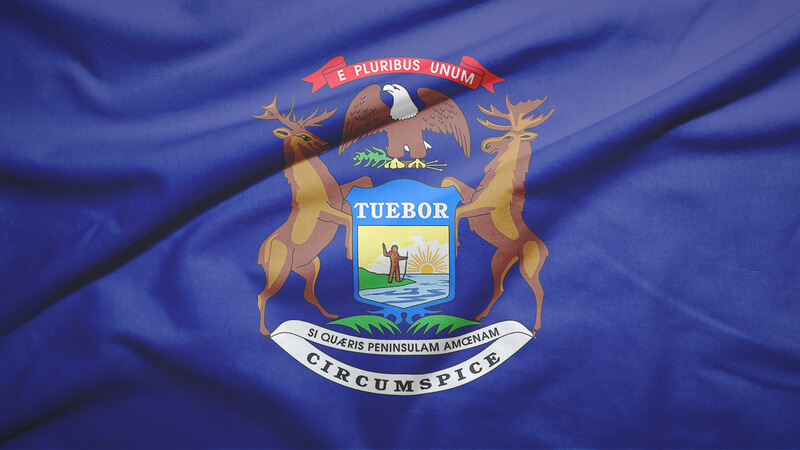
On January 26, 1837, Michigan officially joined the Union, earning its place as the 26th state—but the path to statehood was anything but simple. Before the Wolverine State existed on a U.S. map, the region was part of the vast Northwest Territory, created under the Northwest Ordinance of 1787. That territory once included what would become most of Wisconsin, all of Michigan, and northern portions of Indiana and Ohio—an early reminder of how fluid America’s borders were as the nation expanded westward.
As new states emerged from the Northwest Territory, Michigan’s boundaries shifted and its political identity sharpened. A major milestone came on January 11, 1805, when President Thomas Jefferson signed legislation establishing the Michigan Territory, with Detroit named as its capital. From there, events outside Michigan’s control shaped its future. The War of 1812 brought upheaval, including a period when Michigan fell under British control as conflict flared in nearby Canada. In Detroit, the governor at the time surrendered the city, fearing civilian bloodshed if he resisted.
By the early 1830s, Michigan was ready to take the next step. In 1833, its population surpassed the 60,000 residents required for statehood, prompting leaders to draft a constitution for voters to adopt as they pushed for admission to the Union. Yet even with the numbers and momentum, politics intervened. Michigan’s statehood bid stalled because of the so-called Toledo War—a boundary dispute with Ohio over a strip of land known as the Toledo Strip. Despite its dramatic name, the conflict involved no real battles or casualties, but it created enough tension that Michigan’s admission was effectively put on hold until the border was settled.
Resolution came when President Andrew Jackson stepped in. The final deal awarded Ohio the Toledo Strip, while Michigan received the western three-quarters of the Upper Peninsula. At the time, that might have felt like a consolation prize—but history proved otherwise. The land Michigan gained opened access to valuable natural resources, including timber, iron, and copper, helping fuel the state’s long-term economic growth and industrial legacy.
After decades of shifting borders, war-era disruption, and political wrangling, Michigan’s moment finally arrived. On January 26, 1837, the state was formally admitted to the Union—an anniversary that still resonates as a reminder that statehood is often won through persistence, negotiation, and a little bit of geographic luck.
[adrotate banner=”1184″]