
AMAC Magazine Exclusive – By Alexa Astuto
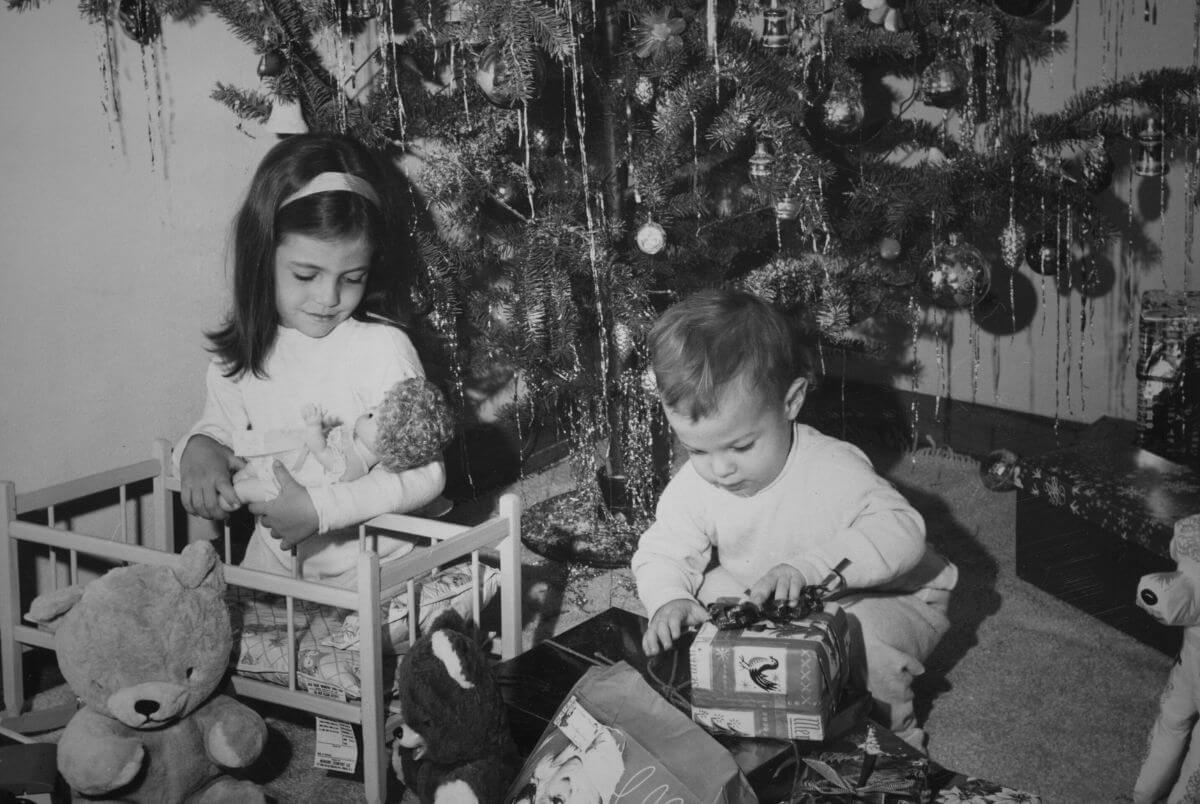
Before screens and smartphones, Christmas morning felt almost sacred. The world outside was quiet and blanketed in snow, and the only glow came from a tree trimmed with tinsel and wonder. You didn’t rush for technology; you rushed for imagination. Each box held a possibility: a hero, a builder, a dreamer waiting to be brought to life.
Those toys did more than pass the time; they helped shape who we became. This is the story of how our toys evolved with us and reflected the courage, creativity, and spirit of a nation always reaching for something new.
The year is 1964. The nation is in the thick of the Cold War, and America’s sons are being called to serve in Vietnam. Back home, the toy aisles are lined with baby dolls for girls and cap guns for boys, but nothing that lets boys imagine themselves as real American heroes. That’s when a small Rhode Island toy company, Hasbro, sets out to change that.
They called him G.I. Joe. Short for “Government Issue Joe,” a nickname for everyday servicemen during World War II. Joe was the first “action figure,” which was a term Hasbro coined to avoid the taboo “doll.” Each Joe represented a branch of the U.S. Armed Forces and came equipped with realistic uniforms and gear. For American boys growing up in the 1960s, G.I. Joe became a plastic embodiment of courage, discipline, and patriotism.
But as the decade wore on and the Vietnam War divided the country, enthusiasm for military toys faded. By the early 1970s, Hasbro reinvented Joe as the “Adventure Team,” swapping rifles for rescue ropes and camouflage for safari jackets. The new Joe wasn’t fighting enemies abroad; he was exploring jungles, saving lives, and solving mysteries at home. It was a softer image for a changing America.
Then came the 1980s. The Cold War tensions were back, and so was G.I. Joe, this time in a smaller, 3¾-inch form with a cast of characters and an enemy called Cobra. Backed by comic books and a Saturday-morning cartoon, the new line came with a rallying cry that rekindled national pride: “A Real American Hero.” Each figure’s card told the story of a soldier with a hometown and a sense of duty.
From wallpapered playrooms to Saturday mornings, G.I. Joe has marched through six decades of American history, adapting to its times but never straying from its mission. Born from conflict, reshaped by culture, and forever flying the flag of American bravery, G.I. Joe isn’t just a toy. He’s a reminder that heroism, in any form, begins at home.
The year is 1933. Winter hangs heavy over America, and the hum of coal furnaces fills every neighborhood. Most homes are heated with coal, and their wallpapered walls wear a thin film of soot as proof. Soap and water are too harsh; scrubbing would ruin the paper entirely. Then comes Kutol Products, a small Cincinnati company with an answer: a pliable, putty-like cleaner that lifts grime from wallpaper without a trace.
For years, sales soared. But as World War II gave rise to cleaner, cheaper gas heat, the coal furnaces went quiet, and with them, Kutol’s business. By the early 1950s, the once-booming company was growing cold.
It wasn’t until 1954, when Kutol was teetering on the edge of bankruptcy, that an unexpected spark came from within the family. Kay Zufall, a kindergarten teacher in New Jersey and sister-in-law to Kutol’s president, Joseph McVicker, was searching for a simple craft her little ones could make for the holidays. The plan was to mold ornaments, but the standard art clay was too stiff for tiny hands.
Thinking quickly, Zufall reached for something familiar: a can of Kutol’s wallpaper-cleaning dough. It was soft, pliable, and easy for children to shape. The kids rolled it, pressed cookie cutters into it, and beamed with pride. When Zufall brought the creations home to bake for hardening, she realized she’d uncovered something bigger than a classroom craft: She’d stumbled onto a way to save her brother-in-law’s company.
McVicker, desperate but hopeful, agreed to reimagine the product. Together, they removed the harsh cleaning agents, added a hint of almond scent, and brightened it with nontoxic colors. Soon after, it was given a new name and a brand-new purpose.
Play-Doh was born, and a second life was given to a forgotten cleaner that once scrubbed soot from walls but now sparked imagination in homes across America.







“For boys who like real life-like toys that they can operate too, attention boys, Tonka Toys are made just for you. There are lots of model trucks, model trailers too, they’re all built with the Tonka touch, the touch that boys like so much. . .” ~ Tonka Toys commercial circa 1962
You can still “google” and find the TV commercial online, featuring two clean cut boys and their well dressed father.
If that commercial aired today, it would be called “racist” “bigoted” “misogynistic” and God knows what else. End of an era when life was simpler. Sad.
Awesome article!