
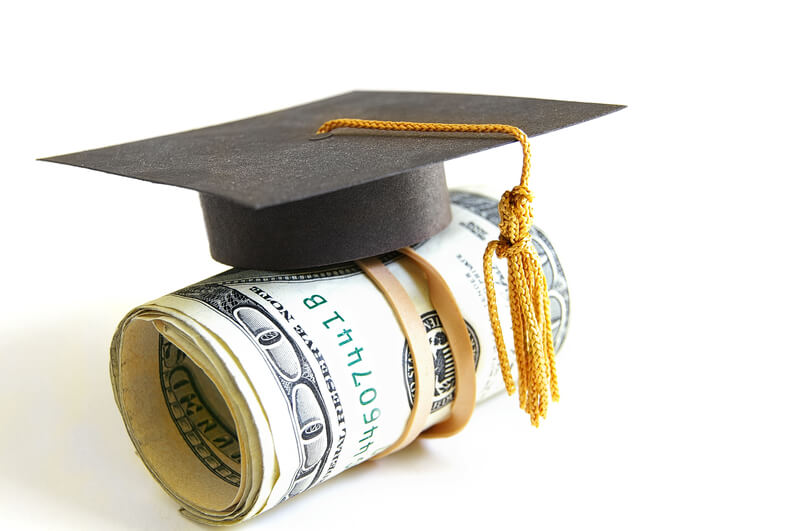
America’s universities profit from a system that turns teenage ignorance and inexperience into guaranteed revenue through federal student loans. While Democrats continue to peddle unworkable debt “forgiveness” schemes that would transfer the financial burden to taxpayers without addressing the root problem, President Donald Trump and congressional Republicans have an opportunity to empower students and reform this predatory lending scheme by incentivizing structured gap years.
Specifically, the federal government should offer lower student loan interest rates to students who complete a year of full-time work or meaningful charitable service after high school. Such a requirement would reduce reckless borrowing and better align higher education with the job market. As an additional benefit, once armed with labor-market knowledge and the wisdom of a year or two in the “real world,” students would be far less inclined to pursue ideological majors like Critical Race Studies and Gender Studies – reforming higher education from within.
Under the current higher education federal lending model, university administrators and student loan companies have shaped a business that captures 18-year-old Americans at their most vulnerable moment and funnels them straight to college immediately after high school. The vast majority of these students have no experience and no idea what sort of career they’d like to pursue. Many end up in majors with no serious job prospects or on a career path that doesn’t align with their skills and passions.
In short, fresh high school graduates are the antithesis of informed consumers – and American higher education has preyed on that fact for decades.
The numbers bear this out. In 1995, total federal student loan debt stood at roughly $187 billion. Today, it has ballooned to nearly $1.67 trillion, an astonishing increase of more than 836 percent.
The damage to students is just as severe. In 2000, the average graduate with a bachelor’s degree carried $17,480 in debt. By 2020, that figure had surged nearly 75 percent to $30,500. And in 2025, the average borrower now shoulders a staggering $42,673 in student loan debt.
The rising cost of college tuition suspiciously follows these borrowing trends. Tuition and fees have skyrocketed more than 259 percent since 1995. For context, inflation rose roughly 92 percent during the same timeframe.
Only in the higher education bureaucracy could this kind of math make sense.
Economic scholars refer to this business scheme as the Bennett Hypothesis. In 1987, then-Education Secretary William J. Bennett warned in a New York Times op-ed titled “Our Greedy Colleges” that unlimited federal aid would allow universities to raise prices endlessly without improving quality.
“Higher education is not underfunded,” Bennett presciently wrote. “It is under-accountable and under-productive… [Students] deserve an education commensurate with the large sums paid by parents and taxpayers and donors.”
He was right. And today’s data only vindicates him further.
A study published by the American Enterprise Institute earlier this year found that most college employees do not teach, even though that is the purported primary function of higher education.
The expansive layers of “administrative bloat” at many universities have become a primary driver of soaring college costs and the diversion of resources away from actual instruction. Students shoulder ever-higher tuition bills while taxpayers are compelled to pour more public dollars into maintaining growing bureaucracies instead of supporting real learning.
The Trump administration this year tightened the bolts of accountability to curb runaway college bureaucracies through a series of executive actions. The One Big Beautiful Bill Act also placed caps on federal student loan borrowing to help clean up this disastrous situation.
But there is still one other major unexplored solution: empowering students themselves.
Universities thrive because students enter campus with no real-world baseline, no labor-market experience, and no idea how poorly ideological majors will serve them in adulthood. A structured gap year would change that for many.
The research is clear. Students who take a structured gap year outperform their peers who enroll in college immediately after high school. The Gap Year Association’s annual surveys report improved engagement, clearer purpose, and higher graduation rates among gap-year participants.
Research also points to the importance of structure for gap years. A 2024 analysis found that gap years are most beneficial when they are framed formally, not simply as “time off,” especially for students at community colleges.
Gap years also steer students toward alternatives to college – which is likely why higher education administrators are so reluctant to embrace them. Vocational and skills-training programs have surged nearly 20 percent in the past five years, growing for three consecutive years as young Americans reject the high school-to-college conveyor belt.
Students who take advantage of a gap year are not wasting time in stuffy classrooms listening to lectures on “decolonizing geometry.” They’re finishing job training in months, entering the workforce with momentum, and earning competitive wages without six-figure debt.
According to Glassdoor, the average entry-level white-collar salary sits around $48,000 a year. Meanwhile, the Bureau of Labor Statistics reports that blue-collar workers in construction, maintenance, production, and transportation earn roughly $24 an hour, or nearly $50,000 annually, without the burden of college debt.
In other words, the path to prosperity increasingly runs through hard skills, not paper credentials. And blue-collar jobs have never been more in demand. If more students took a gap year, they’d be able to see this first-hand.
Reshaping financial aid to reward gap years would not merely tweak a broken system; it would begin to rebuild a culture that has spent decades teaching young Americans that the only respectable career path runs through overpriced lecture halls and federally backed debt.
A Trump-led shift could produce students who are more informed consumers, not captive revenue streams. This would be more than education reform. It would be an economic and cultural course correction. It would expose predatory tuition increases and starve the college bureaucrats who have grown rich exploiting the confusion and anxiety of teenagers.
The student debt crisis was engineered, and it can be unwound. But it starts by changing student behavior before the federal government ever writes another blank check to America’s greedy colleges.
W.J. Lee has served in the White House, NASA, on multiple political campaigns, and in nearly all levels of government. In his free time, he enjoys the “three R’s” – reading, running, and writing.






And when the government inserted itself into healthcare, the costs rose precipitately as well! When people know the government guarantees their payments, they have no desire to price things to help out the seekers of health care!
I began college in the early 1970s, and I worked my way through and earned two B.S. degrees, an Engineering B.S. and, much later, an MBA. I think colleges and universities need to shed all the overhead they added for Ethic studies, Women’s Studies, DEI, etc. A Liberal Arts College Degree in the 1970s included language skills, Literature, Science, U.S. history, and Western Civilization. I was in the sciences, so it included mathematics and science courses beyond the high school level.
In some colleges, the administrative staff outnumber the teaching staff. That is ridiculous. In state-run colleges and universities, they need to pare down the B.S. and the staff that supports it. They also need to get rid of B.S. degrees and that staff. Not everyone is college material, so only qualified students should be admitted.
These steps would make college more affordable for those who qualify to attend – top 10% of HS class, and high SAT scores. The others can go to trade schools, we need them as well.
I imagine what I was able to do when I went to college and grad school is near impossible today, what with the “higher education” providers walking the profit line and not the actual education path…but I paid my way…it took a bit longer, and the school didn’t much like that plan, but I got the degrees I wanted, debt free. When I started my “life careers” there was no cloud of debt hanging over my head……don’t imagine that’s even close to possible in today’s “market” of education, since it’s a business platform,, not a mission to raise up smart, working people who serve their nation, community and self (in that order). I’m old school. literally, and I guess that’s the wrong approach. Seems skill and gumption are lost characteristics.
Could help too if students graduating HS were also educated instead of indoctrinated. More HS graduates can’t read or do math at a HS or college entry level. These students don’t know history or basic finance. They are ill prepared to attend college or trade school. The ideas to help higher education are great but let’s fix public education too!
I think a gap year is a good idea as students would also be more into studying rather than socializing and partying when parents aren’t watching over them! There’s no reason that they can’t take an extra year to graduate so they can work to pay for schooling instead of borrowing it all. But first we need to educate students in high school so they can read and write and do math all at a level to succeed in school and life. Education statistics are at an all time low these days. You should not be able to graduate from high school unless you can perform at grade level and can pass a serious Civics exam. Kids today are seriously lacking, but allowed to vote at 18 without even understanding the issues. It’s enough to make you cry! I also support trade schools 100%!
Even as far back as 1967 when I graduated we had student councilors, we had parents, we had grandparents, and other family members available that could and usually did try to influence or decisions related to our future. The smart kids usually already had a student loan and college acceptance before they graduated. Those of us not so smart had three options – find a deferrable job, get accepted to a college or welcome to Viet Nam. Deferrable jobs were few and far in between, we felt we weren’t smart enough for college so we were basically draft bate. Do I feel sorry for those smart guys who obtained acceptance to a college and paid for their college degree any way they could, to include student loans, to avoid the draft and Viet Nam? No, they were the role models for generations to come – free college education get a student loan. You don’t have to paid it back, it’s free. But it’s not free, it’s like buying a house, a car or major appliances, It’s a lone. You agreed to paid it so pay it. If you need to feel sorry for someone, take a walk along the Viet Nam memorial and pick a name.
Trump is trying to improve education by elimination of the DOE. Just think how many students could be educated with the 80 billion dollars DOE syphons off in tax payer dollars each year.