
When eight-year-old Yvonne began refusing to go to school, her parents were frantic. A bright, intense child, easily excitable, easily upset, she suddenly couldn’t bear how her clothes felt and often refused to get dressed. Her teacher noticed her covering her ears in class and gently suggested an autism assessment. Her parents didn’t know what to do.
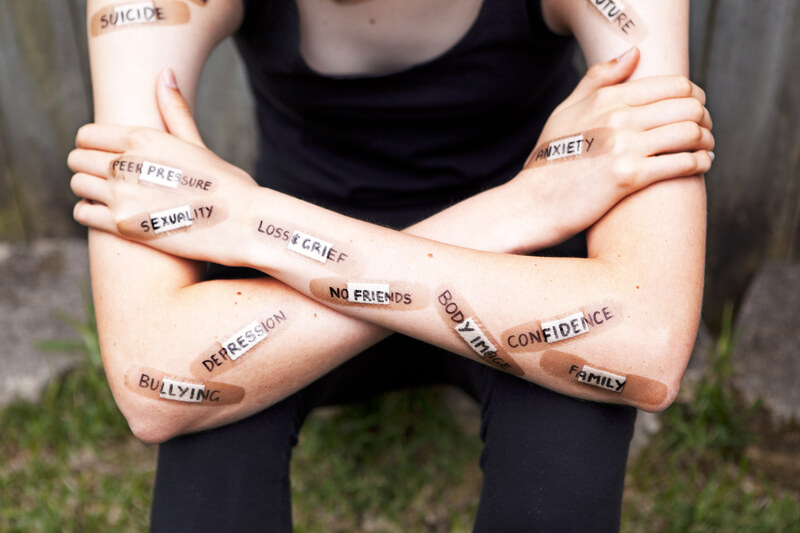
Yvonne’s story is not unusual. Children haven’t changed, but childhood has. Over the past two decades, young people have been increasingly smothered in psychiatric labels. No generation has been as medicated, monitored, or mentally categorized as today’s. And now, in a striking cultural twist, many teenagers are embracing their diagnoses as part of their identity – as if attention deficit hyperactivity disorder (ADHD), depression, or autism were fashion statements or social badges of belonging.
What’s going on? Has this explosion of mental health awareness liberated young people to be “who they truly are”? Or has it trapped them in a culture of fragility, convincing them they are broken or otherwise socially unfit before they’ve even reached adulthood?
The Mental Health Industrial Complex
While more money than ever is being poured into therapy, medication, and mental health services, global mental well-being is declining. This recognized trend is known as the Treatment Prevalence Paradox (TPP): the more we treat, the worse the statistics get.
Suicide rates are climbing. Antidepressant use is soaring. Disability claims for mental illness are up across the West. International studies show that young people, especially those in English-speaking nations, report the lowest mental well-being of any demographic. Despite record spending, the mental health crisis keeps deepening.
We wouldn’t accept this in any other branch of medicine. Cancer outcomes are improving. Heart disease and diabetes mortality are falling. But in mental health, treatment seems to correlate with worsening outcomes. The uncomfortable truth is that our current approach may be part of the problem.
The Trouble with Diagnosis
Having studied this for three decades, it’s clear to me that the science of mental health is built on shaky ground. There is no biological test for depression or ADHD. You can’t see anxiety on a brain scan or find autism in a blood sample. You can’t examine a thought under the microscope. Psychiatric diagnoses are constructs – ideas, not discoveries.
Distress is real; despair is real. But the labels we attach to them are human inventions, not objective truths. Over the years, these categories have expanded to capture ever more shades of unhappiness and difference, and that expansion has proven extraordinarily profitable. As a child and adolescent psychiatrist, I have seen how this changes how young people view themselves.
The Mental Health Industrial Complex is a vast ecosystem of pharmaceutical companies, therapists, assessment clinics, apps, influencers, training programs, institutes, and a whole variety of other products that thrive on our unease. The more we believe that sadness, shyness, or stress are symptoms of illness, the more customers the system creates.
We are told to “end the stigma,” but what if these anti-stigma campaigns have contributed to creating the very problems they were meant to de-stigmatize?
New Identities and New Disorders
Mental health and identity politics have fused into something new. Conditions once considered rare and disabling, such as autism or ADHD, have been rebranded as proud identities, often amplified by social media.
A recent study found an explosion in self-diagnosed cases of Tourette’s, Dissociative Identity Disorder, and eating disorders among teenage girls. Many said identifying with a diagnosis helped them feel seen, part of a community, even special. Mental illness had become a language for belonging in a disconnected world.
Yet this trend, far from empowering, may be inadvertently eroding natural resilience. It tells young people that their struggles are signs of defectiveness, not of humanity.
As I argue in my book Searching for Normal, this shift is profoundly harmful. Academic psychiatry offered the language, Big Pharma offered the products, and the marketplace ran wild. What began as care has metastasized into an industry that feeds on vulnerability and sells relief in the form of labels, pills, therapies, and identities.
Our children are the most exposed. They are growing up in a world where ordinary developmental turbulence – anxiety about exams, heartbreak, existential confusion – can become interpreted through a medical lens. Instead of learning to weather emotion, they are encouraged to outsource it to professionals.
Older generations weren’t tougher or wiser – just less observed. We made mistakes, acted out, and suffered – and we grew through it. Today’s youth, constantly watched, measured, and judged, rarely get that chance.
What We’ve Forgotten
There is no formula for raising emotionally healthy children. But there is one rule that might save us from the grip of the Mental Health Industrial Complex: don’t pathologize emotion.
Fear, anger, sadness, and confusion are not diseases; they are signals – communications that are part of the messiness of being alive. Take them seriously, but keep them in the realm of the understandable, not the medical. Hold diagnoses lightly, if you must hold them at all.
After months of chaos, Yvonne’s parents, with the help and guidance of her maternal grandparents, whom she was close to, followed this approach. They resisted the autism label, stayed consistent, and refused to let school avoidance define her. It took two tough terms, but Yvonne is thriving now. No medication. No diagnosis. Just patience, love, and allowing the hard work of growing up to happen.
Sometimes, the cure is remembering that pain is not always pathology.
Dr. Sami Timimi is a child and adolescent psychiatrist, psychotherapist, and Fellow of the Royal College of Psychiatrists. He is the author of Searching for Normal: A New Approach to Understanding Mental Health, Distress, and Neurodiversity.
The opinions expressed by columnists are their own and do not necessarily represent the views of AMAC or AMAC Action.





Praise for you for this important article Dr. Sami Timimi , it addresses issues that need to be understood – and that cycle of listening to what people have to say in order to understand them is something that is at the foundation of intelligent , clear communication. As in good ,proper management, of anything, business, government or family ,the planning, organization, and scheduling of those matters depends on clear, intelligent communication which is required for accurate, proper decision making. This article is appreciated , Well done !
When I was a child in the 1950s and 1960s there would have been no tolerance for this nonsense. I heard “shape up or ship out” enough to know this. Eventually I outgrew whatever angst I had at the moment and went on to live life with common sense. I had my children in my 30s when ADD and ADHD were becoming “the thing”. I knew a lot of virtue signaling parents who went to seminars about the subject. Knowing them and their children I could not fathom why so I asked some of the parents. The answer was always the same – “just in case”. In case of what?! We did not want our children to become emotional cripples, so we fought back when it was tried on our family. Making small boys sit in a classroom all day was bound to cause a lot of restlessness. Boys need breaks to run off energy. Definitely not more hours in the school day. Our daughter did all right, but our son did not function well in the modern-day school environment where even recess was no longer available or so managed that you spent most of your time in line waiting for your turn to play. No free play like when I was a child. They tried to brand our son ADHD but we were having none of it. We were told we were bad parents who didn’t have the best interest of our son at heart. Actually we did and we knew it. He is now 43 and married with three children. He owns his own A/C and Heating business and he’s never had ADHD. I have a friend whose son truly had ADHD and believe me no parent wants to go through that or have their child go through it. Their son, or the rest of the family, rarely got a good night’s sleep unless he got his medication. There have always been children who suffered from hyperactivity disorder, but it was rare, like Autism. My cousin had Asberger’s when they didn’t know what it was. She could make eye contact so they deemed her not Autistic. Actually she as not focused on the person she was apparently looking at and she was on a different subject in the conversation as well. They called her immature and mainstreamed her in school. Now they have the Autism spectrum where, if you try hard enough and are a good virtue signaling parent, you can find a rung to apply to your child. But there’s never a thought given by the parents or the people advocating the agenda, what this might mean down the road when the child thinks of themselves as mentally and socially deficient. I’ve seen the ads for Autism programs and am appalled at how the ads have no clue of what real Autism is like. They think it means the child is shy and socially awkward. If only that were true. I was terribly shy as a child but grew out of it. I can’t imagine what my life would be like if I had been born at a later time.
Parents might, for one thing, keep their children OFF cell phones and computers and tell them to go outside and play. Then choose a school WITHOUT woke administrators and teachers who get more money for each “diseased” child they can find. Years ago, I saw a woman who posited that ADHD might be caused by rushing babies into walking artificially [with walkers, etc.] early rather than allow them to try to walk, fail, try again, etc. There must be some reason(s) for such an increase in these problems!
Blame sources:
Indoc
Online
Media
academia
Home life
drugs
all aid the issues
** I have seen first-hand the eagerness of government-run, unionized schools systems to “diagnose” pathologies in children who were not docile, cooperative, and performing “on grade level.” There are perverse incentives for school administrators and teachers to do so:
1) The schools get additional impact aid funds per student when the student has a “diagnosis” of either an intellectual, physiological, or psycho-emotional “learning disability.”
2) The “labeled” student’s poor performance and/or poor behavior [compared to “norms” for their age cohort] are not the child’s fault nor the teacher’s — it is a “health problem” that requires medical intervention. This protects the teacher from negative impacts on their performance evaluations, and excuses the child’s poor performance/behavior.
3) Many school systems can get additional state and federal funds to hire additional teachers’ aides, social workers/guidance counselors, special education teachers, psychologists, etc. based upon the number and assessed severity of symptoms of students with these diagnosed “issues.”
** Bottom Line: “Follow the money.” And, for your child’s well-being and your own, if confronted with this sort of “diagnosis” or pressures to get your child “tested” or “interviewed,” JUST SAY NO — and do whatever you can to shift to home-schooling or get them into a faith-based school.
I am old…81. I am convinced that 99% of the problems with our kids today are two very important reasons. First, our liberal politicians started brainwashing our kids to be socialists/ Marxists about 50 years ago in our public schools. We should have kept government OUT of our schools. Now we are reaping what these dangerous people sowed…kids who think the USA is a bad country and only did bad things to get where we are. Second, social media is pouring poison into our kids 24-7. They are addicted to being on their phones watching God knows what that is telling them how to think and what to do. It has made them full of anger and influences everything they say and do. Many parents either don’t care what their kids are doing or they do not have the skills to keep them off their phones. My daughter who has young teens monitors their use of their computers and does not allow them to use any social media. It can be done. Also, they do not go to public schools. If I were had school-age kids now, I would do anything I could to keep them OUT of public schools…even home school them. Parents, know what your kids are doing all the time. It just my save their lives. Teen suicides are at pandemic levels.
Nailed it!
The psychiatric bible, the DSM, is nothing more than a manual for billing purposes. The over 400 mental disorders have ZERO science behind them. They get into the DSM by vote. Hard to believe, but check it out.
Throw in an academic mental handicap and an autistic spectrum disorder takes on a whole new meaning. I have guardianship of such a son and he needs all the psychotropes he’s on. All but one really aren’t considered abusable drugs. He’s on
a benzodiazepine (valium like) Buspar but it’s a very mild anti-anxiety drug besides his anti-psychotic Risperidone. When I prescribed Buspar as a practicing M.D. most people didn’t “like it” as it didn’t give them a “buzz”!
If a child is diagnosed by a board certified child psychiatrist or board certified psychologist, should take the diagnosis seriously. My son’s meds help him immensely and he functions well on them. He generally takes them automatically when I set them out in the morning and evening doses. I’ve had him miss two evening doses and he goes into a temper tantrum to the “Nth” degree by the next day. He generally doesn’t miss the evening dose but sometimes it happens. I’ll tighten up on the monitoring to remind him and he doesn’t protest or get ticked off about it. Just goes, “Oh, o.k. dad I’ll get to them.” I was lucky I was a practicing F.P. as my son’s psychiatrist could speak to me in medical terms with no issues. I had a program director in training who directed me to “moonlight” at a Human Service Center clinic for the “poor” mentally ill. Boy, did I get to see some “flaming” schizophrenics and got comfortable with the anti-psychotic drugs used to help them. Oh when I got there, I didn’t know chit about the drugs. I was open and didn’t care from whom I learned from. The MSW’s who worked there went “all-out” to train me on the anti-psychotic drugs as they knew more than I did! I’d question them on side effects many times and they’d always lead me in the right direction. Deal was they couldn’t prescribe the drugs! I could. When I got out into practice in a rural area, I started to get “referrals” from other docs with schizophrenics, OCD, major depression, simple manics, bipolar and plain-jane simple depression. I always tried to keep up on the meds but was adept at using the “old ones” as the “new ones” cost a fortune and I generally wasn’t able to prescribe them until they went generic. Yeah, I got old enough to prescribe a couple of generations of generic anti-psychotics before I retired.
I could talk “ad nauseum” on mental illness though I’m not a psychiatrist. I did have to deal with it when no psychiatrist was available. The MSW’s were life savers to me though.
—-We are told to “end the stigma,” but what if these anti-stigma campaigns have contributed to creating the very problems they were meant to de-stigmatize?
You do realize, do you not, that “end” the stigma is but one of the many ways if iterating it, fueling it?
Harold A Maio