
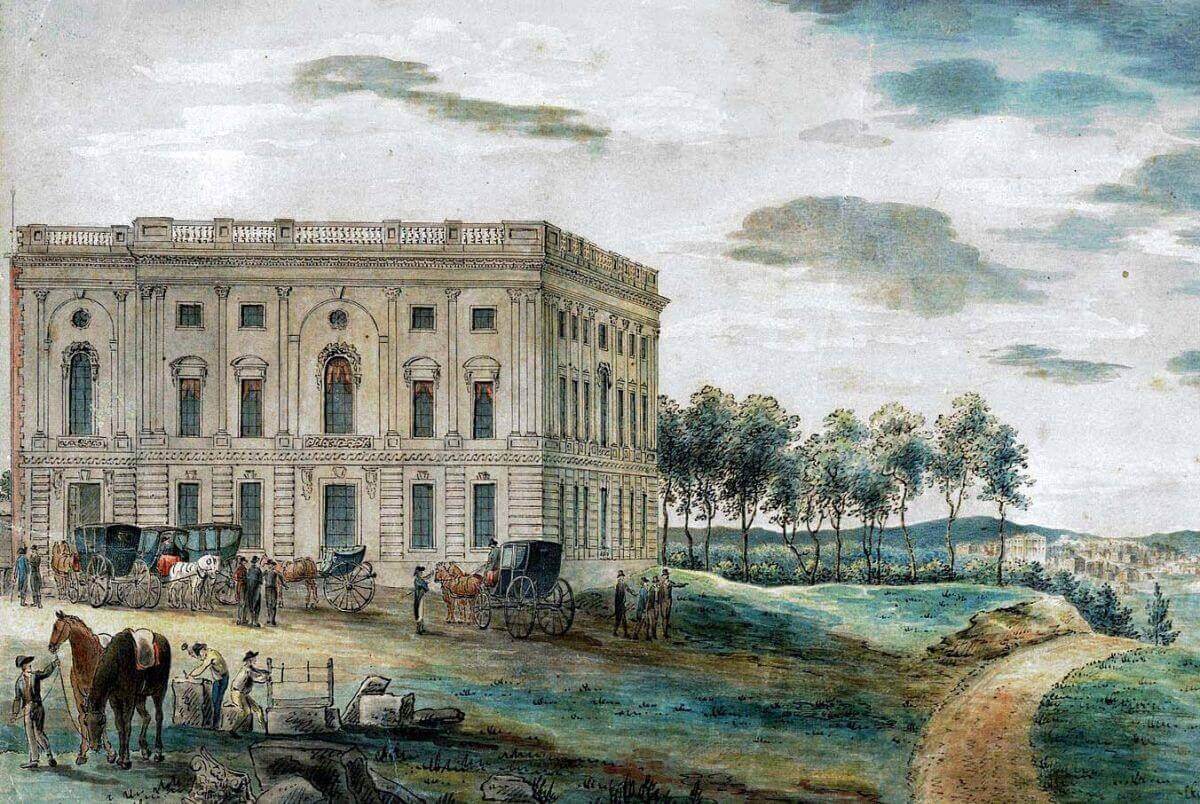
On November 17, 1800, the United States Congress held its first session in the newly completed north wing of the still-unfinished United States Capitol in Washington, D.C.—marking a momentous milestone in American history and the relocation of the national government from Philadelphia.
This move was the culmination of a carefully negotiated political compromise and formal legislation: the Residence Act of 1790 (also known as “An Act for establishing the temporary and permanent seat of the Government of the United States”) had designated the Potomac River site for the national capital and specified that Philadelphia would serve as the temporary seat until the permanent one could be built.
Between 1776 and 1800, the fledgling United States government had occupied nine different capitals—including Philadelphia, Baltimore, Lancaster, York, Princeton, Annapolis, Trenton, and New York—before the final shift to Washington. The new federal district was carved out of land ceded by Maryland and Virginia, and the Capitol building itself was still under construction when Congress convened there—its north wing ready, but much of the rest incomplete.
The relocation signified more than a mere change of address. It symbolized the intent to house the branches of the federal government in a purpose-built national seat, beyond the sway of any one state. As the blog notes, “the Library of Congress was in the Capitol Building from 1800-1897.” The decision to create a city, not within a state, but under federal control, advanced the idea of a national government anchored in its own distinct home.
Yet even as Congress moved, Washington was a rough, nascent city. The Capitol was unfinished, the infrastructure was scant, and the area was still largely rural and remote compared to established eastern cities. Despite this, Congress and the executive branch pressed ahead. The first session in November 1800 occurred just days before the deadline written into the Residence Act, showing the urgency with which the young nation sought to anchor its government in its new capital.
In relocating to Washington, Congress and the nation stepped into a new chapter—one of permanence, institution-building, and nationhood. The Capitol would be completed years later (officially in 1826), and the city would grow into the political and symbolic heart of the nation.
In short, November 17 is more than a date—it represents the moment when the federal government took up residence in its own capital, setting the stage for the evolution of Washington from frontier city into the epicenter of American governance.








this land was given so no state could claim the capital why I am against statehood for the District