
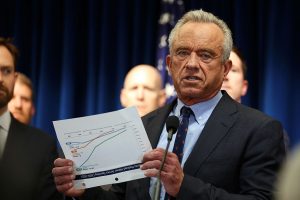
Amid ongoing revelations of large-scale fraud ripping off Medicaid and other taxpayer-funded government programs, the Department of Health and Human Services has announced audits of all 50 states over payouts for autism services.
Medicaid spending on autism has exploded in recent years. In North Carolina alone, autism therapy payments have surged from $6 million in 2021 to a jaw-dropping $660 million in 2025 – a staggering increase of 11,000 percent. This unprecedented spike is fueling concern that taxpayer dollars meant for children with autism are being siphoned away by fraudsters. HHS officials say the issue is not only about stopping fraud, but also ensuring children with autism receive the resources and care they are entitled to.
North Carolina State Auditor Dave Boliek said the magnitude of the increase immediately raised red flags. “These are rocket ship-type spikes,” Boliek said. “It immediately raises the attention that we need to take a look at it and see what’s going on here.”
Federal and state investigators are now reviewing Medicaid autism providers, billing records, and treatment sites across North Carolina. The audit will also determine whether facilities billed as treatment centers actually exist and whether services claimed under Medicaid were genuinely delivered.
The investigation is part of a broader federal review of autism-related Medicaid spending across multiple states. Federal inspector general audits in Indiana, Colorado, Maine, and Wisconsin found improper or potentially improper payments in 100 percent of sampled claims reviewed – an astonishing finding that underscores the depths of the potential fraud. Across those four states, auditors identified approximately $198 million in improper payments, accounting for roughly 31 percent of audited spending.
Applied Behavior Analysis (ABA) therapy – the primary Medicaid-funded treatment for children diagnosed with autism spectrum disorder – has seen rapid expansion alongside rising costs. Supporters of increased spending attribute the growth to higher autism diagnosis rates, expanded insurance coverage, and increased provider availability.
David Laxton, communications director for the Autism Society of North Carolina, said approximately 35,000 children in the state now receive ABA therapy – roughly double the number served a decade ago. The Centers for Disease Control and Prevention has also reported a significant increase in autism prevalence over the past two decades.
However, Medicaid spending on ABA therapy has risen far faster than prevalence rates alone would suggest, according to state and federal audit data. Even with rising diagnoses and expanded coverage, officials reviewing Medicaid expenditures say those factors alone do not explain the scale of the recent spending increases. Across Indiana, Minnesota, Colorado, Massachusetts, Nebraska, North Carolina, Wisconsin, and Maine, Medicaid spending on autism therapy reportedly increased from a combined $347 million to more than $2.2 billion in recent years.
In response, state and federal officials have implemented stricter oversight measures, including tighter billing requirements for ABA providers, enhanced supervision standards, and new restrictions on certain telehealth billing practices. Officials say these procedures are intended to reduce improper payments while preserving access to legitimate care.
The enforcement push comes as the Department of Justice escalates broader healthcare fraud prosecutions nationwide. On May 21, federal prosecutors announced charges against 15 individuals in a Minnesota-based healthcare scheme involving autism-related services. The case included allegations of billing for services never provided, unqualified staff, and illegal kickback arrangements.
Authorities described it as one of the largest Medicaid fraud cases prosecuted in the state.
The HHS audit is expected to further examine whether a similar pattern exists across additional states as federal oversight expands. As investigations continue, federal officials are focusing on a central question: whether the sharp rise in autism-related Medicaid spending reflects legitimate medical need – or whether federal weaknesses have allowed fraud to compromise patient care at the expense of the children these programs are meant to serve.
Lillian Ferrell is a senior at Hillsdale College studying English and music. She has experience in journalism and podcasting as the host of the Grace Over Grind podcast. Her written work focuses on American politics, culture, and public policy.
