
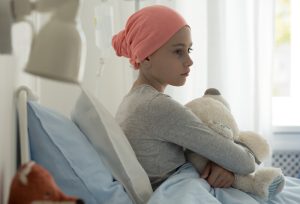
For families with children who have Sanfilippo syndrome, a terminal type of childhood dementia, time is not measured in years or presidential cycles. It is measured in lost words, hospital visits, seizures and skills slipping away. Birthdays are bittersweet because we know there will be far too few of them.
This community is not alone. Children suffering from thousands of rare and debilitating childhood diseases, such as Hunter syndrome, Duchenne muscular dystrophy, and many others, are declining every day.
However, they don’t have to. The Food and Drug Administration can move today to prioritize therapies that have made a measurable difference for these children, such as the Sanfilippo type A gene therapy UX111, which has been helping patients for almost 10 years.
My niece, Sadie, is almost 10 years old and is full of life despite her struggles with Sanfilippo syndrome. Sadie was diagnosed early, at only 3 months old. Around the same time, the first child was dosed with UX111. We have been watching this drug’s development for Sadie’s entire life. We have longed for it to reach approval so she could receive it.
Unfortunately, the application has been delayed twice due to manufacturing documentation, not safety or efficacy concerns. For diseases with a life expectancy of 15 years, accelerated approval and regulatory flexibility must operate as intended.
We’ve spoken to parents of children who have been treated with UX111 at varying ages. Their kids are running when they should be wheelchair bound. They’re eating by mouth when otherwise they should have a feeding tube. After seeing such promise, the FDA’s rejection last summer was devastating. And we weren’t alone, as many rare degenerative disease patients watched approvals for diseases like Duchenne and Spinocerebellar ataxia slow or come to a screeching regulatory halt.
We are hopeful that the next decision date will be sometime this summer, which will be one year since the initial rejection. This represents a year of lost abilities, during which many children will permanently lose the ability to walk, talk or eat.
I’ve watched Sadie go from spelling her name at age 2, knowing hundreds of words, and speaking in full sentences, to now, maybe only saying one word a day. She’s also falling and choking more. I don’t want to see any other children suffer or families have their hearts broken while we wait for this life-changing drug to be approved or while other rare disease families relive the same delay.
Given my background in data analytics, I have been tracking FDA decisions. Since new leadership took over, 82 percent of applications for rare neurodegenerative diseases have received denials.
Additionally, while 50 percent of approvals for rare cancers received accelerated approval, only 11 percent of approvals for non-oncology rare diseases did. The Center for Biologics Evaluation and Research approved only three new rare disease drugs in 2025, down 75 percent from two years earlier.
When the goalposts are moved, children lose the game.
The rare disease community’s requests to the FDA are simple: Maintain commitments to using disease-causing biomarkers for accelerated approvals and apply flexibility across manufacturing, trial design and labeling. Last, include the patient voice in all aspects of drug development.
In other words: put kids first.
Since UX111 was rejected in July, Sadie has experienced an agonizing increase in agitation and a decrease in cognitive, motor and verbal skills. We miss her singing and dancing. If this drug is approved quickly for kids of all ages, we have a chance at stabilizing Sadie’s disease progression, which is a huge win in any neurodegenerative disease.
On February 26, the Special Senate Committee on Aging will hold a hearing on the FDA’s approval process for rare childhood diseases. We are encouraged that the challenges and opportunities to do better for the rare disease community will be highlighted, especially as more families report the same barriers across different conditions.
FDA officials and scientists bring unique expertise, but patient families bring critical lived experience. We are the voices for patients who cannot speak for themselves, and we must be part of the process.
For kids with fatal rare diseases, we don’t have time to wait.
Reprinted with permission from DC Journal by Jessica Haywood.
The opinions expressed by columnists are their own and do not necessarily represent the views of AMAC or AMAC Action.