
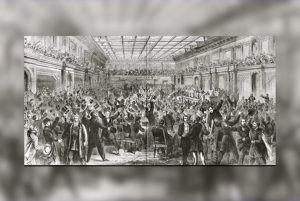
On April 8, 1864, in the midst of the Civil War, the United States Senate took a historic first step toward ending slavery by passing what would become the Thirteenth Amendment. Though the amendment would not be fully ratified until the following year, this vote marked a critical turning point—transforming the fight against slavery from a wartime policy into a permanent constitutional objective.
At the time, the nation was deeply divided, and the future of millions of enslaved people remained uncertain. President Abraham Lincoln’s Emancipation Proclamation of 1863 had declared freedom for enslaved individuals in Confederate-held territories, but it was limited in scope and vulnerable to legal challenges. Many lawmakers recognized that only a constitutional amendment could abolish slavery nationwide and ensure it could not be reinstated.
The effort to create such an amendment gained momentum in early 1864. Various proposals were introduced and refined in Congress, eventually coalescing into a joint resolution that declared that neither slavery nor involuntary servitude would exist in the United States, except as punishment for a crime. This language drew from earlier anti-slavery measures, including the Northwest Ordinance, and represented a decisive shift in federal policy.
When the Senate brought the measure to a vote on April 8, it passed with a strong margin of 38 to 6. The coalition behind it included Republicans, as well as a small but significant number of Democrats from border and Union states. The vote took place before a packed gallery, reflecting the intense national interest in the issue. For supporters, it was a moral and political victory—proof that the federal government was committed to ending slavery once and for all.
However, the Senate’s approval was only the beginning of a difficult journey. Just two months later, the amendment failed to secure the necessary two-thirds majority in the House of Representatives. Political divisions, concerns over states’ rights, and the uncertainties of an ongoing war all contributed to its initial rejection.
Despite this setback, momentum continued to build. Lincoln, recognizing the amendment’s importance, made its passage a priority during his reelection campaign. By early 1865, shifting political dynamics and Union military successes helped sway enough votes in the House to finally approve the amendment. It was then sent to the states, where it was ratified in December 1865, officially abolishing slavery in the United States.
The Senate’s vote on April 8, 1864, stands as a pivotal moment in American history. It signaled a decisive commitment to freedom and equality, laying the groundwork for one of the most transformative changes to the Constitution. While the road to ratification was long and complex, this initial act by the Senate marked the beginning of the end for slavery in the United States.
