
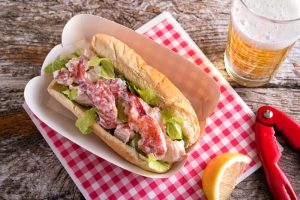
From sea to shining sea, each region’s cuisine reflects migration, innovation, and cultural blending throughout American history.
Lobster Rolls (Northeast)
Lobster rolls originated in New England in the early 20th century, when lobster—once considered a cheap, abundant food—became more desirable as transportation and refrigeration improved. First popularized in Connecticut and Maine, the sandwich showcased fresh lobster meat served in a buttered roll, either warm with melted butter or chilled with mayonnaise. Over time, lobster rolls evolved into a regional delicacy and a symbol of coastal New England’s rich maritime heritage.
Cold Lobster Rolls
Ingredients:
- 8 oz Lobster meat claw and knuckle
- 2 tbsp Mayonnaise
- pinch of White Pepper
- pinch of Kosher Salt
- 2 tbsp Celery (peeled and diced)
- 2 Hot dog rolls (Martin’s Potato Rolls are our favorite)
- 2 tbsp Mayonnaise or soft butter to grill
- Green leaf lettuce
Optional – Chopped chives and a wedge of lemon to garnish
Instructions:
- Tear lobster meat into bite-size pieces, about 1 cups worth (be generous!)
- Add lobster meat, mayonnaise, white pepper, salt, and celery to a large bowl. Mix well and chill in the refrigerator until ready to use.
- Spread a layer of mayonnaise or butter onto both sides of 2 rolls. Place on a pan or griddle over medium heat & grill each side until golden brown.
- Time to assemble! Start by placing a piece of green leaf lettuce in the roll as a base. Divide the lobster mixture evenly between rolls.
- Garnish with chopped chives and a squeeze of fresh lemon (if you choose).
- Serve immediately!
Warm Lobster Rolls
Ingredients:
- 8 oz Lobster meat claw and knuckle
- Pinch of White Pepper
- Pinch of Kosher Salt
- 4 tbsp Butter
- ½ Lemon Zest
- 2 Hot dog rolls (Martin’s Potato Rolls are our favorite)
- 1 tbsp Mayonnaise or Soft Butter to grill
- Chopped Chives to garnish
Instructions:
- Tear lobster meat into bite-size pieces, about 1 cups worth (be generous!)
- Spread a layer of mayonnaise or butter onto both sides of 2 rolls. Place on a pan or griddle over medium heat & grill each side until golden brown. Set aside.
- Add butter to a pre-heated pan over medium heat. Allow to fully melt.
- Add lobster, stir, and allow to simmer until warm, about 2 minutes.
- Add salt, white pepper, and lemon zest. Mix and simmer 1 more minute before removing from heat.
- Divide the warm lobster mixture evenly between rolls. Spoon additional lemon butter over each roll. Garnish with chopped chives.
- Enjoy immediately!
Why it Matters:
Once considered a poor man’s food, lobster became a New England delicacy as transportation improved in the 19th century.
Southern Fried Chicken (South)
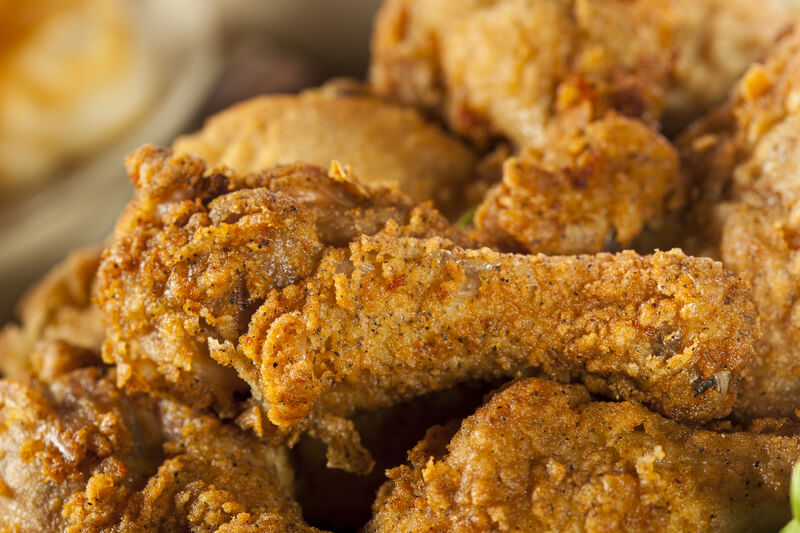
Southern fried chicken has roots in a blend of cultural traditions, combining Scottish frying techniques with West African seasoning and cooking methods brought by enslaved people. In the American South, this fusion created a uniquely flavorful dish that became a staple of home cooking and community gatherings. Over time, fried chicken grew into a symbol of Southern hospitality, resilience, and the rich cultural influences that shaped American cuisine.
Ingredients:
- One 4-pound chicken, cut into 8 pieces
- 2 large eggs
- 1/2 cup whole milk
- 1 1/2 cups all-purpose flour
- 1 tbsp seasoned salt, such as Lawry’s
- 1 tsp seasoned pepper, such as Lawry’s
- 24 ounces solid vegetable shortening, such as Crisco
Instructions:
- Pat the chicken pieces dry and line a baking sheet with wax paper.
- In a large bowl, whisk the eggs with the milk.
- Add the chicken.
- In another bowl, whisk the flour with the seasoned salt and seasoned pepper.
- Dredge the chicken in the seasoned flour and transfer to the baking sheet.
- In a 12-inch, cast-iron skillet, heat the vegetable shortening to 365°.
- Add all of the chicken and fry over moderate heat, turning occasionally, until deeply golden brown and an instant-read thermometer inserted nearest the bone registers 170°, 20 to 24 minutes.
- Drain the chicken on paper towels and serve right away.
Why it Matters:
Rooted in Scottish frying techniques and West African seasoning traditions, fried chicken represents cultural fusion in early America.
Jambalaya (Louisiana)
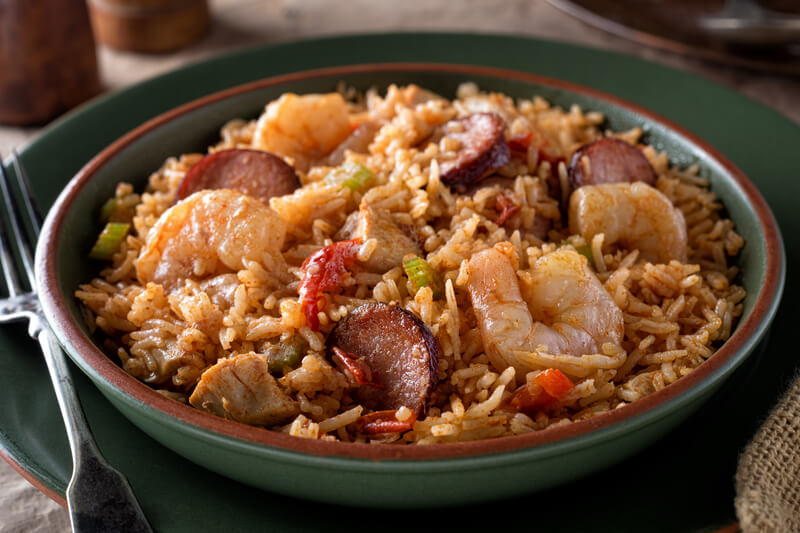
Jambalaya reflects the rich cultural history of Louisiana, blending Spanish, French, and West African influences into one iconic dish. Inspired by Spanish paella, it evolved in the 18th century when the Spanish brought the dish to New Orleans and used local ingredients like rice, sausage, seafood, and spices. Over time, jambalaya became a symbol of Louisiana’s diverse heritage and the broader American story of cultural fusion and regional identity.
Ingredients:
- 1 pound pork, cubed
- 1 tsp Cajun seasoning
- 1 tbsp vegetable oil
- ½ pound smoked sausage, sliced
- 1 cup onion, chopped
- ½ cup green bell pepper, chopped
- ½ cup celery, chopped
- 1 tbsp garlic, minced
- 1 tbsp dark roux
- ½ cup water
- 2 cups rice
- 3½ cup beef broth
- 2 bay leaves
- 1 tsp Louisiana-style hot sauce
- ¼ cup green onions, chopped
- 2 tbsp parsley, minced
Optional – ¾ pound uncooked peeled deveined medium shrimp
Instructions:
- Season pork with Cajun seasoning.
- In a large sauce pot heat oil, stir in seasoned pork and cook over medium heat for 10 minutes, stirring occasionally.
- Add smoked sausage and cook for an additional 5 minutes.
- Stir in onion, bell pepper, celery, garlic and cook for 5 minutes.
- Stir in roux and water, cover pot and cook for 10 minutes, stirring occasionally.
- Stir in rice and cook for 1 minute; add beef broth, bay leaves and hot sauce.
- Bring to boil, cover pot and turn stove on low.
- Cook for 30 minutes, stirring every 10 minutes. (If using shrimp, add to pot with about 15 minutes left in the cooking process.)
- Stir in green onions and parsley and serve.
Why it Matters:
A product of Spanish, French, and African influences, jambalaya reflects the melting pot of American cuisine.
Want to see more recipes tied to America’s history? Visit amac.us/250 to learn more!

