
These festive dishes are just about as patriotic as it gets—they reflect key moments in American innovation and culture.
Homemade Ice Cream
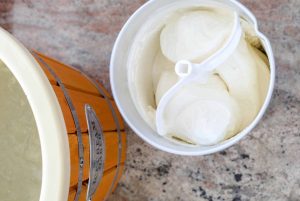
Homemade ice cream has a long global history, but it became especially significant in early America thanks to Thomas Jefferson. While ice cream was already enjoyed in the colonies as early as the mid-1700s, Jefferson encountered refined versions of the dessert during his time in France in the 1780s and developed a lasting appreciation for it. Upon returning home, he wrote down what is considered the first known ice cream recipe by an American and served the treat to guests at the White House, helping elevate its popularity. His version—often flavored with vanilla—helped transform ice cream from a rare luxury into a beloved American dessert, making it a fitting addition to celebrations like Independence Day.
Ingredients:
- 1 quart of cream
- 6 egg yolks
- 1 cup sugar
- 2 tsp vanilla
Instructions:
- Beat the yolks of 6 eggs until thick and lemon colored.
- Add, gradually, 1 cup of sugar and a pinch of salt.
- Bring to a boil 1 quart of cream and pour slowly on the egg mixture.
- Put in the top of a double boiler and when it thickens, remove and strain through a fine sieve into a bowl.
- When cool, add 2 teaspoonfuls of vanilla.
- Freeze, as usual, with one part of salt to three parts of ice.
- Place in a mold, pack in ice and salt for several hours.
*For electric refrigerators, follow usual direction, but stir frequently.
Why it Matters:
Thomas Jefferson helped popularize ice cream in America after encountering it in France. His handwritten recipe still exists today.
Baked Beans (Colonial & Boston Tradition)
Baked beans have deep roots in early American history, particularly in New England. The dish originated from Native American cooking traditions, where beans were slowly cooked with maple syrup and fat in earthen pots. European colonists adapted the recipe by incorporating ingredients like molasses and salt pork, creating the version we recognize today. In Boston, baked beans became especially popular in the 18th and 19th centuries, earning the city the nickname “Beantown.” Traditionally prepared on Saturdays to last through the Sabbath, baked beans remain a symbol of colonial ingenuity and enduring American food culture.
Ingredients:
- 2 cups navy beans
- Salt
- ½ pound slab bacon, cut into cubes
- 1 medium onion, peeled and chopped
- ⅓ cup molasses
- 2 tsp dry mustard
- 1 tsp ground black pepper
Instructions:
- Soak beans in a large bowl of water for 6 hours or overnight.
- Drain beans and put them in a large oven-safe pot with a heavy bottom and a tight-fitting lid.
- Add 1 teaspoon salt and enough cool water to cover 2 inches above the beans.
- Bring to a boil, then lower the heat and simmer gently, stirring occasionally, until the beans are just tender, approximately 30 to 40 minutes.
- Drain and remove beans.
- Heat the oven to 250 degrees.
- Bring a kettle full of water to a boil on the stove.
- Return the heavy-bottomed pot to the stove and turn the heat to medium-high.
- Cook the bacon in the bottom of the pot until it begins to brown, then turn off the heat and add the chopped onion and, on top of it, the beans.
- Mix together molasses, mustard, and black pepper, and add the mixture to the pot.
- Pour in enough boiling water to cover beans, put the lid on, and bake, occasionally adding more water to keep beans covered, until they are tender but not falling apart, 4 to 5 hours.
- Remove beans from oven, uncover, stir, and season with salt.
- With the lid off, return the pot to the oven and let the beans finish cooking, uncovered and without additional water, until the sauce has thickened and the top is deeply crusty, about 45 minutes more.
Why it Matters:
A staple in New England, baked beans reflect early colonial cooking methods and Native American influence.
Applesauce Cake
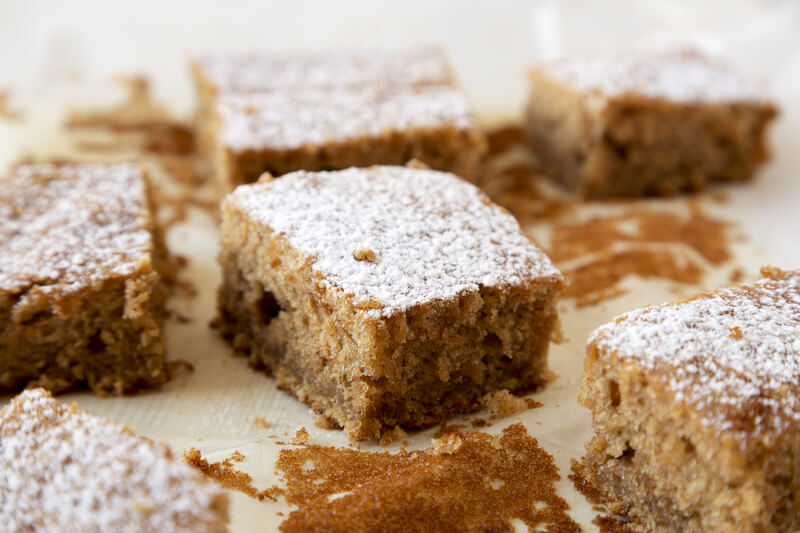
Applesauce cake has its roots in early American home cooking, when resourceful bakers looked for ways to make desserts with simple, readily available ingredients. Apples were abundant in colonial and early rural America, and applesauce became a popular substitute for butter, sugar, or eggs—especially during times of rationing, such as World War I and World War II. Spiced with cinnamon, nutmeg, and cloves, applesauce cake offered a moist, flavorful treat that didn’t rely on scarce ingredients. Over time, it became a beloved staple of American kitchens, symbolizing thrift, creativity, and the comforting traditions of homemade baking.
Ingredients:
- 2 tbsp unsalted butter, room temperature
- ½ cup granulated sugar
- ½ cup molasses
- 1 cup unsweetened applesauce
- 2 cups all-purpose flour
- 1 tsp baking powder
- ½ tsp baking soda
- 1 tsp ground cinnamon
- ½ tsp ground cloves
- ¼ tsp ground nutmeg
- ¼ tsp salt
- ¾ cup raisins
- ½ cup walnut pieces
Instructions:
- Preheat oven to 350F. Butter the inside of an 8 x 8-inch baking dish.
- In a large bowl, cream together the butter and sugar. Add molasses and applesauce and stir to combine.
- In a separate bowl, combine the flour, baking powder, baking soda, cinnamon, cloves, nutmeg, and salt.
- Slowly add dry ingredients to the wet ingredients, stirring well until a smooth batter forms.
- Pour into the prepared dish and bake for 30–35 minutes, or until the center springs back when lightly pressed.
- Cool completely before cutting into 9 pieces. Serve plain or frosted.
Why it Matters:
Applesauce Cake symbolizes American resourcefulness, using simple ingredients to create comforting desserts during times of scarcity, like the World Wars.
Want to see more recipes tied to America’s history? Visit amac.us/250 to learn more!

