
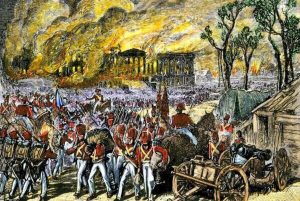
On June 1, 1812, President James Madison delivered a pivotal message to Congress that would help propel the United States into the War of 1812. Known as the “War Message,” the address outlined a series of grievances against Great Britain and argued that British actions had violated American sovereignty, threatened national security, and undermined the nation’s rights as an independent and neutral power. The speech marked one of the most consequential moments of Madison’s presidency and set the stage for the first formal declaration of war by the United States against another nation.
At the heart of Madison’s argument was the British practice of impressment, in which Royal Navy vessels stopped American ships and forcibly removed sailors alleged to be British subjects. Madison contended that this policy violated international law and American sovereignty, noting that thousands of U.S. citizens had been seized and compelled to serve aboard British warships. He portrayed impressment not as a legitimate wartime measure but as an affront to the rights and dignity of the American people.
Madison also condemned Britain’s interference with American commerce during the Napoleonic Wars. Through a series of trade restrictions known as the Orders in Council, Britain limited neutral trade and disrupted American shipping. The president argued that these measures unfairly targeted U.S. economic interests and reflected Britain’s broader disregard for the rights of neutral nations. According to Madison, repeated diplomatic efforts and economic sanctions had failed to secure meaningful concessions from the British government.
Another major concern was Britain’s alleged support for Native American resistance along the American frontier. Madison charged that British agents in Canada were encouraging and supplying Indigenous groups engaged in conflicts with U.S. settlers, thereby threatening American expansion and security in the West. This accusation resonated strongly with congressional “War Hawks,” who favored a more aggressive response to British actions.
Although Madison stopped short of explicitly demanding a declaration of war, his message left little doubt about the course he believed Congress should take. He presented Britain’s actions as a sustained pattern of hostility that could no longer be addressed through diplomacy alone. Within weeks, Congress narrowly approved a declaration of war, and on June 18, 1812, Madison signed it into law.
This message remains a landmark document in American history. It illustrates the young nation’s struggle to defend its sovereignty amid global conflict and highlights the tensions between diplomacy, commerce, and military action that shaped early U.S. foreign policy.
