
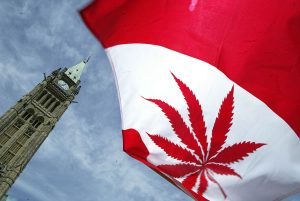
British Columbia ended its drug decriminalization “experiment” last month after the liberal leaders of the west coast Canadian province were forced to admit that the program had caused widespread chaos and failed to alleviate the intensifying addiction crisis devastating communities.
The program “hasn’t delivered the results that we hoped for,” said Josie Osborne, British Columbia’s Health Minister, in what could perhaps be the understatement of the century. “At the end of the three-year pilot, it is difficult, if not even possible, to attribute certain changes [in the number of people accessing care] directly to decriminalization,” she added.
This failure mirrors Oregon’s recent retreat from drug decriminalization and strikes another blow to the insistence of American liberals that allowing open use of hard drugs is a viable policy choice. In 2024, the Beaver State’s Democrat-dominated legislature was forced to confront the same reality as British Columbia, rolling back much of its decriminalization policy after a surge in overdose deaths and worsening public disorder.
The cases of Oregon and British Columbia teach the same hard lesson: conservative warnings were right. Decriminalizing hard drugs does not reduce harm. It multiplies death, erodes public safety, and negatively impacts everyone, not just users.
Over the objections of Conservative Party lawmakers in 2022, Canada’s Liberal–New Democratic governing coalition granted British Columbia a first-of-its-kind exemption from the nation’s Controlled Drugs and Substances Act. Then-Prime Minister Justin Trudeau celebrated the move as a “pilot” meant to be scaled nationwide. The exemption effectively decriminalized hard-drug possession for adults, allowing individuals to carry up to 2.5 grams of cocaine, methamphetamine, ecstasy, heroin, or fentanyl without arrest or prosecution.
The results were predictably disastrous.
Canadian policymakers wagered that “destigmatizing” addiction by framing it as a health matter rather than a criminal justice issue would steer more users into treatment. But the policy had the exact opposite effect. By imposing no accountability and requiring no recovery, it established a permission structure for open, destructive drug use in public spaces.
Parents soon reported playgrounds littered with discarded syringes. People began smoking fentanyl and meth openly inside hospitals. Within a year, the Vancouver Police Department testified to Parliament that officers were confronting “several high-profile instances of problematic drug use” in parks, beaches, and transit corridors. Small businesses suffered most, as families simply stopped going out, ceding public life to the chaos the state had chosen to tolerate.
A comparative study examining British Columbia alongside several other Canadian provinces found that leniency toward hard drug possession coincided with a rise in opioid-related hospitalizations. The findings punctured liberal claims that decriminalization would improve public health, raising unavoidable questions about whether Parliament’s progressive majority had recklessly conducted a social experiment on an unwitting public.
But perhaps the greatest scandal of all in British Columbia’s fiasco is how long it took the government to reverse itself. Back in 2024, Canada’s Conservative leader, Pierre Poilievre, correctly described drug decriminalization as “a wacko policy from a wacko PM that’s destroying lives.”
Trudeau and his Liberal Party responded not by reckoning with the policy’s failure, but by accusing Poilievre of courting “white nationalist groups” and then kicking him out of the House of Commons for the day.
Ultimately, it wasn’t rising deaths and public disorder that finally moved Canada’s Liberal leadership to reverse course – it was politics.
As polling ahead of the 2024 election showed growing momentum for Conservative challengers, Trudeau and his allies recriminalized the use of hard drugs in public – a change designed not to actually stop the harm, but to hide it from the view of voters.
But as the consequences of the policy got worse and worse, some Liberals finally began to grow a conscience. Speaking at a Vancouver event in late 2025, British Columbia Premier David Eby conceded, “I was wrong on drug decriminalization and the effect it would have. It was not the right policy.”
Yet despite these abysmal failures in both British Columbia and Oregon, some Democrats continue to push hard drug leniency as an answer to overdoses. Rising progressive stars like New York City Mayor Zohran Mamdani and other far-left leaders continue to claim in the face of all evidence to the contrary that leniency toward hard drug use is the answer to addiction.
Mamdani avoids the politically toxic label of “decriminalization” by rebranding the policy under his so-called “Agenda for Decarceration,” a platform promoted by his party, the New York City Democratic Socialists of America. That agenda includes taxpayer-funded “safe” injection sites, ending cash bail, slashing prosecutors’ budgets, and decriminalizing other activities such as prostitution.
While the New York State Legislature would ultimately have to change the law to fully enact these proposals, Mamdani has made clear he does not intend to wait. He campaigned on using mayoral authority to deprioritize enforcement of drug possession misdemeanors, directing police to effectively look the other way.
In practice, this approach advances the same failed leniency through executive discretion, substituting enforcement retreat for legislative debate and repeating the mistakes that have already hollowed out public order in other progressive-controlled jurisdictions.
British Columbia and Oregon did not stumble into failure by accident. They followed a theory that conservatives warned was detached from human nature, public safety, and lived reality. Those warnings were dismissed as cruel, ideological, or reactionary until the bodies piled up and public order collapsed.
Today, the evidence is undeniable. Decriminalizing hard drugs does not save lives. It sacrifices them. But as the destructive path of progressives like Zohran Mamdani shows, the fight to defend common sense and public safety is far from over.
W.J. Lee has served in the White House, NASA, on multiple campaigns, and in nearly all levels of government.
