
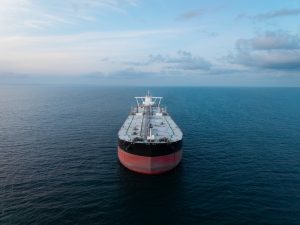
Since February, when President Trump and Israel confronted Iran militarily to stop a nuclear and long-range missile breakout, oil markets have shuddered. The Strait of Hormuz – the route on which Europe and China depend – was effectively closed down. Gas prices rose. With midterm elections in the US less than five months away, what’s next?
The answer may surprise you. If the reportedly imminent peace deal unfolds, we may see as swift a fall in gas prices as the February rise. True, some capacity has to be brought online. True, we could have more damage ahead, before that deal is sealed.
That said, even now crude oil prices are falling in anticipation of the deal being cemented. Last week, according to Trading Economics, “crude oil fell 3.2 percent to $84.88 per barrel, as expectations increased that the US and Iran could reach an agreement to reopen the Strait of Hormuz,” cautiously adding “a deal was not guaranteed.”
Overall, “prices declined about 6 percent … but remain more than 20 percent higher” than in February. Promisingly, the Trump administration reported “an 80 percent chance of a deal being signed soon,” including the “reopening of Hormuz, removal of the naval blockade, dismantling of Iran’s nuclear program and economic incentives…”
Accordingly, the near term is hopeful. But what of public confidence and gas prices – sure to affect November’s midterms? If economics tops all lists, where are those measures?
Interestingly, the University of Michigan’s “consumer sentiment” index rose to 48.9 in early June, exceeding the 46-point expectation, reversing the slide to 44 from February to May.
On gas prices, history could be – as it always is – a useful guide. In 2022, the most recent example to track, gas prices “rose sharply” in February 2022, based on the Russia-Ukraine war. Oil production and transit were threatened, affecting Europe, just as access to and ability to safely transit the Hormuz Strait today affects Europe (and China).
Just like today – only worse – the price of gas at the pump peaked (on average) at $5.01 per gallon in June 2022. People were as dismayed, worried, and unsettled by mid-June 2022 as they are right now, only worse. Sentiment is already rebounding in June 2026.
So, as “normal” – or a manageable understanding of global oil markets – again looked possible, what happened between June and November 2022? In short, public confidence in the conflict’s retreat reopened world energy flows.
Specifically, in August 2022, refinery production rose, confidence returned, demand fell slightly, and prices came down. By the end of 2022, “the average U.S. retail price for regular gasoline had fallen to $3.09 per gallon,” not only two dollars below February, but nineteen cents lower than the start of 2022.
Such was public relief – and the restoration of affordable gas expectations – that public sentiment was again high, and gas prices lower than before the conflict.
Now, ask yourself: How much more likely is that outcome if the Iran and Hormuz Strait conflicts are resolved, no more threat of nuclear Iran, or long-range ballistic missile development, a nominally more rational government, and elevated chances of a broad, enduring Middle East peace?
In short, while some fear volatility stretching into November and the fear has basis, reality is – as history suggests – a new peace will lower prices, raise confidence, and make mid-term elections stable.
Robert Charles is a former Assistant Secretary of State under Colin Powell, former Reagan and Bush 41 White House staffer, Maine attorney, ten-year naval intelligence officer (USNR), and 25-year businessman. He wrote “Narcotics and Terrorism” (2003), “Eagles and Evergreens” (North Country Press, 2018), and “Cherish America: Stories of Courage, Character, and Kindness” (Tower Publishing, 2024). He is the National Spokesman for AMAC. Today, he is running to be Maine’s next Governor (please visit BobbyforMaine.com to learn more)!
