
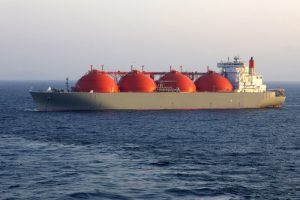
The price of gas and oil predictably climbs as President Trump concludes the conflict with Iran. Iran has threatened the Strait of Hormuz, through which its own oil passes. Liberal media are gleeful, imagining midterms going to Democrats over inflation. That said, smart money is on lower prices.
If this sounds counterintuitive, oil shocks historically are of three kinds: short, medium, and structural or permanent. They have been defined by an unchanging Middle East, OPEC control over global supply, not by an energy-independent United States and South America.
Objectively, many oil analysts – not preoccupied by domestic US politics, watching long-term trends – suggest backing Iran down, ending their radical Islamic power projection, terror, nuclear, and long-range ballistic missile ambitions, could be a stabilizing force, so long as the Strait stays open.
They note “crude oil price movements” rose “sharply” after Trump pushed to arrest Iran’s nuclear and ballistic missile ambitions, up 50 percent this year, but they attribute this to temporary – not structural – issues. The Strait is threatened, but that can be stopped fast. Some production has stopped.
This is not a land war, not one with the staying power of the 1973, 1979, Gulf I, or Iraq – at least not yet. The strikes are surgical, have not hit major oil production, and can likely be fast reversed. Likewise, the conflict is not Pan-Arab, not Israel against the Arabs, but more all against Iran’s irrationality.
While continued closure of the Strait could keep prices high for now, Iran’s need to use the Strait to export, China and India’s need for Middle East oil, and geopolitical reasons for keeping the Strait open are likely to lead either to capitulation by Iran or unified action to assure Strait security.
Adding to the likelihood of US oil and gas prices coming down after the initial shock and uncertainty is the extraordinary ability of North America, now aided by Venezuela, to keep production constant, meeting projected US needs. We import very little from the Middle East.
As one major report put it, “We assume this shut-in production” – Middle East oil transit held by uncertainty over safe passage through the Strait – “will gradually ease as transit through the Strait resumes.”
Looking at hard numbers, experts forecast crude oil “will remain above $95 a barrel over the next two months,” or through the start of the summer, then retreat to “below $80 a barrel in the third quarter,” dropping to $70 a barrel by the 4th quarter.
The news in the US is actually likely to be good, first for producers and later consumers, as supply is bumped up from 13.6 million barrels a day to 13.8 billion barrels by early next year.
On natural gas, Europe and the US have more in storage due to a mild winter, and as with oil, US production is expected to increase, electricity generation rising by 1.2 percent in 2026, then 3.1 percent in 2027. will also increase in the US.
Notably, also likely to lower prices by summer, President Trump has just released 172 million barrels of oil from the “Strategic Petroleum Reserve,” to blunt near-term price rises and relax the energy markets. If more oil were needed later in the year, Trump could do this again.
Will these measures re-stabilize oil and gas prices? Are these predictions of mid-to-late-year reductions in cost accurate? Will the economy be roaring again, inflation under wraps, by year’s end?
Truth be told, there is no way to know – since this conflict with Iran, a “just war” to end a potentially catastrophic nuclear and ballistic missile threat, must end. That said, if ground troops remain out, defensive inventories are strong, the Strait is open, and oil and gas prices should fall. If that happens, Democrats’ perverted glee over high inflation producing midterm victories will be up in smoke.
Robert Charles is a former Assistant Secretary of State under Colin Powell, former Reagan and Bush 41 White House staffer, Maine attorney, ten-year naval intelligence officer (USNR), and 25-year businessman. He wrote “Narcotics and Terrorism” (2003), “Eagles and Evergreens” (North Country Press, 2018), and “Cherish America: Stories of Courage, Character, and Kindness” (Tower Publishing, 2024). He is the National Spokesman for AMAC. Today, he is running to be Maine’s next Governor (please visit BobbyforMaine.com to learn more)!
