
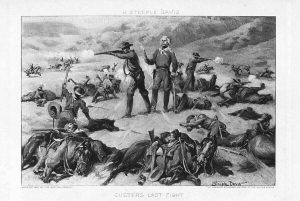
On June 25, 1876, one of the most famous and controversial battles in American history unfolded along the banks of the Little Bighorn River in present-day Montana. Known as the Battle of the Little Bighorn—or “Custer’s Last Stand”—the conflict pitted U.S. Army forces led by Lieutenant Colonel George Armstrong Custer against a coalition of Lakota Sioux, Northern Cheyenne, and Arapaho warriors. The battle ended in a stunning Native American victory and became a defining moment in the history of the American West.
The roots of the conflict lay in growing tensions between the United States government and Native American tribes living on the Great Plains. The 1868 Treaty of Fort Laramie had guaranteed the Lakota Sioux control of the Black Hills, a region considered sacred to the tribe. However, the discovery of gold in the Black Hills in 1874 triggered an influx of prospectors and settlers, leading the U.S. government to seek greater control over the area. When many Native groups refused to relocate to reservations, military campaigns were launched to force compliance.
In the spring of 1876, several bands of Lakota, Cheyenne, and Arapaho gathered near the Little Bighorn River. Among their leaders were renowned figures such as Sitting Bull, Crazy Horse, and Gall. The encampment represented one of the largest gatherings of Plains Indians in history, with thousands of people assembled to preserve their traditional way of life.
Tasked with locating and engaging Native forces, Custer led approximately 600 soldiers of the 7th Cavalry Regiment into the region. Believing he faced a smaller force, Custer divided his regiment into separate battalions in an effort to attack the village from multiple directions. The strategy proved disastrous. Instead of encountering a small group of warriors, the cavalry found itself facing a much larger and highly motivated force.
As the battle intensified, Native warriors overwhelmed the divided U.S. troops. Custer and more than 200 men under his direct command were killed in the fighting. Other elements of the regiment managed to hold defensive positions until reinforcements arrived. While estimates vary, the battle resulted in significant casualties on both sides and delivered one of the most decisive defeats ever suffered by the U.S. Army during the Indian Wars.
News of the defeat shocked the nation. Custer, already a well-known Civil War hero, was transformed into a legendary figure in American popular culture. For many Native Americans, however, the battle represented a powerful defense of their land, sovereignty, and way of life against increasing encroachment.
Although the victory at Little Bighorn was a triumph for the Lakota and their allies, it proved short-lived. The U.S. government responded with renewed military efforts, eventually forcing many tribes onto reservations. Today, the Battle of the Little Bighorn is remembered as a pivotal moment in American history, symbolizing both Native resistance and the tragic consequences of westward expansion.
