
On May 31, a hotly contested presidential election was held in Colombia. Voting began at 7 a.m. on Election Day and closed at 4 p.m. About 23.3 million ballots were cast. By midnight, the results were known: Abelardo De La Espriella came out on top with 10,361,499 votes (43.74 percent), Iván Cepeda Castro came in second with 9,688,361 votes (40.90 percent), and the remaining 3.3 million votes were spread among 12 other candidates.
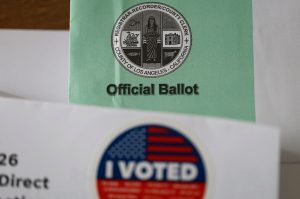
Compare that to the primary elections held on June 2 in California. Six days after Election Day, the results of the gubernatorial primary are still not finalized because only 72 percent of the ballots have been counted as of late Sunday evening.
How is it possible for Colombia, a country full of drug lords and rife with corruption, to count its votes in a single day while California frequently takes weeks to count its ballots?
Is it because there are far more votes to count in California? Nope. The Golden State has 23.1 million registered voters, and the average turnout is a little over 52 percent. This means that Colombia counts twice as many votes in one day as California tallies up in one week – or sometimes multiple weeks.
Moreover, Colombia is a mountainous country nearly three times as large as California geographically. California is also light-years ahead of Colombia technologically.
So, what exactly is wrong with California? The problem is obviously its intentionally insecure mail-in voting system and mandatory 30-day canvass period. The California Secretary of State’s website characterizes this pig’s breakfast as follows:
“California has the largest number of registered voters in the nation… Ensuring that all votes cast by eligible voters are accurately processed and counted takes time. The complete tally of votes is never finished on Election Night as vote-by-mail ballots postmarked on or before Election Day and received within seven days after the election, as well as any provisional ballots cast, must still be counted. These ballots are always counted during the official canvass period in the 30 days after Election Day.”
The system is clearly designed to be slow and insecure. Even worse, California doesn’t require anyone to show an ID when registering to vote or casting a ballot and is notoriously negligent about cleaning its voter rolls. Thus, those voter rolls contain large numbers of ineligible voters—including illegal aliens, dead people, and many who have left the state to avoid its high taxes, skyrocketing cost of living, and crime. Yet every person listed on these bloated voter rolls is sent a postage-paid mail-in ballot, many of which are intercepted by paid ballot harvesters.
All of which begs the following question: What does Colombia do differently than California? According to a report in Breitbart News, Sen. Bernie Moreno (R-OH) went to the South American nation as an observer during the May 31 election and described it as a “world-class” election model from which the United States had much to learn.
“You have to show that ID when you present yourself to get your ballot,” he explained. In fact, in some polling places where they suspect there might be fraud, they even have fingerprint and facial recognition biometrics.” Fingerprint and facial recognition biometrics. Yet California, with a GDP more than ten times that of Colombia, can’t even implement signature verification.
Sen. Moreno, who is Colombian-American, goes on to explain that all ballots are paper and counted by hand without machines. Nor does Colombia allow mail-in voting of any kind. Even if a voter lives overseas, they are required to go in-person to the nearest consulate and prove who they are before they are permitted to vote. The only process that Colombia and California have in common is the nonpartisan primary followed by a run-off if no candidate crosses the 50 percent threshold.
Political science professor Brian Norris describes another feature of Colombia’s process that would vastly improve U.S. elections:
“Despite having 32 states—called departments—and being a federal system, Colombian election rules are codified nationally and therefore standardized throughout the country. In Colombia, all polling stations have paper ballots only, and state officials do not have the constitutional authority to change this. In contrast, specific election laws are set at the state and local levels in the U.S. As a result, Virginia has all-electronic voting while Ohio and Missouri require a paper ballot to complement electronic voting.”
The kind of election uniformity Colombia enjoys is badly needed in U.S. elections. Yet the Democrats—and some low-IQ GOP Senators—object to the SAVE America Act. (Last Wednesday, four Republicans joined the Democrats to kill the bill in the Senate.)
This legislation, which has already passed in the House, would not be as comprehensive as Colombia’s national election laws, but it would require voters in every state to provide proof of citizenship before registering to vote and to provide a valid ID when casting a ballot.
Another way that some uniformity could be imposed on U.S. elections involves a Supreme Court case called Watson v. RNC. The Court will decide whether Mississippi may continue the practice of accepting mail-in ballots and counting them after Election Day has come and gone. The RNC argues that this violates several federal statutes requiring that a final election-wide decision must be arrived at by Election Day. If the Court accepts that argument, 14 states—including California—will have difficulty controlling election results by creative counting.
This inevitably brings us back to the question we began with above: If a South American country like Colombia can start and finish a national election on Election Day, why can’t the state of California manage to do so?
The answer could not be more obvious—the Democrats who have misruled the Golden State for 16 long years don’t want the counting to finish until they have harvested enough mail-in votes to remain in power.
We will know who the next President of Colombia is by midnight on June 21. California may still be counting primary votes on that date.
David Catron is a Senior Editor at the American Spectator. His writing has also appeared in PJ Media, the American Thinker, the Providence Journal, the Catholic Exchange and a variety of other publications.
