
On March 26, 1945, after more than a month of relentless combat, the Battle of Iwo Jima officially came to an end—marking one of the most intense and costly victories for the United States in World War II. What began as a strategic mission to capture a small volcanic island in the Pacific evolved into a brutal, five-week struggle that would become emblematic of the ferocity of the war against Japan.
Located roughly 750 miles from the Japanese mainland, Iwo Jima held significant military value due to its airfields, which could be used by American forces for bombing raids and emergency landings. U.S. Marines launched their invasion on February 19, 1945, expecting a relatively swift operation. Instead, they encountered a deeply entrenched and determined Japanese force that had spent months preparing elaborate underground defenses, including miles of tunnels, bunkers, and hidden artillery positions.
From the outset, the battle proved extraordinarily difficult. The island’s soft volcanic ash made movement challenging, while Japanese troops, led by General Tadamichi Kuribayashi, employed unconventional tactics designed to maximize American casualties. Rather than launching immediate counterattacks, Japanese forces waited for U.S. troops to advance before unleashing devastating fire from concealed positions. This strategy turned the battlefield into a deadly maze, forcing American soldiers to fight for every inch of ground.
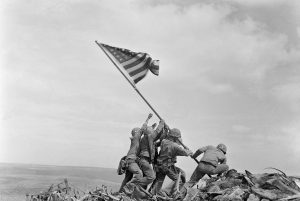
Despite these challenges, U.S. forces gradually gained ground. One of the most iconic moments of the battle came just days after the invasion, when Marines captured Mount Suribachi and raised the American flag—a powerful image that became a symbol of perseverance and sacrifice. Yet the fighting was far from over, as Japanese resistance continued across the island in brutal close-quarters combat.
By the time the island was declared secure on March 26, the human cost was staggering. Nearly 7,000 American service members were killed, and tens of thousands more were wounded. Japanese losses were even more severe—of roughly 21,000 defenders, only a few hundred survived, with most fighting to the death.
Although the United States achieved victory, the battle’s strategic value has been debated by historians. While Iwo Jima did provide a base for fighter escorts and emergency landings for bombers, some military leaders later questioned whether the high cost in lives justified its capture.
Nevertheless, the end of fighting on Iwo Jima represented a critical step in the Allied advance toward Japan and offered a sobering preview of the resistance they might face in a potential invasion of the Japanese mainland. More broadly, the battle became a lasting symbol of courage, sacrifice, and the harsh realities of war.
Today stands as a reminder not only of a hard-won military victory, but also of the extraordinary human toll behind it. The legacy of Iwo Jima endures through memorials, historical reflection, and the enduring image of those who fought—and died—on its blackened shores.
