
The frustrating experience of trying to speak with customer support only to be transferred to a foreign call center and connected with someone who barely speaks English could soon be coming to an end thanks to the Trump administration.
Last week, the Federal Communications Commission (FCC) announced that it had “voted to launch a new proceeding looking into the use of offshore call centers.” The agency explained that bringing call centers back to the United States would be beneficial for several reasons.
First, moving call centers overseas takes jobs away from Americans and causes “language, communication, and other barriers that make it difficult, if not impossible, for consumers to get a satisfactory resolution to their problem.” Offshore call centers also create national security issues as “bad actors working inside foreign call centers have been known to illicitly access customer data or information to advance criminal endeavors.”
As a result of these issues, the FCC is seeking comments on “actions that would encourage and facilitate the onshoring of call centers,” on “steps the FCC can take to improve the customer service and security of communications between an American and any call center that remains abroad,” and on “steps we can take to address illegal robocall scams that originate inside foreign call centers.”
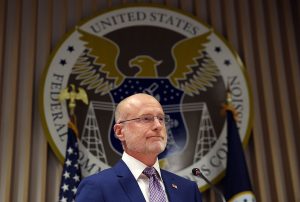
FCC Chairman Brendan Carr explained in a statement that Americans deserve better than the current service they are getting from call centers and that the agency is taking action to ensure they do get better service moving forward.
“American consumers deserve call centers that speak proficient English, provide clear answers, and are based here at home – not halfway around the world,” Carr said. “So today, the FCC is taking action to change that. We adopt proposals to reshore call center jobs and improve the customer service experience at the ones that remain – including by seeking comment on requiring call center workers to be proficient in American Standard English.”
The notice included several proposals, such as prohibiting “providers from using call centers located in ‘foreign adversary’ nations,” requiring “a cap on the fraction of calls providers may handle via foreign call centers,” and limiting “certain transactions to domestic call centers.” The agency is asking for comments on how these proposals can potentially be carried out.
FCC Commissioner Olivia Trusty praised the agency’s notice for spotlighting the risks of the nation’s call centers remaining overseas.
“A trusted, reliable, and secure communications ecosystem is paramount to ensuring that consumers continue to benefit from a dynamic marketplace where innovation and investment can thrive,” Trusty said. “And so, I welcome today’s NPRM to address risks to Americans that originate from call centers located overseas. In particular, I appreciate the Notice’s focus on protecting the privacy and security of consumers’ sensitive information and proposing ways to more proactively identify and mitigate threats before they impact American consumers.”
The notice even received support from Anna Gomez, who serves as the only Democrat-appointed commissioner at the FCC.
“I believe that the FCC does best when our work honors the people we serve. That is why I support action by this FCC that honors consumer concerns,” Gomez said. “Consumers rely on customer support lines to solve the problems they experience with communications services. Thus, questions about how to improve the customer service experience are within our remit and a meaningful way to ensure we continue to serve the public.”
Alan Jamison is the pen name of a political writer with extensive experience writing for several notable politicians and news outlets.
