
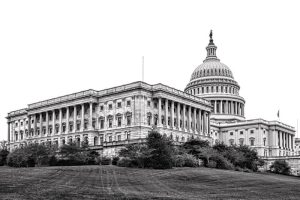
One of the special characteristics of the 2026 national midterm elections is how unsettled many of the competitive races are this late in the campaign calendar.
A major factor in this has been the number of late decisions to retire by incumbents of both parties.
This is more common in the U.S. House, where so many members are either retiring outright, running for other offices, or are deceased.
Fewer U.S. senators are leaving or have left. But just this past week, one surprise retirement and one appointment to President Trump’s cabinet have occurred, with only seven-plus months until Election Day and the primary season underway.
Senate races normally require considerable lead time for organization, publicity, and fundraising, usually about two years for a challenger or any first-time candidate for an open seat.
In most cases, the departures this cycle are in districts or states where the party of the outgoing members enjoys large majorities.
This was the case this week as Montana Senator Steve Daines dropped his re-election bid just minutes before a filing deadline for candidates, and Oklahoma Senator Markwayne Mullin was nominated by President Trump to be the next Secretary of Homeland Security. (The Oklahoma seat will be filled by an appointment from Republican Governor Kevin Stitt until a special election.) Both of these are safe Republican seats.
So far, more than 50 House members will not be running again this year, and seven incumbent senators will not be on the ballot. In addition, one incumbent is facing a serious primary challenge to his re-election bid.
Of the seven open Senate races, three Republican seats are considered safe. The seat of one retiring GOP member, Thom Tillis in North Carolina, is now a toss-up, and three Democrat seats are considered very competitive.
The path for Democrats to retake control of the Senate is therefore now very narrow, especially if the liberal candidates’ prospects in North Carolina and Minnesota, previously thought to favor the Democrats, continue to decline. The Republican Party currently holds a 53-47 Senate majority. Because Vice President J.D. Vance holds the tie-breaking vote in the Senate, Democrats need a net gain of four seats to regain control.
Two other races, both Republican-held, in Texas and Ohio, are now considered likely GOP, but either of these races has the potential to become very competitive.
The two likeliest opportunities for Democrat pickups are North Carolina and Maine. In the Tar Heel State, former Democrat Governor Roy Cooper will face former national GOP chair, Mike Whatley. Cooper has been leading narrowly in early polls, but Whatley, with full support from President Trump, is a savvy campaigner, and this race is a true toss-up at this point.
In the Pine Tree State, Republican Senator Susan Collins, a New England moderate, always faces a tough re-election battle. She usually trails in polls until Election Day, when she ultimately wins. Her opponent will either be Governor Janet Mills or controversial populist oyster fisherman Graham Platner, who is running a surprisingly strong first-time race against traditional liberal Mills. Should Platner win the nomination, the question would be how independent Maine voters would regard his radical views against a Republican who often disagrees with President Trump.
Georgia is one of four pick-up targets for Republicans. Incumbent Democrat Jon Ossoff is facing re-election in a state carried by President Trump in 2024. GOP hopefuls Mike Collins and Buddy Carter are vying to oppose him in November, but Ossoff leads in all polls against any opponent. Democrats are favored in this race.
Democrat Senator Jeanne Shaheen is also retiring in New Hampshire. Two former Republican Senators, John Sununu and Scott Brown (who represented neighboring Massachusetts but lost and moved to the Granite State) are running to be the GOP opponent to Democrat Congressman Chris Pappas. Although the race could be close, Pappas leads in the polls and is favored in November.
Republican prospects for a pick-up look better in Michigan, where Democrat Gary Peters is not running for re-election. Former GOP Congressman Mike Rogers, who narrowly lost the Senate race there two years ago, leads both of the likely Democrat nominees, Haley Stevens and Mallory McMorrow, in the polls. This is so far the most likely Senate seat to change hands in 2026.
The biggest surprise in the 2026 Senate races could be in traditionally blue Minnesota. Incumbent Democrat Tina Smith is retiring. Two well-known Democrats (of the Minnesota Democratic-Farmer-Labor Party, or DFL) are running, Lt. Governor Peggy Flanagan and retiring Congresswoman Angie Craig.
Widespread fraud in state programs is putting the DFL, which dominates all statewide offices, at risk in 2026. DFL Governor Tim Walz, who had previously announced his re-election bid, has since withdrawn from the race in disgrace. Flanagan, as a member of the DFL state administration, could face backlash from voters if she is the nominee, but she has so far received major endorsements, including one from Tina Smith.
Most observers, however, consider Congresswoman Craig the stronger candidate in November based on her record in the state’s Second District. Republicans did not have a serious candidate until recently, but well-known TV personality Michele Tafoya has now entered the race. Tafoya will likely now be the GOP nominee. She will have appeal among key suburban voters. This race now goes from likely Democrat to toss-up.
Two other midterm Senate races currently favoring Republicans have some potential to become competitive in November. A bitter GOP primary race between incumbent GOP Senator John Cornyn and state Attorney General Ken Paxton has gone to a runoff. Democrat Congressman James Talarico will face the winner.
In Ohio, incumbent GOP Senator Jon Husted, who was appointed to fill the vacancy created by J.D. Vance’s election as vice president, will face former Senator Sherrod Brown, who was defeated by Republican Bernie Moreno in 2024. Both Texas and Ohio are strong red states, and both GOP incumbents are currently favored to win, but the Democrat candidates should not be counted out.
The seats of retiring GOP incumbents in Wyoming, Kentucky, and Montana are heavily favored to remain Republican.
Based on current conditions, then, Democrats winning the majority in the Senate this year is difficult to imagine. In fact, as it stands now, it is much more likely that the GOP will expand its majority by one or two seats.
But the political playing field could change. The war in Iran is already causing temporary rises in the price of gasoline and other goods. The recent rise in the stock market is taking at least a short-term correction, and the state of inflation, unemployment, and interest rates six or seven months from now, when most voters make up their minds, is unknown.
The economy, most of all, can change voters’ minds, and the competitive Senate races discussed above are those most likely to see the impact of a booming economy or one in decline.
Barry Casselman is a writer for AMAC Newsline.
