
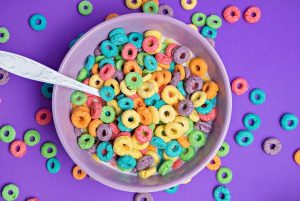
In the latest victory for the “Make America Healthy Again” (MAHA) movement, retail and grocery giant Target will require that every cereal sold in its stores be free of synthetic colors by the end of May. The news is yet another example of how MAHA advocates, once mocked by many on the Left, are now making major progress in improving the quality of American food.
With nearly 2,000 locations throughout the United States, Target becomes one of the first major U.S. retailers to eliminate artificial dyes across an entire grocery category. The policy applies to national brands and to Target’s private-label products. While cereal producers like General Mills and Kraft Heinz have already announced plans to remove artificial dyes from U.S. products by 2027, Target’s accelerated timeline promises to institute that change even sooner.
Federal officials say the decision reflects growing pressure from the “Make America Healthy Again” (MAHA) movement led by Department of Health and Human Services (HHS) Secretary Robert F. Kennedy, Jr. HHS officials praised the move as a sign that companies are responding to parents’ demands for cleaner ingredients.
Synthetic petroleum-based dyes such as Red 40, Yellow 5, and Yellow 6 remain common in processed foods marketed to children. Federal health officials have raised concerns about potential negative health effects from these dyes, with FDA Commissioner Dr. Marty Makary linking them to behavioral problems in children, including ADHD.
“It’s great to see Target take the lead on the MAHA front with food dyes,” Jay Richards of the Heritage Foundation said. “This is a clear response to market signals from not only federal action but to consumers, who are waking up to the weird stuff in so much of our food. Let’s hope Target’s competitors get the message as well.”
Target’s announcement did not occur in a vacuum. It comes amid a broader series of policy changes and private-sector decisions that together signal growing momentum for the MAHA movement.
Earlier this year, the Department of Health and Human Services launched a sweeping initiative known as “Eat Real Food,” which dramatically updated federal dietary guidance. The revised food pyramid moves away from the decades-long emphasis on heavily processed convenience foods and instead prioritizes nutrient-dense whole foods such as meat, eggs, fruits, vegetables, and dairy.
The change reflects a growing recognition among federal health officials that many of the chronic illnesses plaguing Americans are closely tied to diet and lifestyle choices. Roughly half of all Americans now suffer from either diabetes or prediabetes. Nearly 75 percent of adults live with at least one chronic health condition, while about half have two or more. Even more striking, roughly 90 percent of U.S. health care spending goes toward treating chronic disease – much of it driven by poor nutrition and sedentary lifestyles.
For MAHA advocates, those numbers underscore why reforms targeting the American food supply are so critical.
The Trump administration has also begun tackling the issue through federal nutrition programs. One major focus has been the Supplemental Nutrition Assistance Program (SNAP), which provides food benefits to millions of low-income Americans. For decades, critics have argued that allowing taxpayer-funded benefits to be used for soda, candy, and other junk foods undermines the program’s goal of improving nutrition.
In response, the administration has worked with states to secure waivers allowing them to remove certain unhealthy products from SNAP eligibility. As AMAC Newsline reported late last year, at least 18 states have already implemented policies banning junk food and soda purchases through their SNAP programs – a significant step toward aligning the program with its intended nutritional mission.
At the same time, MAHA’s influence has begun extending beyond government programs into the private sector. One of the earliest high-profile victories came last March when Steak ’n Shake announced that all of its more than 450 U.S. locations would “RFK” their famous shoestring fries by switching from vegetable oil to traditional beef tallow for frying.
The company also reformulated its “buttery blend,” used in several burgers and sandwiches, eliminating seed oils and replacing them with “100 percent Grade A Wisconsin butter.” While the changes might seem small on the surface, they marked a major cultural shift in an industry long dominated by ultra-processed ingredients and industrial oils.
The federal government has also begun pushing similar reforms through its own purchasing power. Updated federal procurement guidelines now encourage schools, military bases, and other federally funded institutions to prioritize real, minimally processed foods when purchasing meals for students and service members.
Meanwhile, the Food and Drug Administration has launched its first comprehensive review of infant formula standards since 1998. Health officials say the effort is aimed at ensuring that formulas sold in the United States meet modern nutritional science and eliminate unnecessary additives wherever possible.
These policy initiatives have coincided with a wave of voluntary commitments from major food companies – further evidence that MAHA’s message is gaining traction in corporate boardrooms.
According to a tracker maintained by the FDA, dozens of food manufacturers and retailers have already pledged to remove artificial dyes and other controversial additives from their products. Tyson Foods, the world’s second-largest processor of chicken, beef, and pork, has eliminated certified color additives across its product lines. Sam’s Club has removed synthetic dyes from its Member’s Mark food and beverage products. PepsiCo has pledged that new varieties of popular snack brands like Cheetos and Doritos will contain no artificial flavors or dyes.
Even restaurants known more for indulgence than nutrition are making changes. In-N-Out Burger has eliminated certain color additives from items like its strawberry shakes and signature pink lemonade, reflecting growing consumer demand for cleaner ingredient lists.
Taken together, these developments illustrate the growing influence of the MAHA movement across American food policy and industry. What began as a grassroots push for transparency and healthier ingredients is now reshaping the decisions of some of the country’s largest corporations.
Target’s decision to eliminate synthetic dyes from cereals is therefore not just a single corporate policy change. It is another signal that the momentum behind MAHA continues to build. For millions of families concerned about what ends up on their dinner tables, that shift could make a meaningful difference in the health of the next generation.
Sarah Katherine Sisk is a proud Hillsdale College alumna and a master’s student in economics at George Mason University. You can follow her on X @SKSisk76.
