
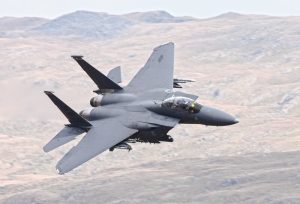
Three days ago, prayers were said for an American F-15 weapons officer who – together with the F-15 pilot – ejected over southern Iran. The pilot was soon rescued. Yesterday, the weapons officer was also rescued. Prayers answered.
To those involved in this Combat Search and Rescue (CSAR) mission, well done! Beyond this victory, comfort comes from how American aviators train and operate.
First, unlike those in Iran’s Kohgiluyeh and Boyer-Ahmad region, American CSAR teams, Pave Hawk helicopters, and fixed-wing pilots are proficient with night vision.
Second, every “strike package” or collection of combat aircraft gets pre-briefed by intelligence on “what ifs” of the mission, contingencies, where to go, and what to do.
Third, US military pilots and aircrew receive SERE training (Survival, Evasion, Resistance, and Escape) for events exactly like this one, on how to survive physically, mentally, and emotionally in hostile circumstances.
SERE training starts with outdoor survival, moves to evasion, resistance, and escape. In this case, after ejecting, evasion and signaling surely came into play. Military personnel do as they train.
Beyond skills, personnel learn to improvise. American ingenuity and resourcefulness save lives. Our culture is about never giving up, pressing on. We envision, believe, and work towards outcomes. That is especially so under pressure.
SERE training takes improvisation to another level. Advanced situational awareness and mental strength, adaptability, and preparedness are taught and practiced until automatic, the way you might tap your car’s brakes, gas, and use mirrors.
From first aid, navigation, and camouflage to evasion and signalizing, these pilots were well-trained. To enable extraction, they knew the terrain, routes to move, pick-up points, as well as how to resist, endure, and manage the stress.
If apprehended, other skills would have kicked in, part of SERE training – how to react, what to say, Code of the United States Fighting Force, which notably ends:
“I will never forget that I am an American, fighting for freedom, responsible for my actions, and dedicated to the principles which made my country free. I will trust in my God and in the United States of America.” They all know it.
Bottom line: When every hour counts, American aviators have and rely on SERE training. American pilots are the best trained in the world, and part of that training is crisis response, reacting to pre-imagined contingencies, like this kind of event.
How much comfort can we take from that? A lot. These two pilots, and the CSAR team that searched and found them, are the best of us, examples of American can-do against long odds. Proving Americans always find a way, they did.
As we move from Easter, four things. First, these pilots – and the team that saved them – knew to “trust in God and the United States.” Second, they never said never, kept going until done. Third, contingency planning, “seeing around corners,” preparing works in our world, too. Fourth, prayers for those who need them are part of success.
Robert Charles is a former Assistant Secretary of State under Colin Powell, former Reagan and Bush 41 White House staffer, Maine attorney, ten-year naval intelligence officer (USNR), and 25-year businessman. He wrote “Narcotics and Terrorism” (2003), “Eagles and Evergreens” (North Country Press, 2018), and “Cherish America: Stories of Courage, Character, and Kindness” (Tower Publishing, 2024). He is the National Spokesman for AMAC. Today, he is running to be Maine’s next Governor (please visit BobbyforMaine.com to learn more)!
