New Jersey just registered thousands of non‑citizens to vote through a “software glitch.” The House passed the SAVE America Act. The Senate is sitting on it. Your two senators and your representative need to hear from you — today.
Americans have already sent their message. Add your voice.
One more way to help: chip in to power the fight for election integrity.
Secure payment. AMAC Action is a 501(c)(4) advocacy organization; contributions are not tax-deductible as charitable contributions. Prefer our donation page? Give here instead.
Thank you! Your donation is powering the fight. A receipt is on its way to your inbox.
A campaign of AMAC Action, the 501(c)(4) advocacy affiliate of AMAC.
A “software glitch” registered thousands of non-citizens to vote in the Garden State — fresh proof that the voter rolls are not secure enough, and that the Senate is out of excuses.
N.J. Gov. Mikie Sherrill. The state’s registration system flagged thousands of non-citizen records this month.
This Is Not Over
The House passed it. The Senate stalled. AMAC Action is escalating the fight.
AMAC Action is mobilizing members nationwide to flood congressional offices with emails and phone calls demanding immediate passage of the SAVE America Act. This is not the time for another study, another hearing, or another excuse. This is a demand for action.
★★★★★ Rated 4.8 out of 5 across 325+ Google reviews.
Medicare★★★★★
Saved $2,100 on my Medicare supplement in 45 minutes on the phone. The agent walked me through three plans and never once pushed me. I switched from AARP the same week.
MMargaret T. · Florida · Member since 2019
AMAC Magazine★★★★★
The magazine arrives six times a year and it's the first thing I read with my coffee. Finally, writing that respects my values instead of talking down to me.
CCarol S. · North Carolina · Member since 2019
Travel Benefits★★★★★
The travel discounts alone covered my dues six times over last year. Hotels, car rentals, the works. Spouse is included free — it's not even close to AARP on value.
JJames W. · Arizona · Member since 2017
First Look
While we fight for your vote, we rebuilt your home base.
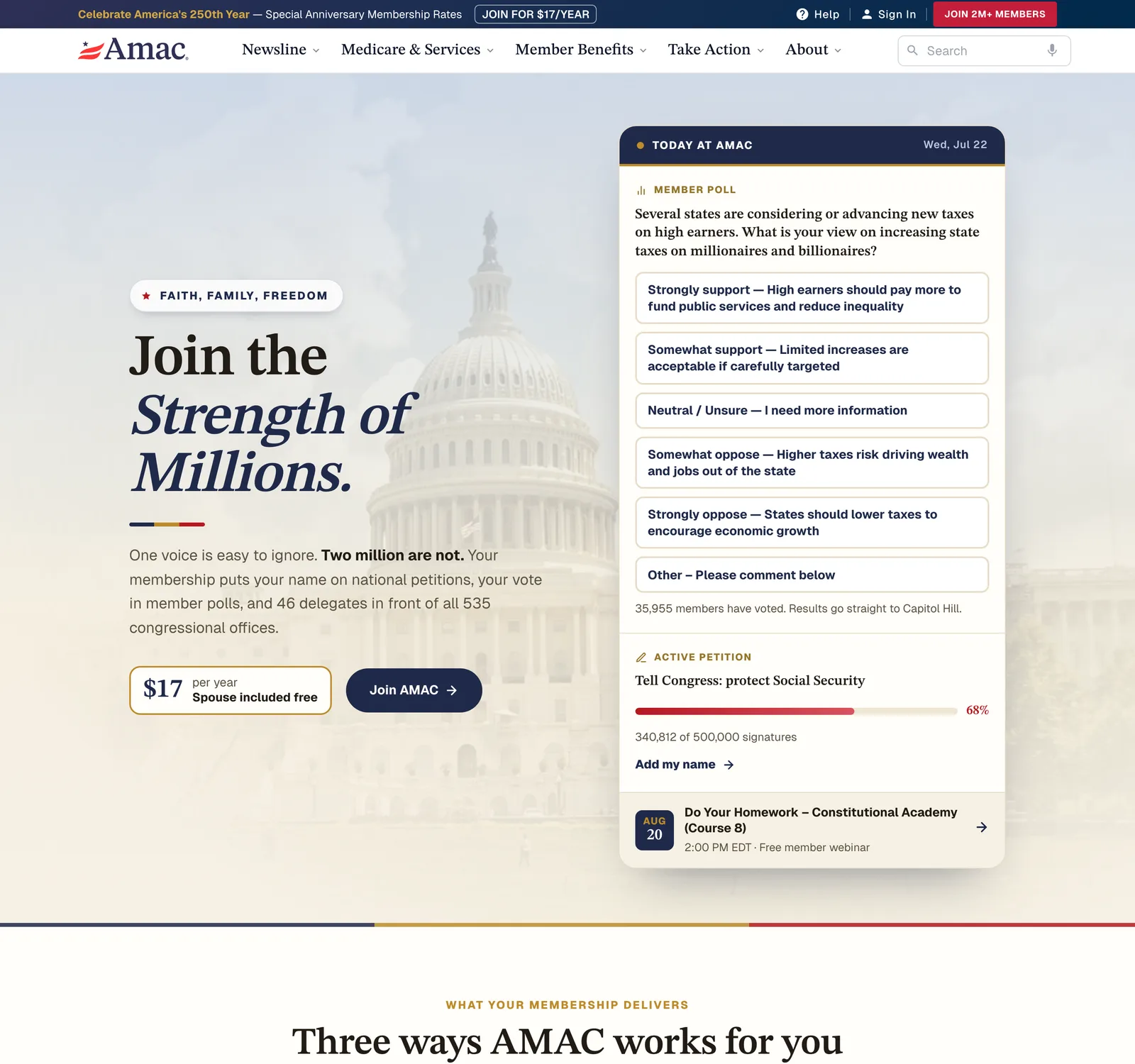
The page you’re reading is a preview of the all‑new amac.us — rebuilt from the ground up. Faster. Clearer. Built around your voice: live member polls, active petitions, benefits that are easy to find, and the news mature Americans actually need. It’s almost here.
amac.us
Your new homepage — live polls, petitions & events
Beautiful on your phone
amac.us/newsline
Newsline, reimagined as a daily broadsheet
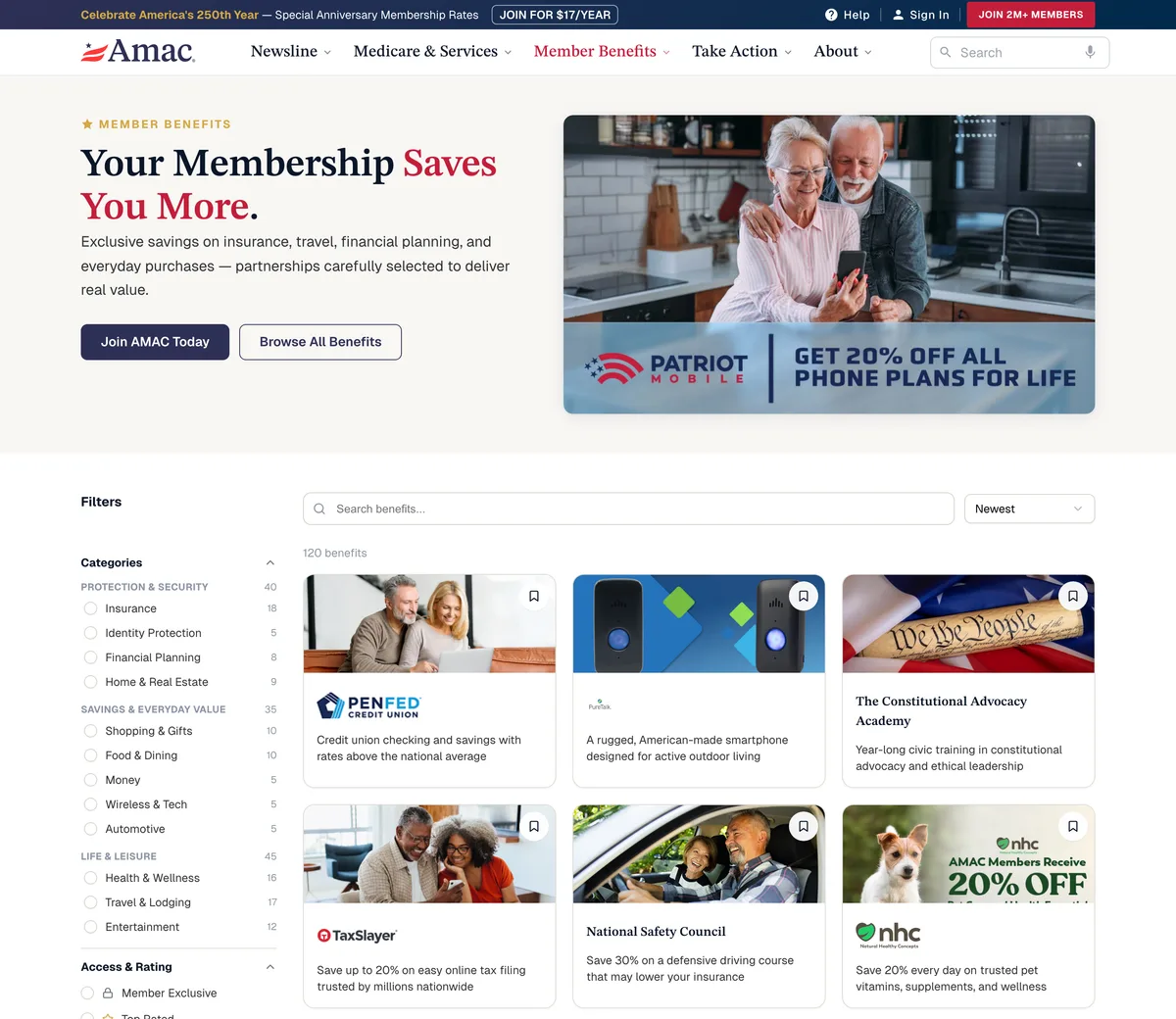
amac.us/benefits
150+ member benefits, finally easy to browse
amac.us/medicare
Expert Medicare help, front and center
The all-new amac.us goes live Monday, July 27 at 9:00 AM ET
Your voice belongs in this fight. Send your message or make your call before the Senate leaves the SAVE America Act to die — it takes two minutes, and it lands on the record.